


Armenia stands between Europe and Asia. It is a landlocked country situated to the South of the Caucasus Mountains, bordered by Turkey to the West, Georgia to the North, Azerbaijan to the East and Iran to the South.
Armenia used to be part of an empire which extended from the Caspienne to the Mediterranean sea. It was already present in the antique maps of Anatolia. It was part of the silk road which used to link Eastern Asia to Venice. It is also recognized as the first country to officially adopt Chirstianity in 301 AD.
A turbulent history along centuries divided the ancient kingdom many times under the various rulings of the Byzantine, Turk, Ottoman, Iranian and Russian empires
The actual 3 million of Armenian people living in Armenia are strongly related and dependant of the 8 millions of Armenians who are living outside the country since the diaspora was formed as a result of the Armenian genocide ordered by the Ottoman Empire at the time of WWI.
After the war it became part of the Soviet Union and successfully developed during this period.
But at the time of its independence in 1991 the Republic of Armenia had not resolved its conflicts with Azerbaijan and Turkey. The borders with these 2 countries are closed and the sanctions imposed are strongly weakening the economy.
The hospitality of the people, the scenery of the mountains and of Lake Sevan, the Armenian culture and the 3000 years long history makes the country a great attraction to the tourists. Traveling is safe. Hotels are comfortable, Food is delicious. You can easily spend one ot two weeks enjoying one of their numerous festivals, or visiting villages, monasteries, Unesco sites, local museums, or learning with local masters about cooking, ceramics, drawing, carpet making, jewelry and toy making, willow-weaving, batik-painting.
The land and people of what is now called Armenia had its beginnings nearly 5,000 years ago. The original name of the country was Hayk, named after the founder of Hayastan. The legend of Hayak includes him and his followers settling in the foothills of Mount Ararat, traveling to assist in the building of the Tower of Babel and defeating the Babylonian king in 2492 BCE. In the Bronze Age several great empires existed in the area including the great Hittite Empire which flourished from 1750 BCE to 700 BCE. Yerevan, the beautiful modern capital of Armenia, was founded in 782 BCE by King Arghishti I . At its height, the Hittite Empire equaled the strength, knowledge and land masses of the Egyptian and Babylonian civilizations. The ancient Greeks and Persians called this territory “Armenia” which translates into the ”Land of Rivers”.
Ancient Armenia was often ruled by the Persians and became a buffer land between the Greeks and Romans on the west and the Persians and then the Arabs on the east. During the reign of Tigran the Great (95-55 BCE); Armenia stretched from the Mediterranean Sea to present day Georgia.
The Hittite language was Indo European which linked it to the western world and Armenia’s ancestors were among the first Bronze Age Empires to smolt and work iron. The culture was advanced and had a written language, codified laws, libraries and literature. The Hittite legacy was passed along to the city-state of Troy and to the Etruscans who occupied Italy before the Romans. One of the Hittites most beloved symbols was the double headed eagle which was used by the Byzantine Empire and is still used in Eastern Europe and Russia today.
The Hittite capital city, Hattusha, was one of the most advanced and powerful cities of the ancient world. The Hittites practiced a religion honoring “The Thousand Gods.” Over 25,000 clay writing texts from this time period have been discovered.
In 301 A.D., Armenia was the first sovereign nation to accept Christianity as its state religion. The country, throughout history, has been both a regional power and a captured and enslaved state and in the 19th century was divided between Russia and the Ottoman Empire. The great genocide- killing 1.5 million Armenians- occurred between 1895 and 1915. After World War I, in 1918, Armenia regained its independence with the establishment of the Democratic Republic of Armenia but was conquered by the Soviet Union and taken behind the iron curtain in 1922 and remained controlled by the Soviet Union until 1991 when the Eastern European freedom movements were victorious and the Soviet Union ceased to exist and the iron country countries, including Armenia, regained their independence.
Present day Armenia consists of about 11,500 square miles; it is landlocked and bordered by Turkey on the east, Georgia and Iran on the north, and Azerbaijan and disputed Nagorno-Karabakh to the east.
Armenia has been populated since prehistoric times and many religious people think it is both the site of the Garden of Eden and the resting place of Noah’s Ark on Mount Ararat. Armenic Sumerian records tell of a great flood in 2700 BCE. Many archeological digs point to Armenia as one of the first European sites of civilization with pottery and tools being found as early as 10,000 BCE.
The population of Armenia today is slightly under 3 million people with 62% living in urban areas and the median age is 35.
“Armenia’s majestic mountainous landscape offers wonderful tourist opportunities. Armenia has natural landmarks , historic Christian monasteries, ancient cultural heritage, distinctive gastronomy, and one of the world’s oldest wine making traditions… over 6,000 years old.”. “Touches of Mediterranean cuisine similar to that of Greece, Syria and Lebanon appear in Armenia’s culinary traditions. “And central to everything is the rich heritage of Armenian hospitality, which you will witness for yourself.”
The Capital is Yerevan and the country is divided in eight different regions.
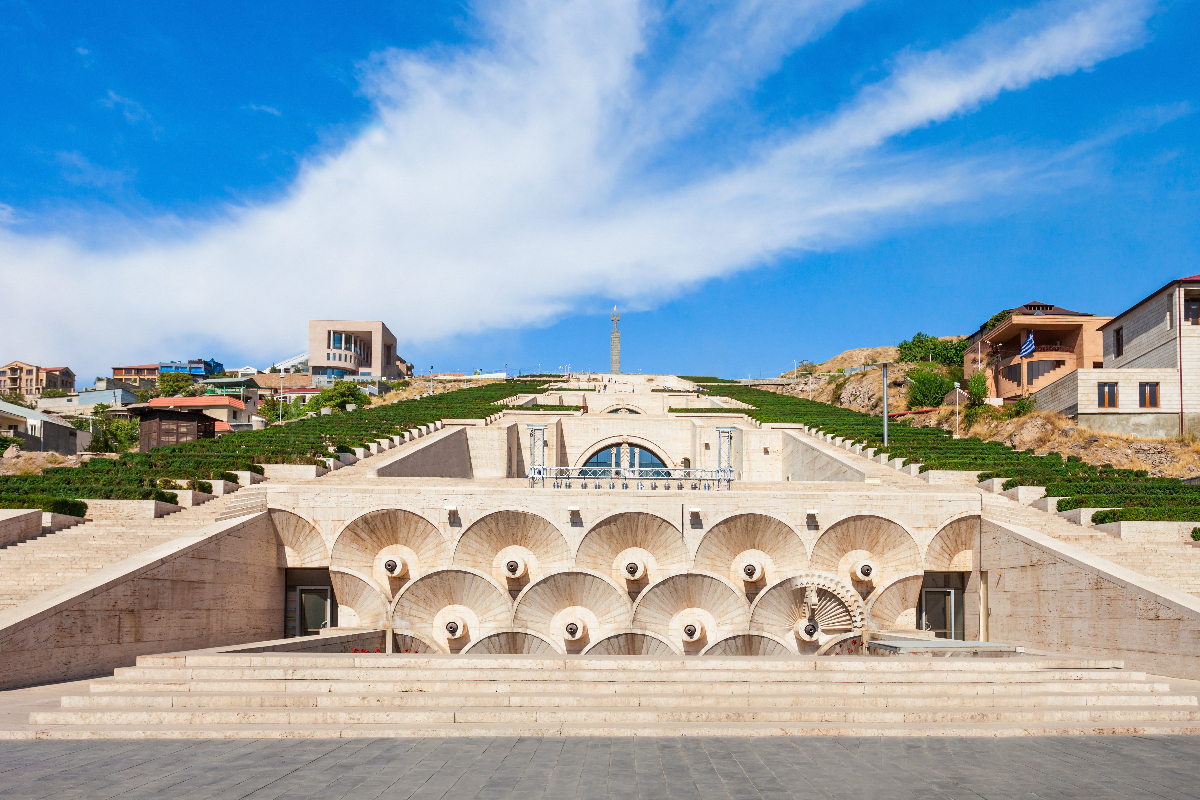
Yerevan, The Capital
In 782 BC the Urartian King Argishti I founded the fortress Erebuni on Arin-Berd hill. He perpetuated this event in the cuneiform inscription, which was later discovered during the excavations in Yerevan. In 2018 Yerevan celebrated it 2800th anniversary. In the 12th century it became a famous trade center having close connections with the city of Ani, which was the capital of Armenia during that period. Gradually the role of Yerevan started to increase and since the 14th century the city was mentioned in the written sources as the “capital of Ararat land”.
Yerevan was several times conquered by Persia and Turkey during the wars. In 1827, it was conquered by the Russian army and after signing the treaty of Turkmenchay, it became the center of one of the states of the Russian Empire. The city began to develop in the 19th century. On the 29th of November, 1920, Erivan was proclamed the capital of the Armenian Soviet Socialist Republic. Alexander Tamanyan became the main architect of the city.. In September of 1991, Yerevan became the capital of the Independent Republic of Armenia.
In the small center of the city you can see the 19th-century one or two-storey old houses, faced with black or red tuff. They are still preserved with their small yards, and mixed among large business centers, modern hotels and elite block of flats.
Yerevan typical architecture shows the colorful stone tuff (from pink to black) which is used in facing the buildings.
Yerevan is an important cultural center. Music is a very important media, classical or jazz concerts of both Armenian and world famous performers take place daily, Numerous museums tell the rich history of Armenia and other countries including the new Museum of the Genocide
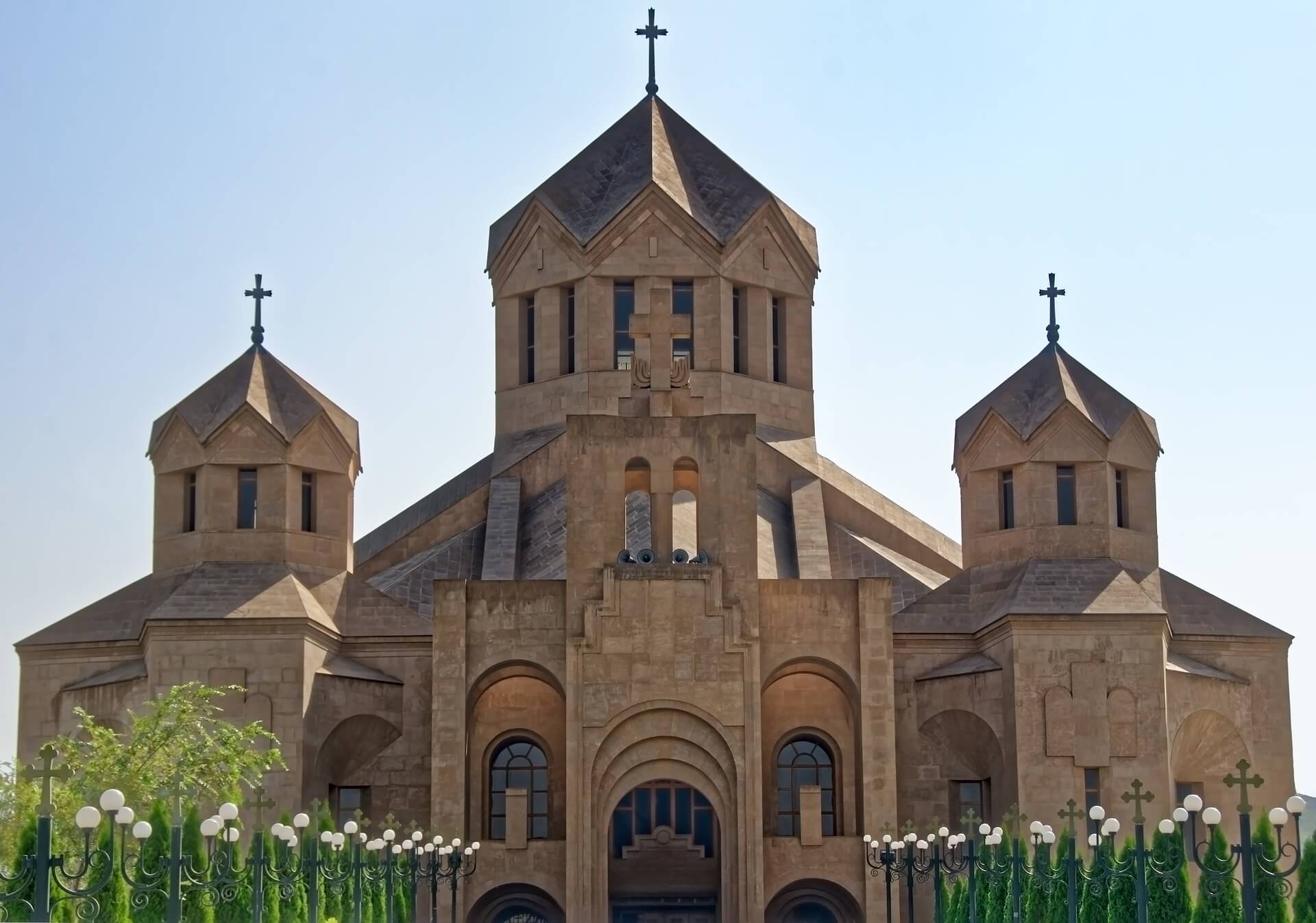
The Shirak Region
“The Shirak region is in the northwest of the country bordering Georgia and Turkey.” The climate is cold winters and pleasant summers. Shirak has volcanoes, mountains, river gorges, beautiful lakes and waterfalls. Sharak proudly shows off its prehistoric culture with monuments and archeological artifacts, such as Horom Citadel hoghmik Habitation, Beniamin Archaeological site, the monasteries of Marmashen, Harich, and the Basilica of Yereruyk among others. Two special sights in the region are a section of the Great Silk Road where remnants of a caravanserai are still preserved, and the ruins of Ari, Armenia’s medieval capital. In the town of Gyumri you will see distinctive architecture, preserved handicraft skills and master blacksmiths, coppersmiths, tinsmiths, jewelers and stone masons producing products as they have done for many centuries.” You can go back in time.
Gyumri is also known as a center for arts and is famous for the Gallery of Miriam, and house-museums. The regional food is delicious and features chanakh, tatar boraki, Lenten tomas, and sweets such as pakhlava, yaghli and various puff pastries.
Sightseeing includes: the Pagan Shrine of Tsar Kar built 100-200 BCE, Horom Citadel built 200-300 BCE, Yereruyk Basilica founded 300 AD, Kumayri Historic District constructed 700-1300 AD, Marmashen Monastery built 900-1200 AD,, Seven Brothers Saints Chapel from 300-400 AD and Sev Ghul (Black Fortress built1800 AD.
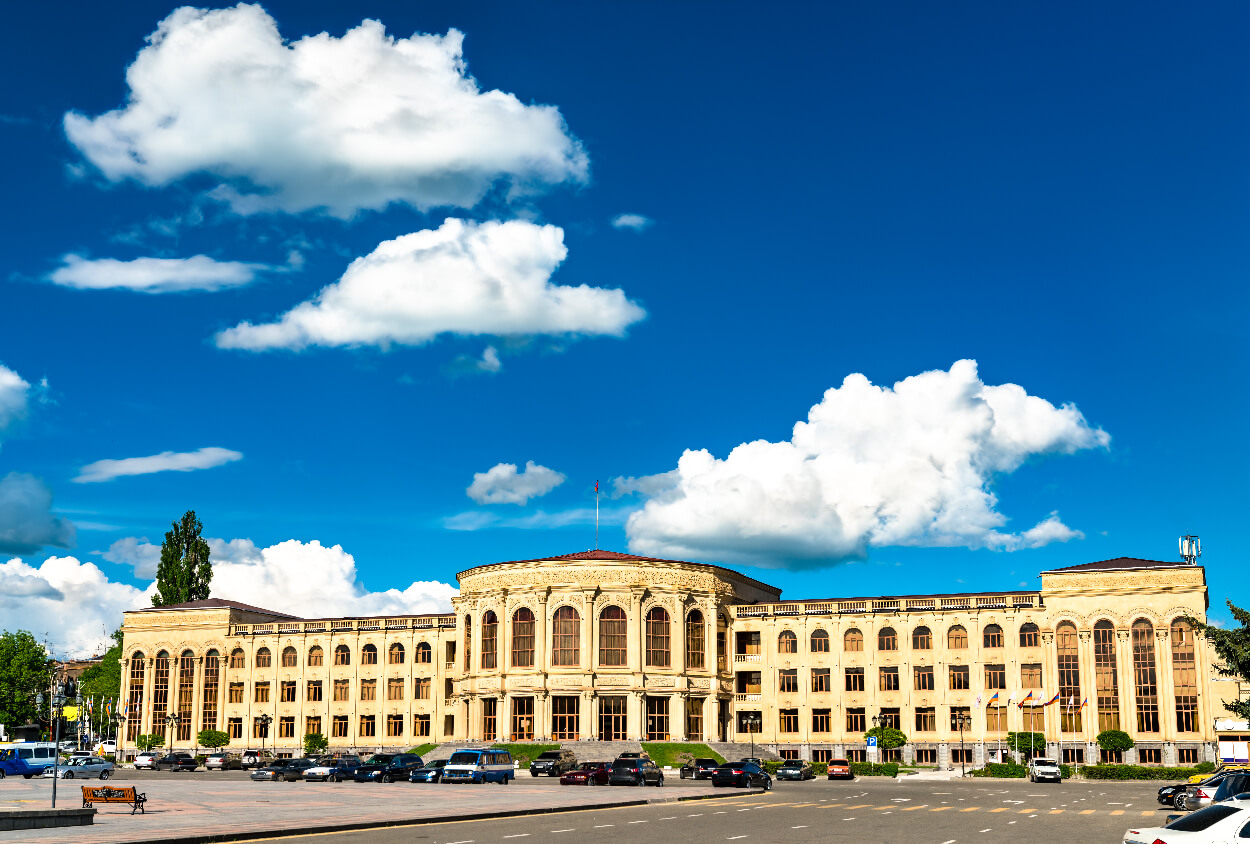
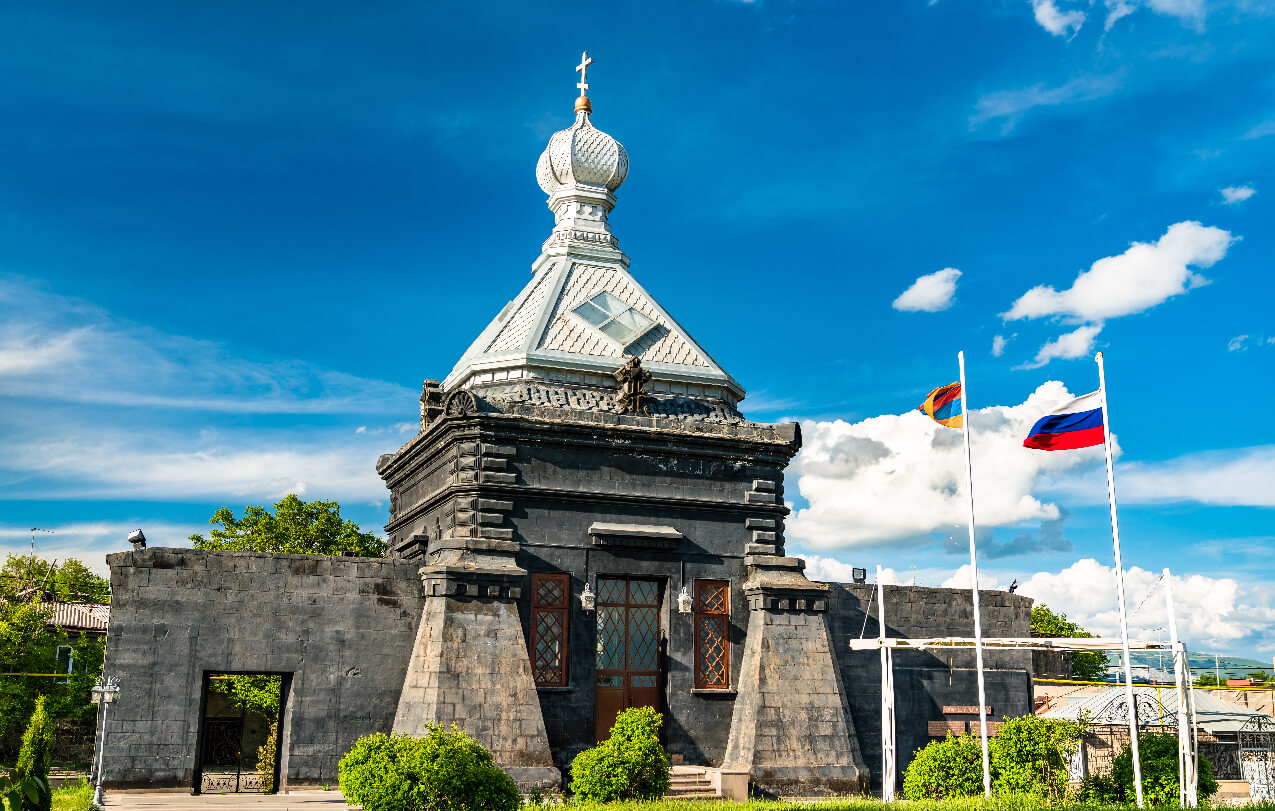
The Lori Region
“Located in northern Armenia near the Georgia border, Lori is one of the country’s most beautiful regions with its forested mountains, clear water springs, deep canyons, gorges and caves. Its climate is humid with cold winters and warm summers.” Those interested in historical and cultural heritage may wish to visit the Bronze-Iron Age settlements and medieval towns, the Odzun Monastery and adjacent 6th century A.D. monument, the frescoed monasteries of Kobayr and Akhtalal and the medieval monasteries of Sanahin and Haghpat, which are inscribed on the UNESCO World Heritage List.”
The Aragatsotn Region
“The Aragatsotn Region is located in the western part of Armenia, which includes Mount Aragats with its stunning views. The region’s history is diverse with monuments dating from the Bronze Age as well as medieval times. There are monastic complexes, a 10th century fortress, ancient petroglyphs on the slopes of the mountains and the Bronze Age settlement of Agarak. The town of Ashtarik still has much architecture from the 18th and 19th centuries. There are many vineyards, some of which go back 6,000 years. There are beautiful restaurants in old wine cellars and you can watch performances of the traditional Armenian Shadow Theater. The village of Talin has preserved the folk songs and dances of the ancestors and it is home to many artisans using centuries old traditions as well as Byurakan Astrophysical Observatory and centuries old Agarak Site 200BCE, Tegher Monastery 1200-1300 A.D. Amberd Fortress 700 A.D., and the Talin Cathedral 500 A.D.
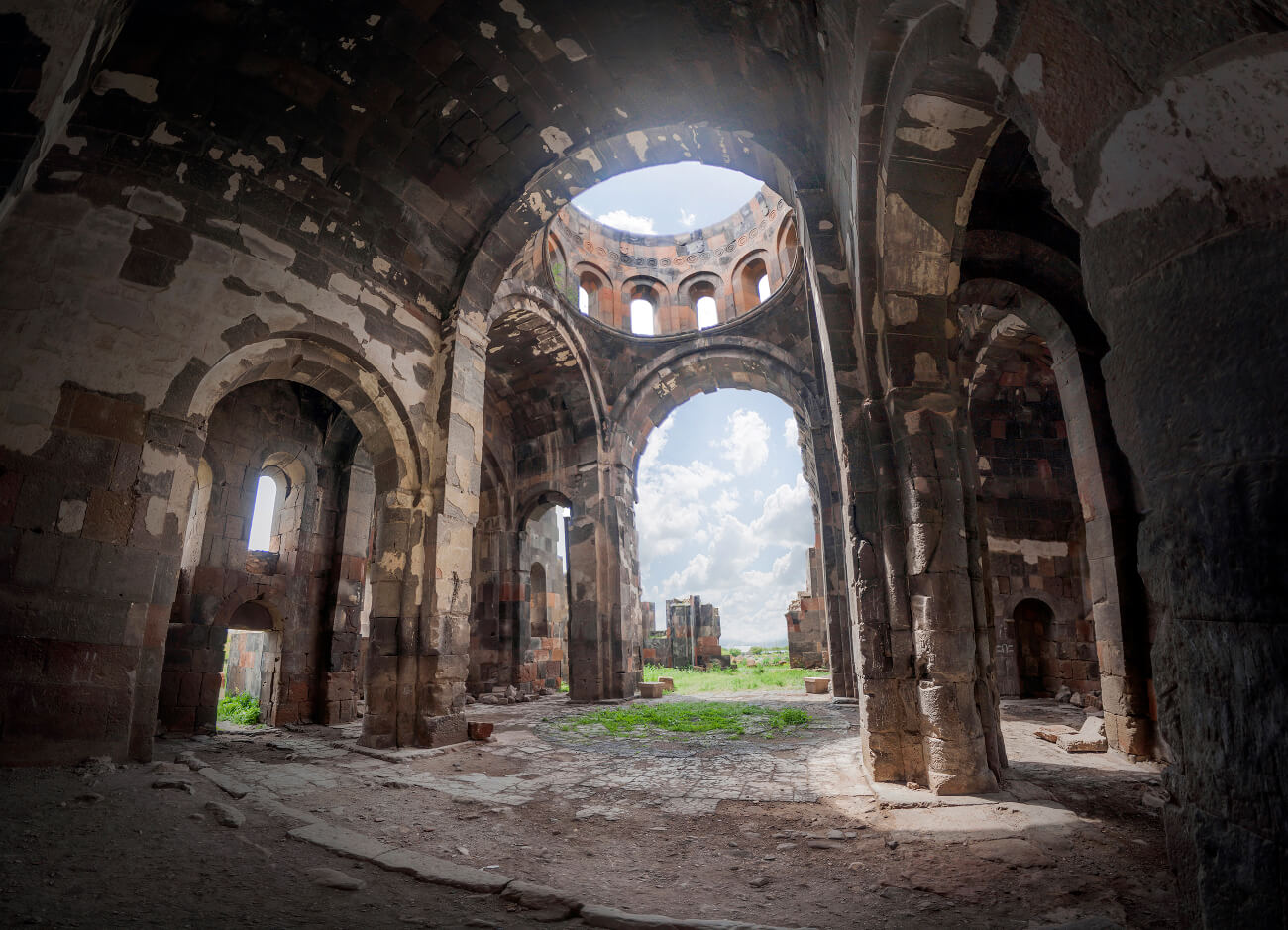
The Tavush Region
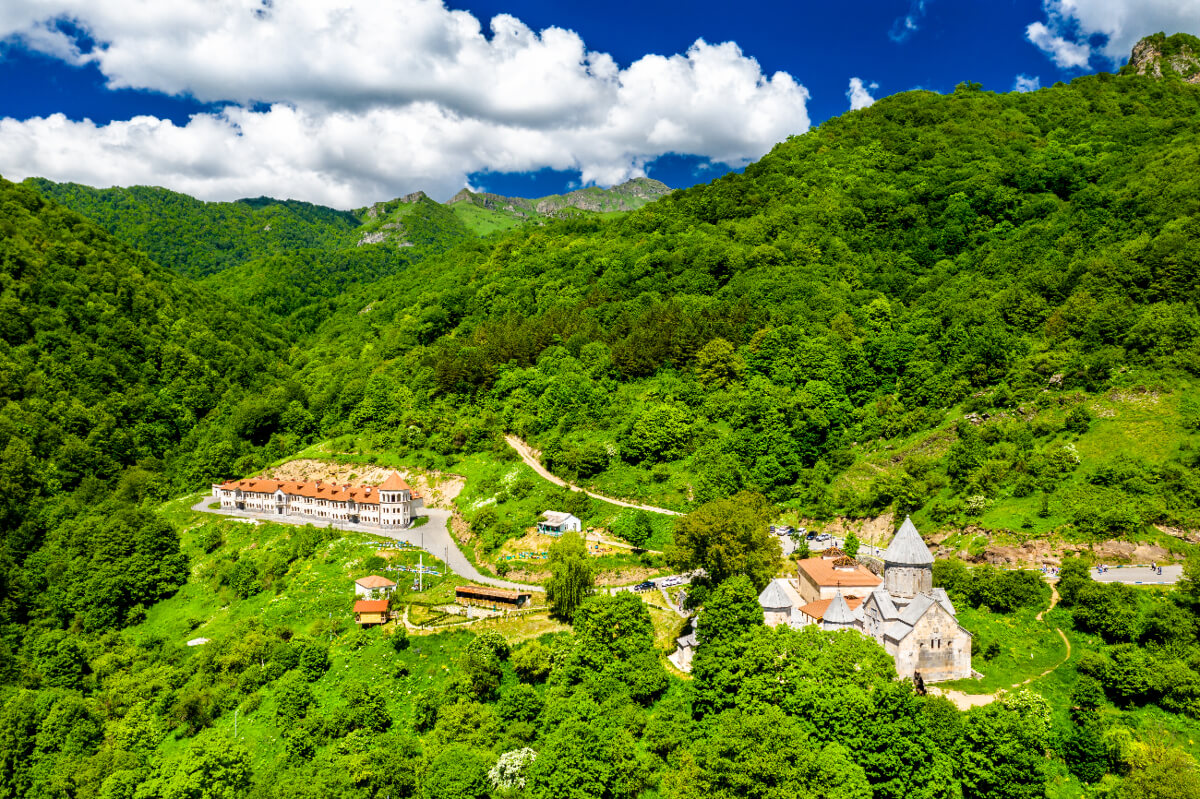
“The Tavush Region is in the northeastern corner of Armenia and borders Georgia to the north and Azerbaijan to the east. Its climate is mild and humid due to its mostly forested mountains.” “The region is ideal for nature lovers. With its picturesque landscapes, mineral water springs, clear lakes and dense forests. There are caves and waterfalls and many opportunities for bird watching. The region’s cultural center is Dilijan, known as Armenia’s Switzerland which is a popular summer destination for local artists and writers. Artisans engage in carpentry, carpet weaving, embroidery, jewelry, and stonework. Tavush is one of Armenia’s most important wine regions. The region is also home to several medieval monasteries. Kirants Monastery from 700 A.D., Goshavank Monastery 1100 A.D. ,and Matosavank Monastery 1200 A.D.
The Gegharkunik Region
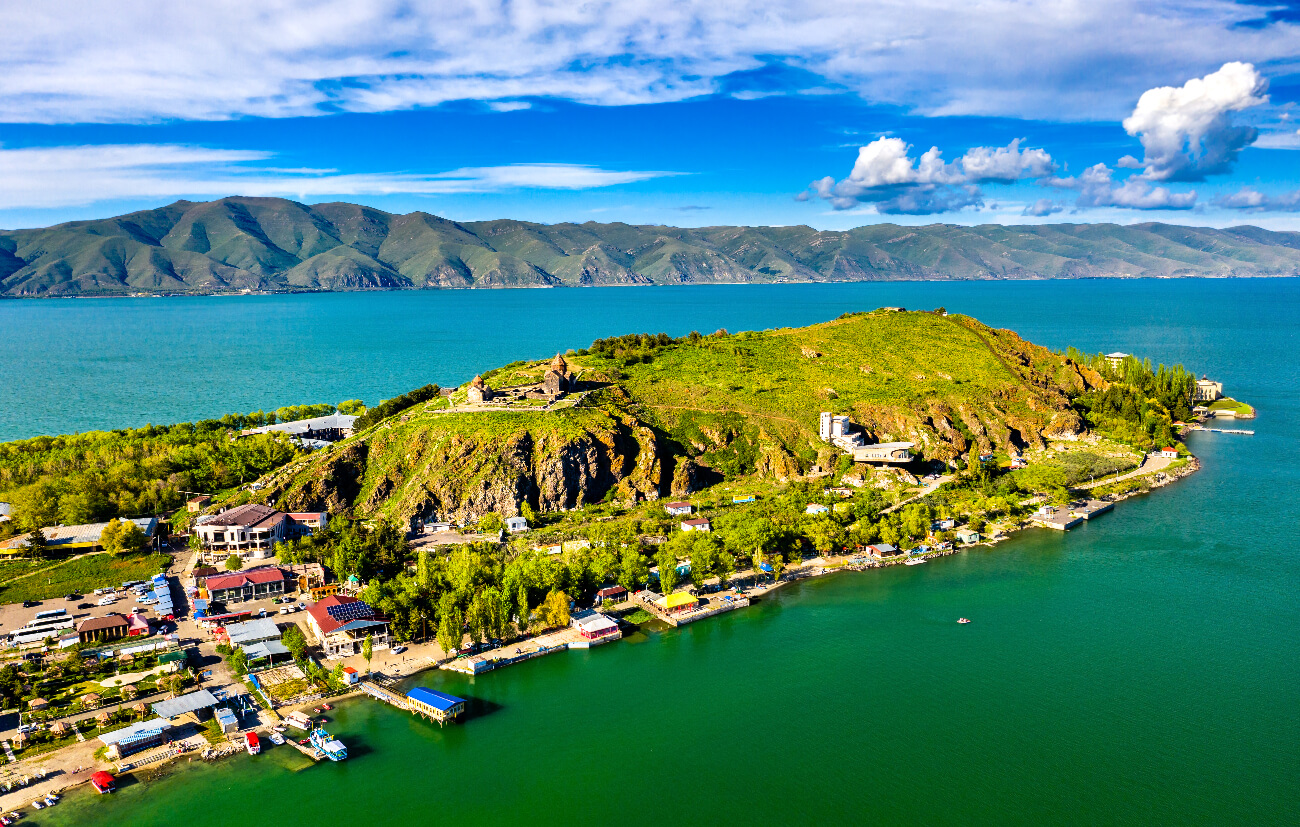
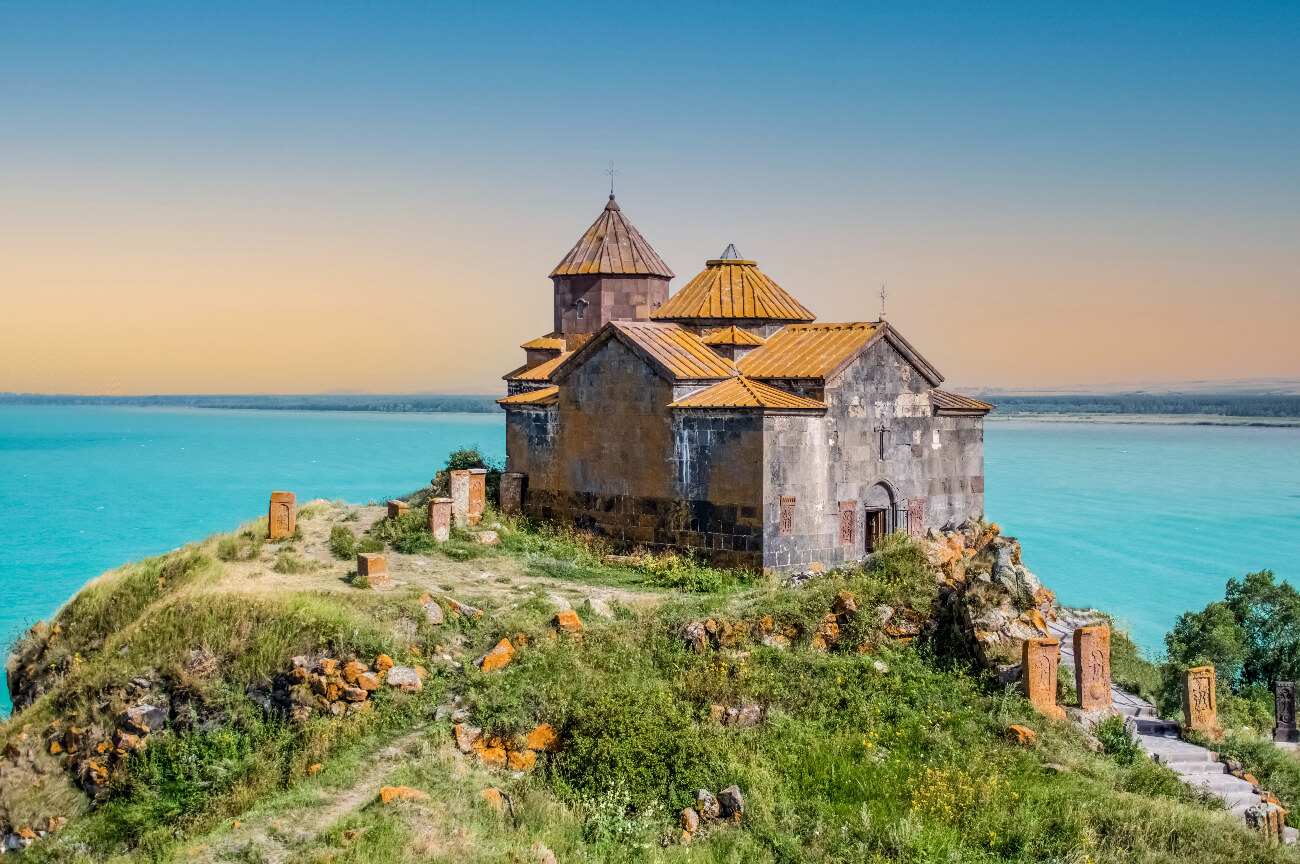
The Gegharkunik Region is in eastern Armenia and is the country’s largest. The region includes Lake Sevan- the third largest freshwater alpine lake in the world and the region is a very popular tourist center. Near the lake is the BronzeAge fortress town of Lchashe where archeologists found a rare four-wheeled cart dating back several millennia. There are also petroglyphs and dragon-stone monuments left by ancient people. Enthusiasts of Medieval architecture will want to visit the 10th century Devanavank and the late-medieval cemetery of Noratus with its high-art Khachkars and carved tombstones.
Syunik Region
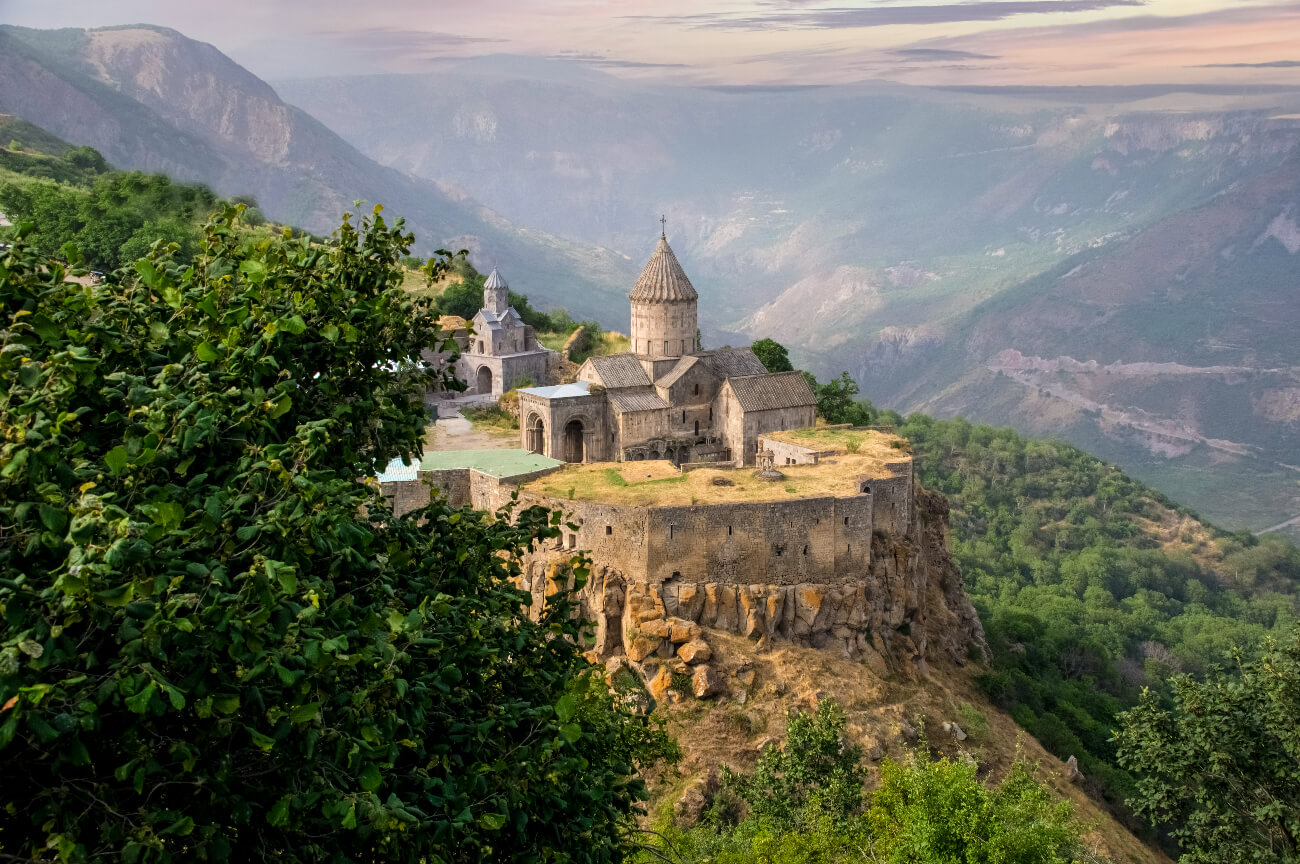
The Syunik Region is one of Armenia’s most captivating regions due to its landmarks and its historical monuments. It is Armenia’s most southern region and connects Armenia to Iran. It contains nearly every climate zone in the country. Visit the Bronze Age settlement Of Zorats Karer, hike the mountains and see the ancient petroglyphs, visit Tatev Monastery built between the 9th and 15th centuries A.D. and walk the TaTever ropeway which is registered with the Guinness World Records as the longest of its kind in the world. There are many colorful towns resembling the look of the 18th century and the old cave city of Old Khndzoresk.
Ararat Region
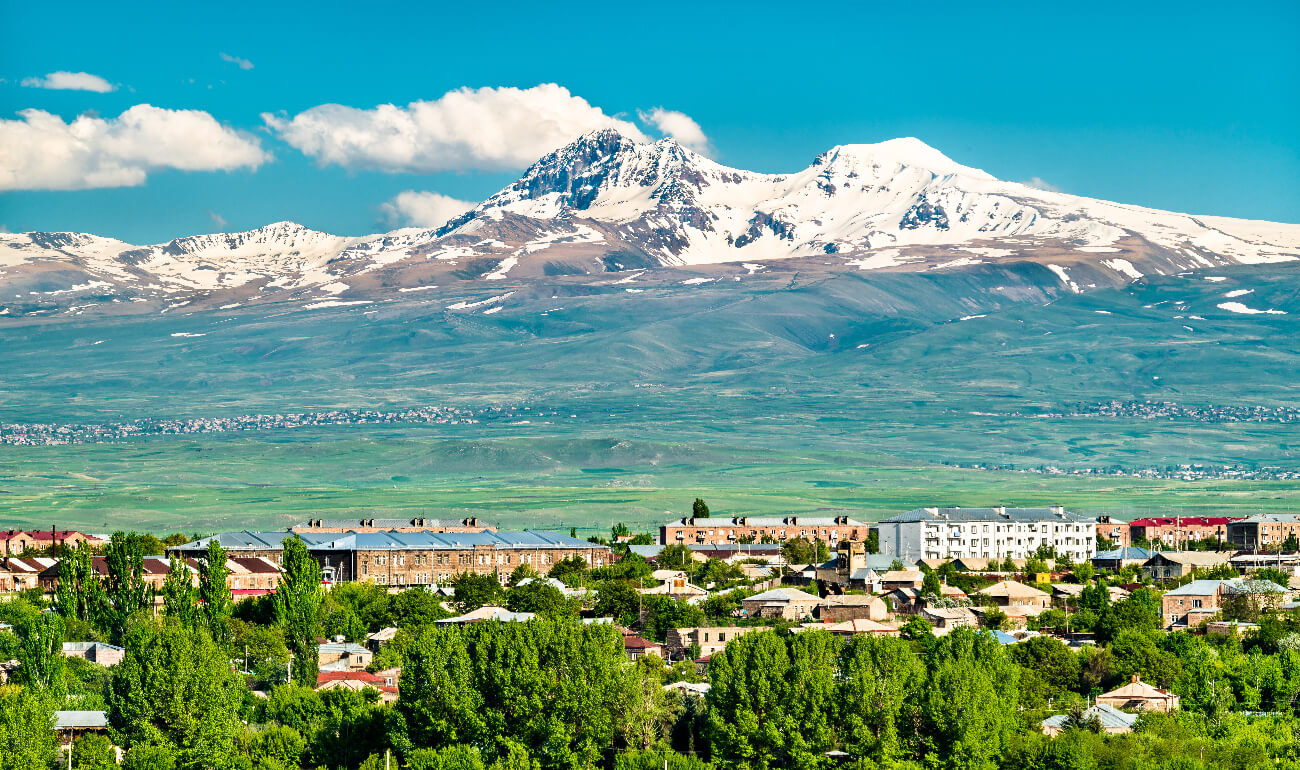
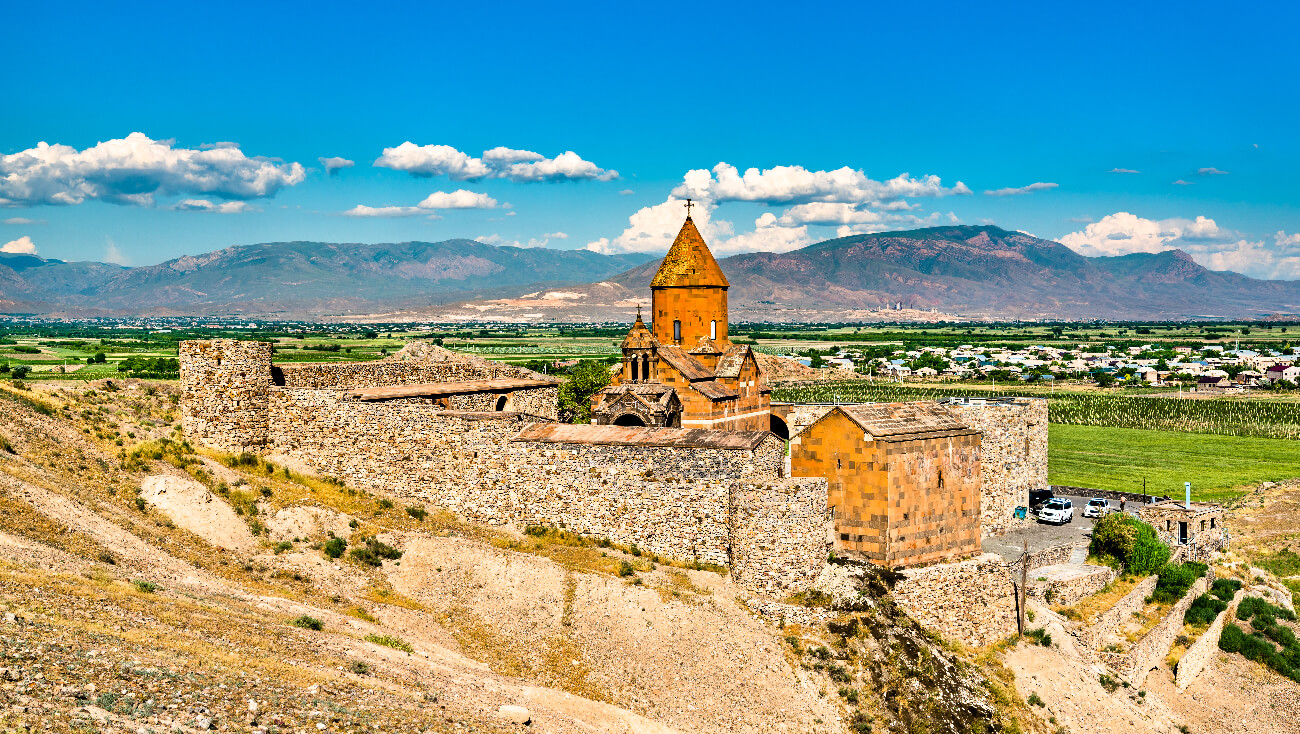
The Ararat Region is named after the famous biblical mountain and is in Armenia’s southwestern region bordering Turkey and the Nakhchivan enclave of Azerbaijan. There is a glorious view of Mount Ararat from the Khor Virap Monastery which is a favorite tourist stop. The region is an important agricultural part of the country. There are numerous apricot and peach orchards visible from the road. The Ararat Valley is also one of the world’s centers of grape domestication and viticulture origins, and contains one of the highest densities of aboriginal grapes in the world. The villages are home to craftsmen of every type with the skills passed down through the centuries. Ararat is also home to two famous capitals of Armenian history. Artashat, founded in the second century BCE, and Dvin, its successor. Due to the actual new borders of the country even though you see Mount Ararat from Armenia, the famous mountain now stands in Turkey.
The Armavir Region
The Armavir Region is Armenia’ smallest in size but also its most densely populated. The region is home to very old churches dating from the 4th century A.D.; three of which are on the UNESCO World Heritage List. Located in the Ararat Valley, it is one of the country’s driest and hottest regions. There are many apricot orchards and the region’s traditional industries are viticulture and wine making. Discovered grape seeds go back 8,000 years. Bread is baked in enormous clay vessels placed on the ground.
Visit the villages with potters, blacksmiths and skilled carpenters and go to the Sardarapat Ethnography Museum which displays remarkable examples of traditional Armenian folk culture. Plan a trip to the Bronze Age fortress city of Metsamor, now an archeological site, which was once a place of worship containing an observatory and a metallurgical complex dating to 3000 BCE.
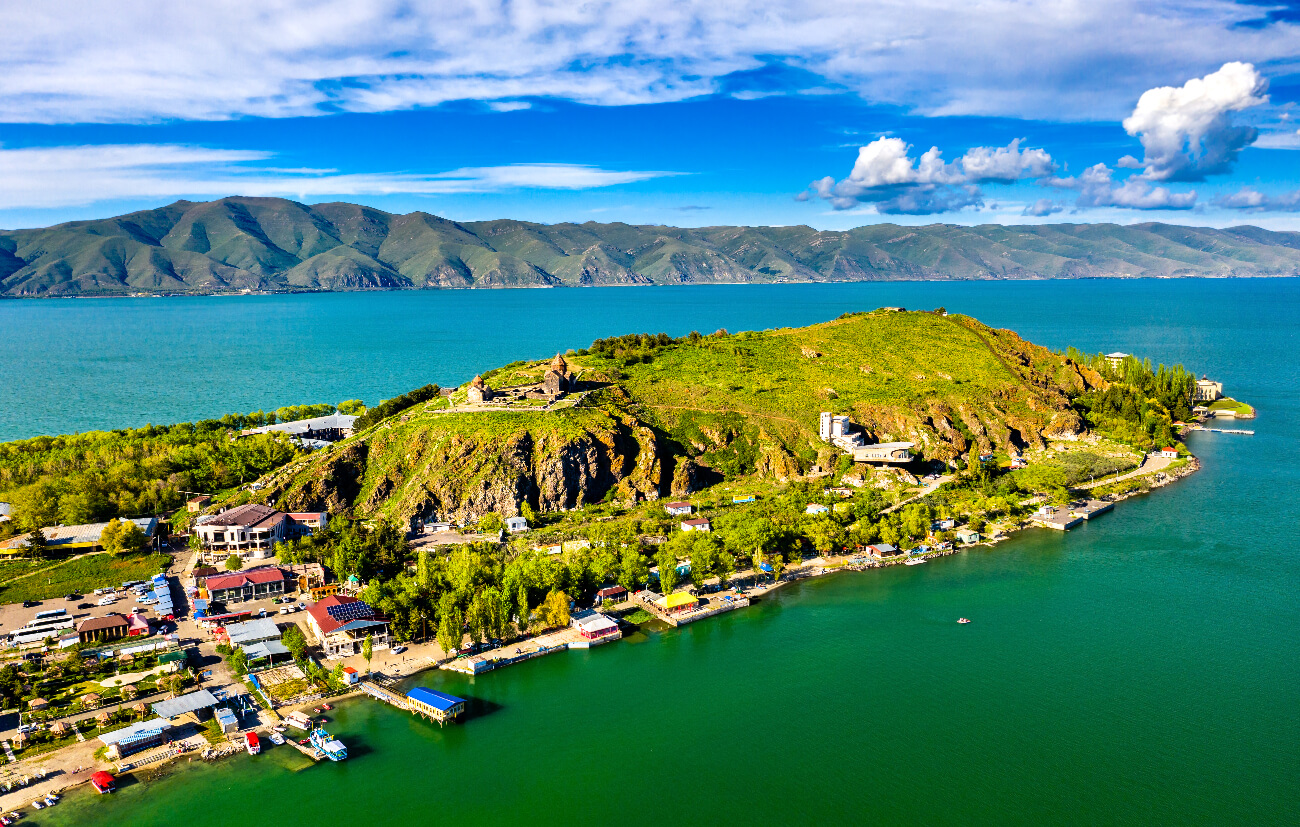
Lake Sevan and Dilijan
At an altitude of 1900 meters, on the slopes of Geghama Mountains, rests the largest freshwater lake in the region – Lake Sevan known as the Sea of Geghama in Ancient times. It was right there that King Ashot II Yerkat (Ashot the Iron) of Armenia won the war against the Arab troops and restored the independence of Armenia.
Sevan has become one of the most popular tourist destinations in the country during the summer. Besides swimming and sunbathing, all kinds of rock and jazz festivals are organized here. Enjoy a tour on the lake by “Cilicia” sailboat. The boat is an exact wooden replica of medieval merchant ships used in the times of the Kingdom of Cilicia (11th-16th centuries).
A unique species of trout, known as “ishkhan” come from the lake to your plate. It is one of the gastronomic specialties of the region as well as crawfish which can be prepared as as kebab, kyufta and even smoked beer snacks.
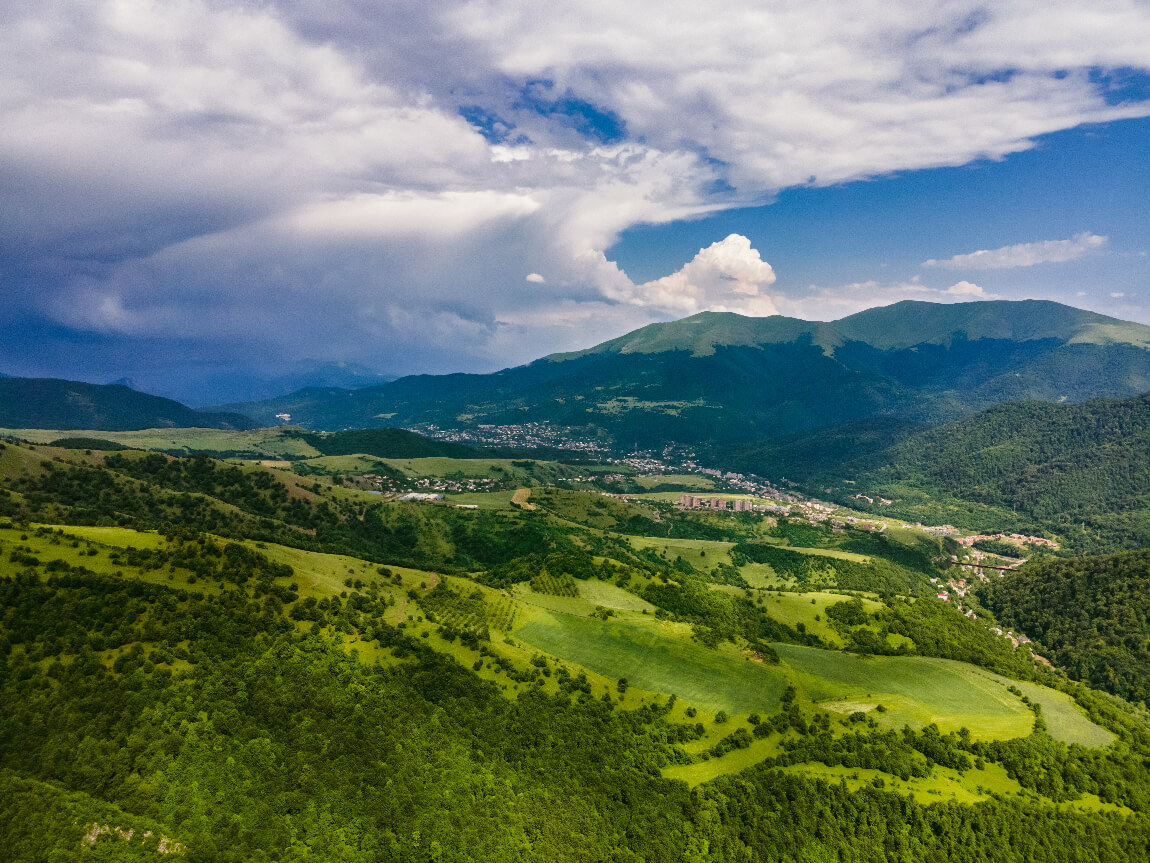
Dilijan is a mountain resort town surrounded by the forests of Dilijan National Park and close to the lake known as “Parz Lich” (clear lake). The town has recently become popular not only as a tourist resort, but as an educational center: the Training and Research Center of the Central Bank of Armenia, which houses the bank’s money museum, is located here. In 2014, the United World College Dilijan, as part of the global education movement of the United World Colleges (UWC), was officially opened. Today students from all over the world attend the boarding-school; while the school building has received a number of prestigious international awards for eco-friendly architecture.
There are many hotels and rest houses, as well as national and European restaurants operating in the town. Besides, Dilijan has its own production of beer and mineral water – all local products are branded “Dilijan”.
Here are the major landmarks of Armenia:
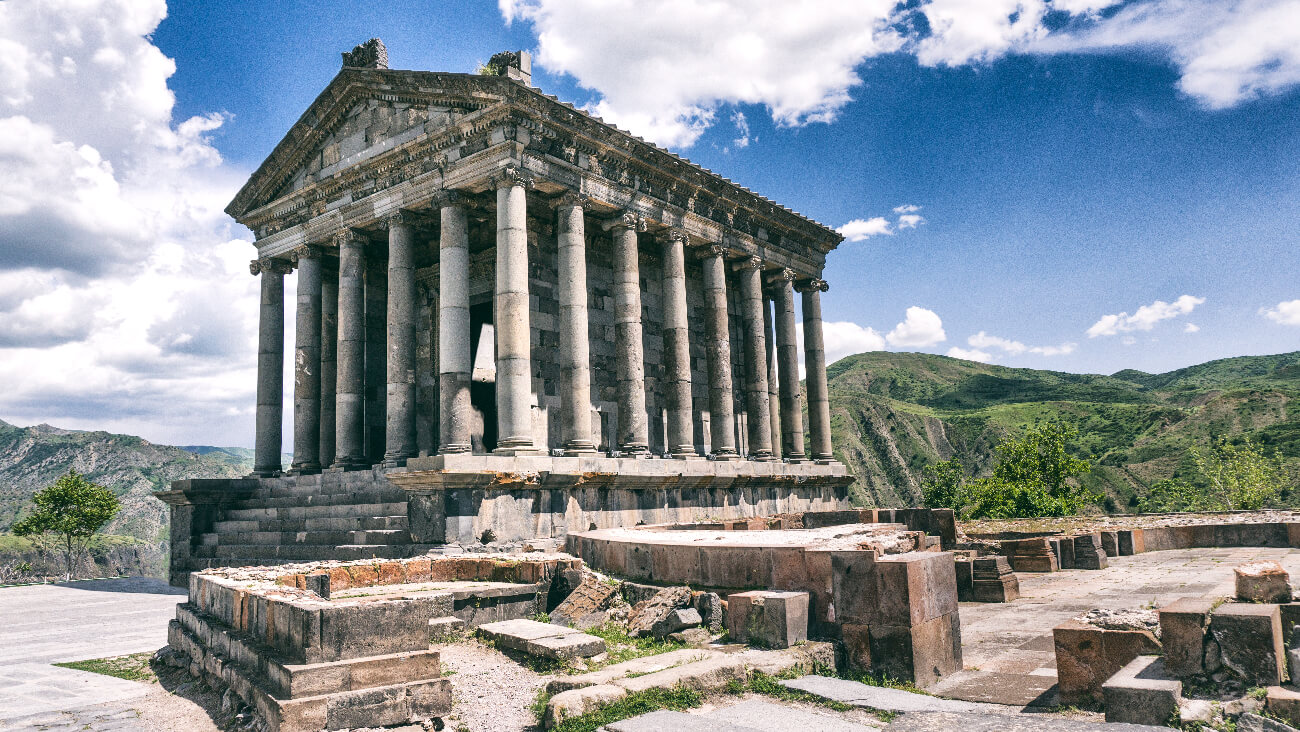
Garni Temple
Garni temple is dedicated to the sun god Mithra. It was built by the Armenian King Tiridates I in 76 AD. It is the only remaining pagan shrine not only in Armenia, but, perhaps, in the entire region.
After Armenia adopted Christianity as a state religion, all pagan temples were destroyed and the newly built churches replaced them. Only Garni wasn’t razed to the ground. Nevertheless, the temple was almost entirely destroyed by an earthquake in 1679, and restored in the Soviet times.
For a long time, Garni was used as a summer residence of Armenian kings. Next to the main building, located was a Roman bathhouse, the mosaic floor of which has remained almost intact.
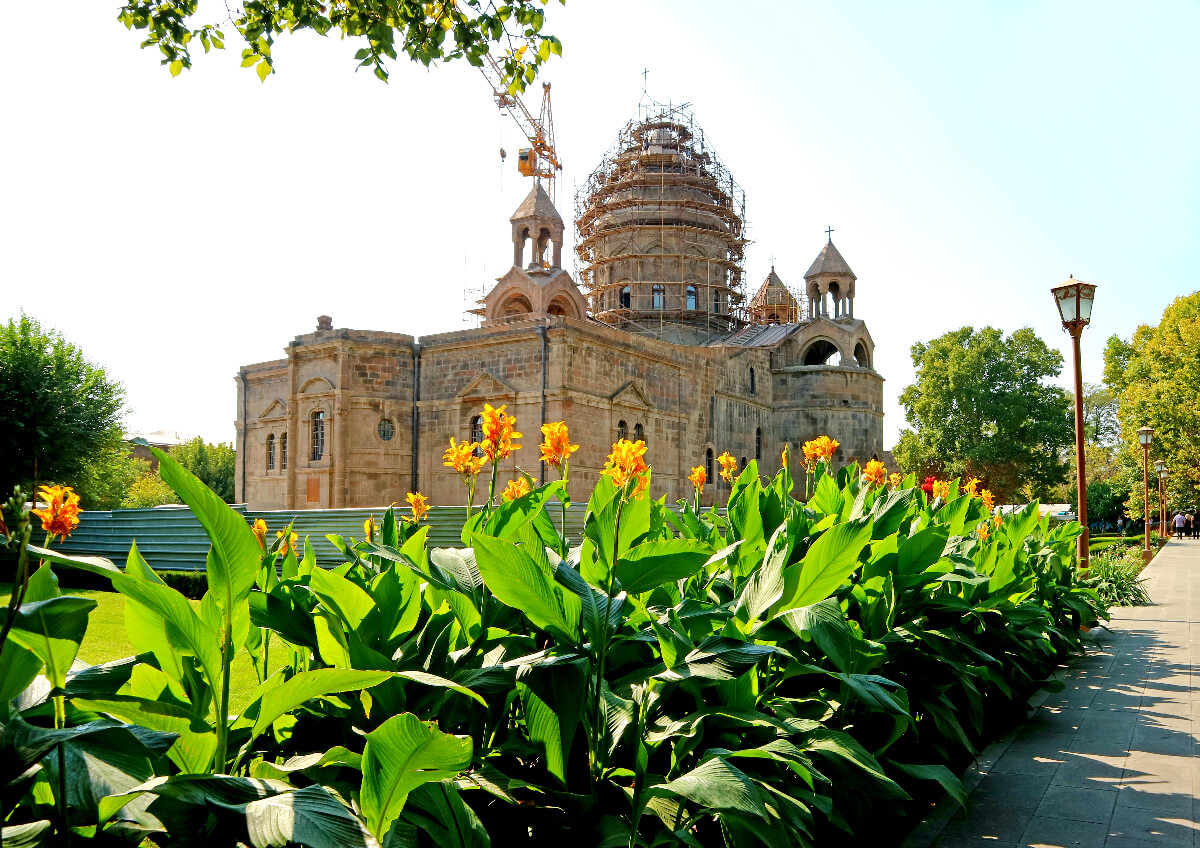
Etchmiadzin Cathedral
Etchmiadzin Cathedral stands in the spiritual center of Armenian. It is the residence of the Catholicos of All Armenians who is the head of the Armenian Apostolic Church. It was founded in the IV century over a pre-existing pagan temple, where pagans were converted to Christianity. The first Catholicos, Gregory the Illuminator had a vision of Jesus Christ descending from heaven and striking the earth with a golden hammer to show where the cathedral should be built. Hence, the patriarch gave the church the name of Etchmiadzin which is translated as “the Descent of the Only-begotten.” Nowadays, it is one of the most visited places in Armenia; it was listed as a UNESCO World Heritage Site in 2000.
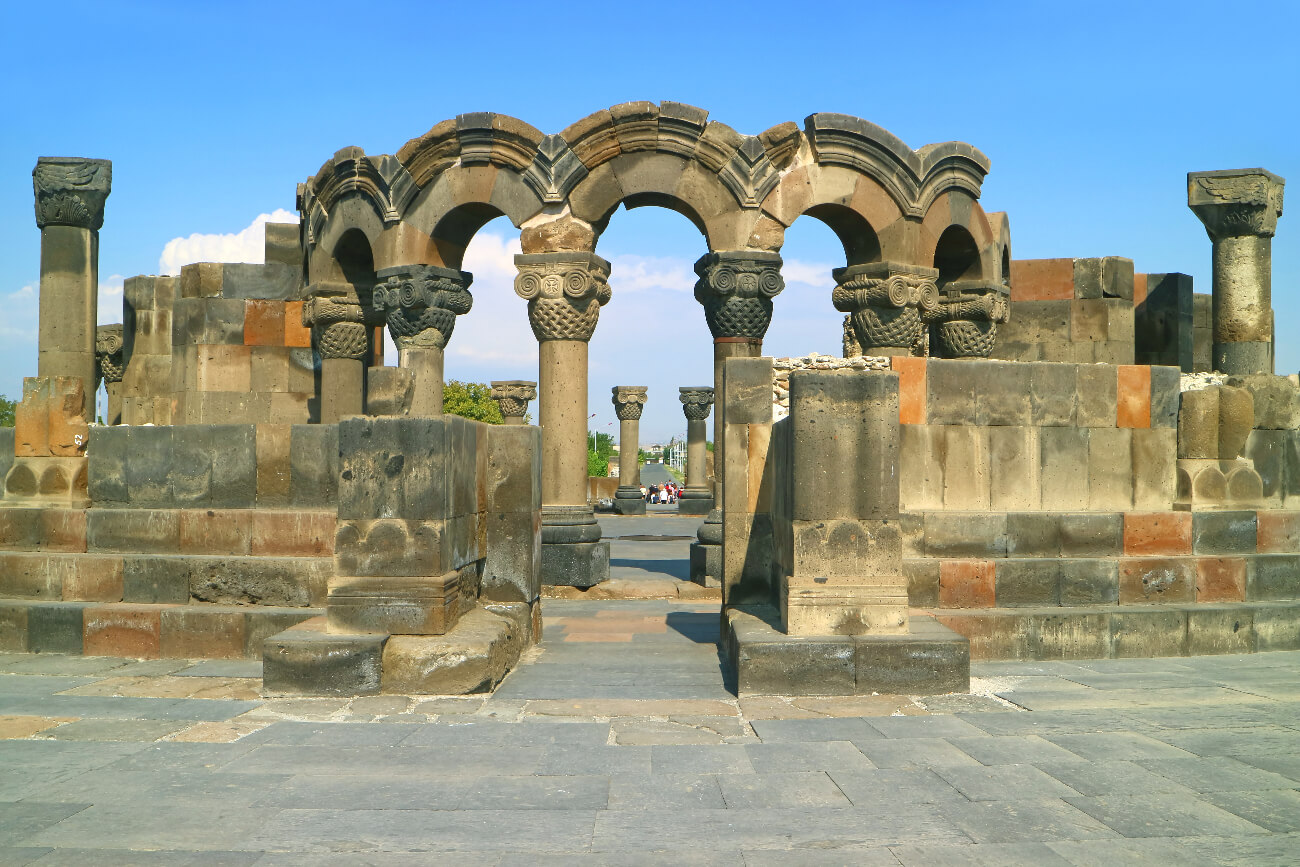
Zvartnots Cathedral
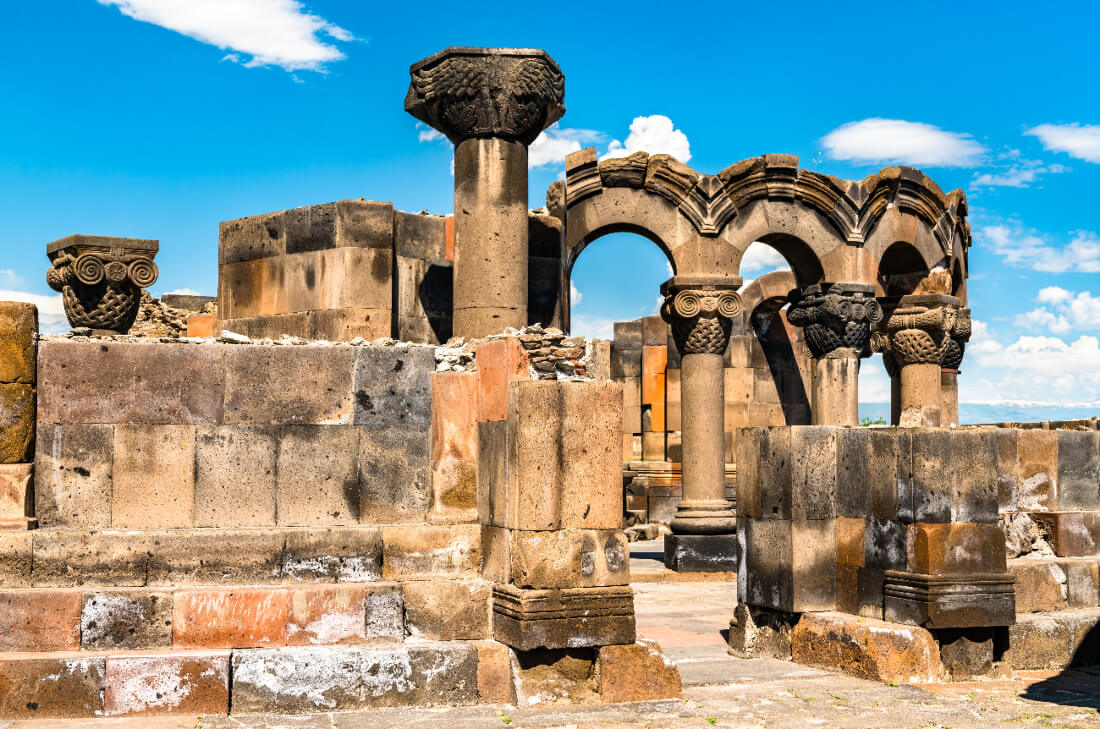
Between Yerevan and Etchmiadzin you will find the ruins of Zvartnots Cathedral.. The Catholicos Nerses III (r. 641-661 CE) requested its construction in the middle of the 7th century., Zvartnots is the oldest and largest Armenian church built in the shape of a Greek cross, with four apses of equal size, one in each direction. It was badly destroyed by an earthquake in the 10th century, then excavated and rediscovered in the early 1900s and partially reconstructed in the 1940s. Since 2000 the ruins of Zvartnots Cathedral are part of the World Heritage sites.
UNESCO WORLD HERITAGE SITES
There are 3 Unesco World Heritage sites in Armenia all with a religious, spiritual and historical background
4 more are on the tentative list waiting to become nominated:
Celestial Voyagers will be happy to customize a program for you based on your main and specific interests either with a stay in Yerevan with daily excursions in the vicinity or with tours visiting either or both of Southern or Northern Armenia.
No Tour Found
No Tour Found