


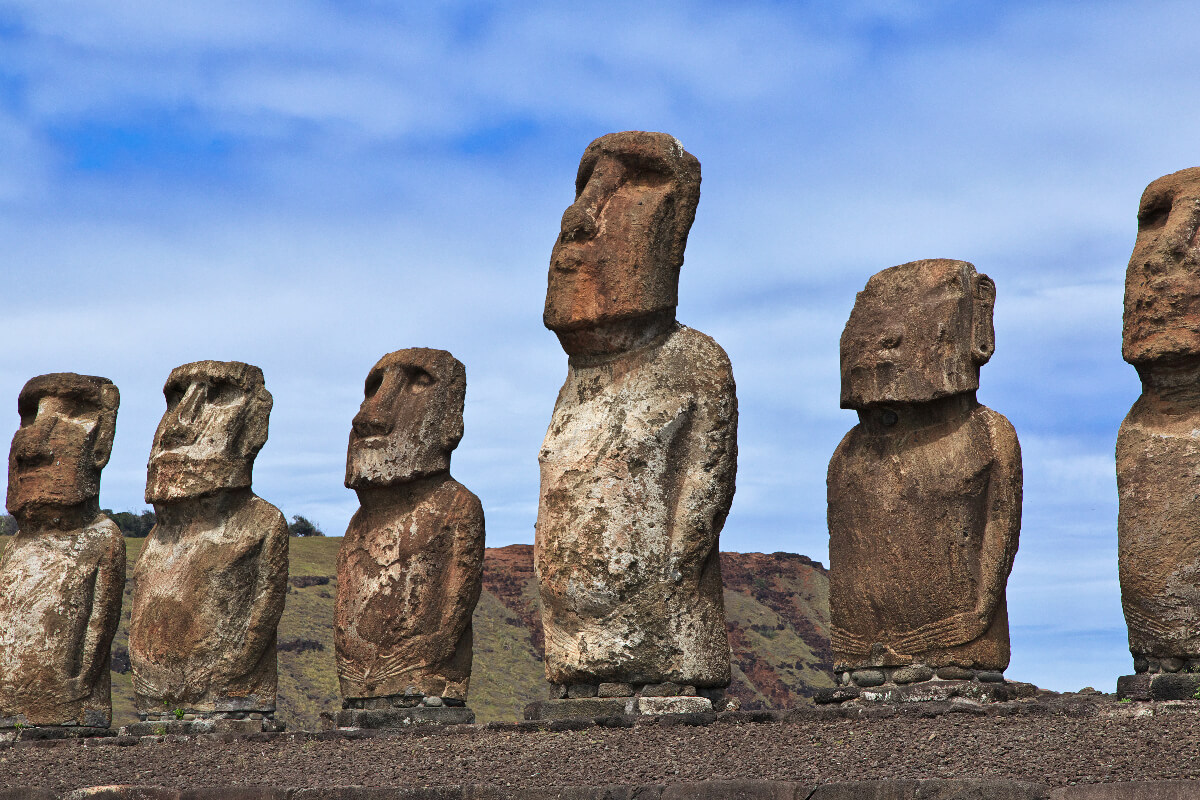
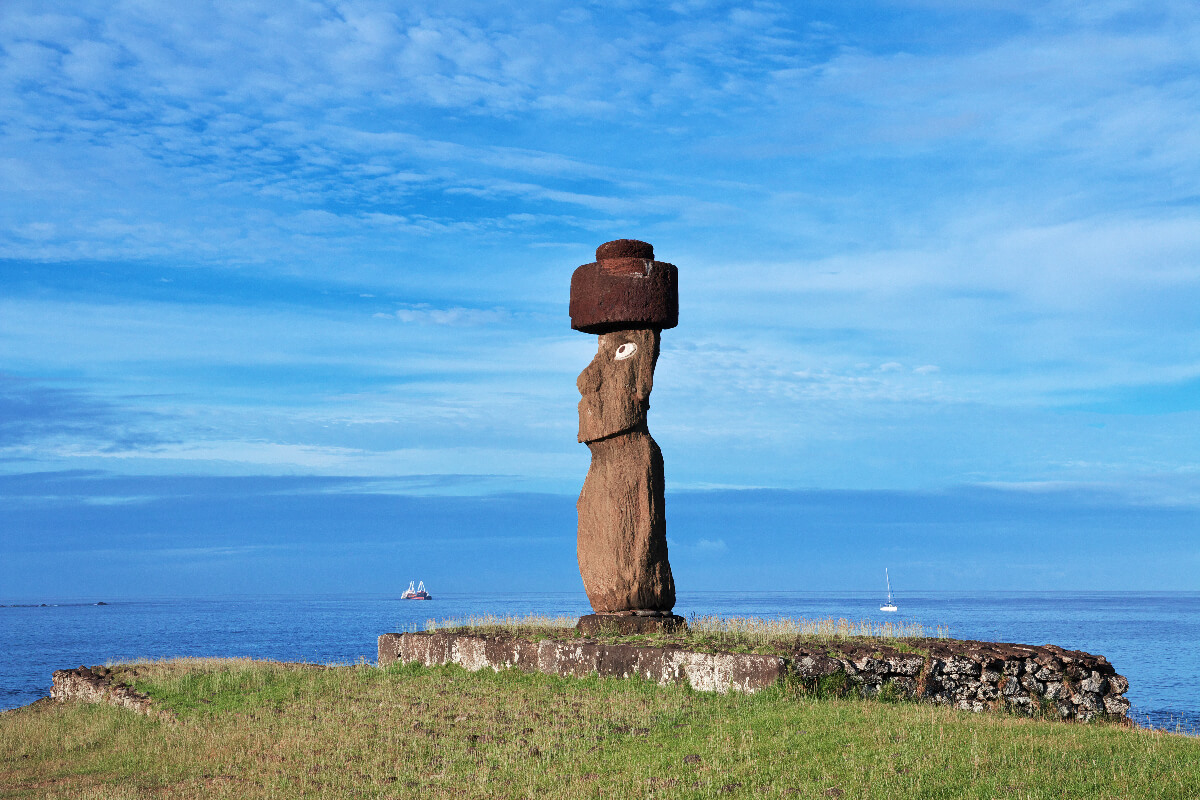
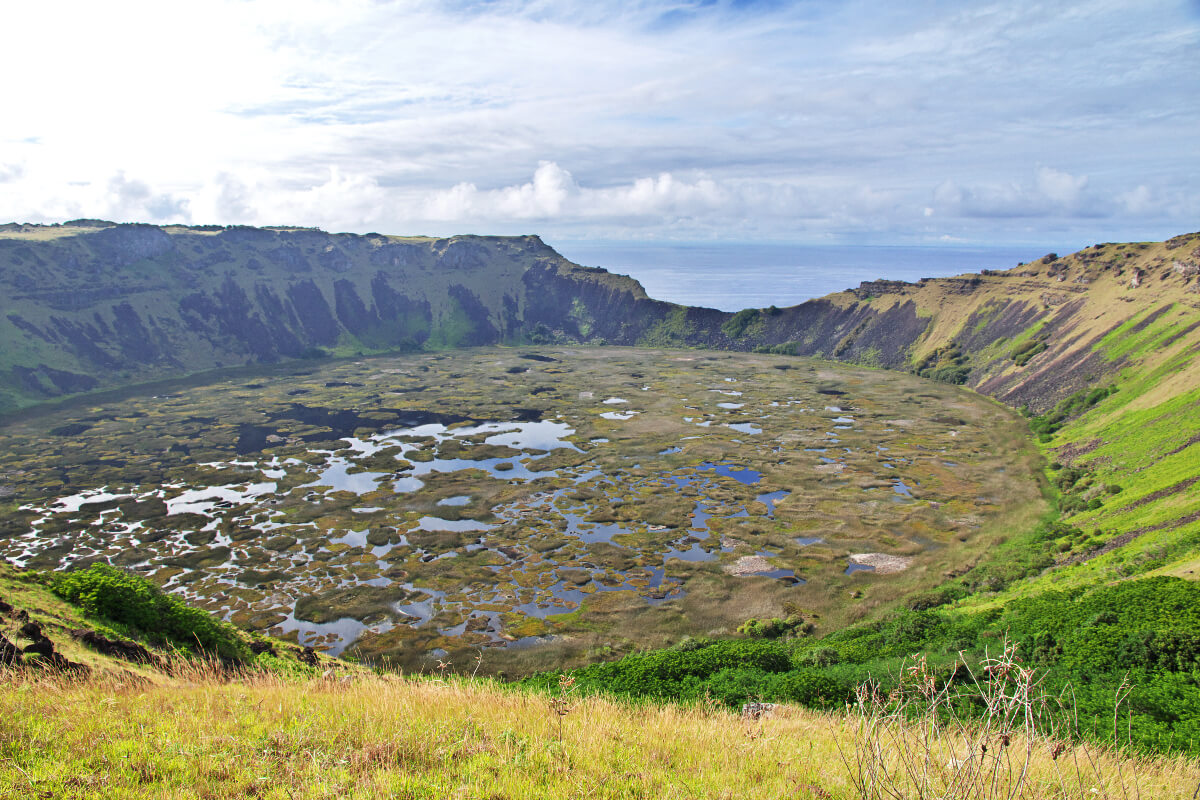
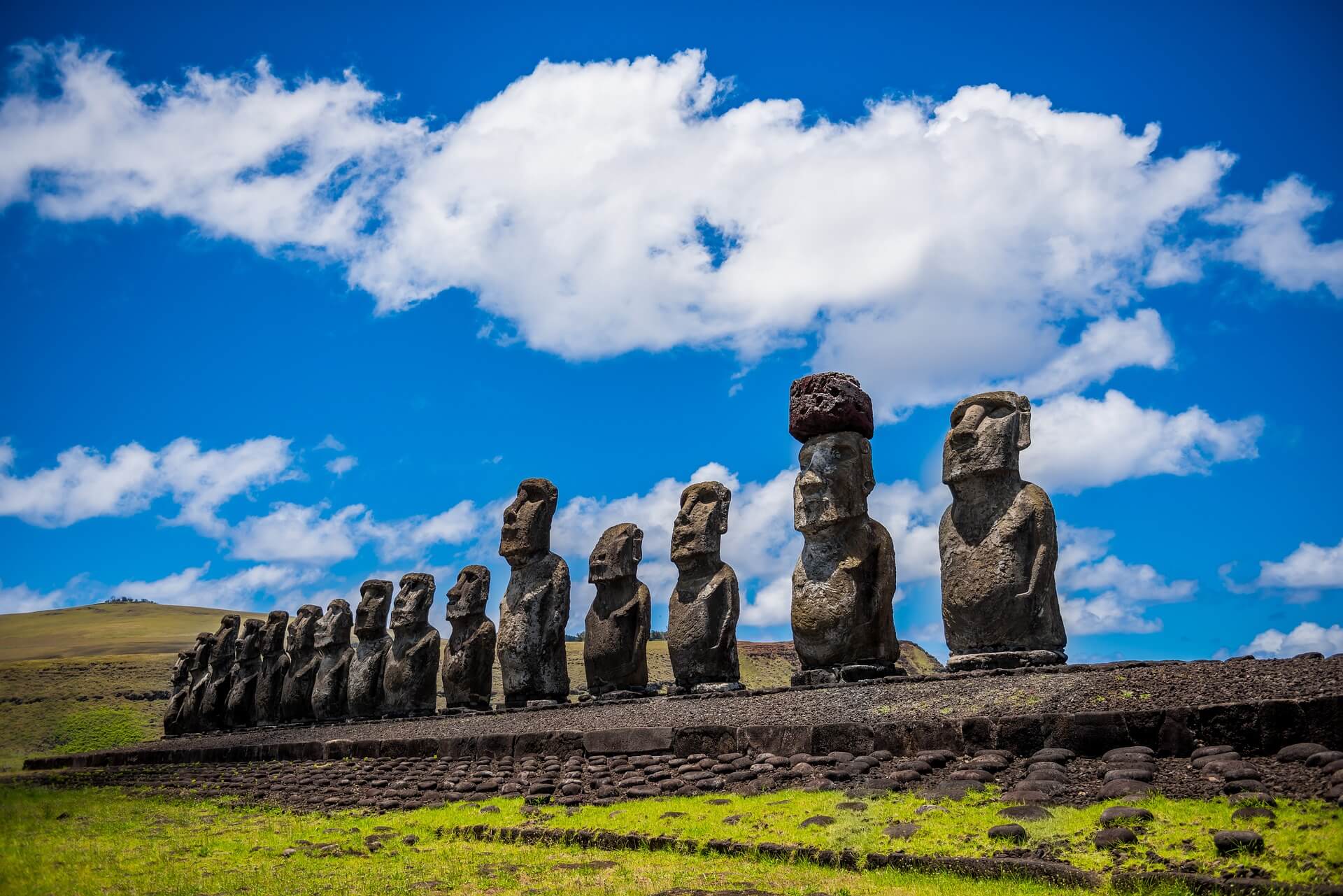
Easter Island, (Rapa Nui) is an island and special territory of Chile in the southeastern Pacific Ocean, at the southeastern most part of the Polynesian Triangle, in Oceania. It has a land mass of 63.2 square miles. The island is 15.3 miles long and 7.36 miles wide at its widest point. Its high point is 1663 feet above sea level. Easter Island is a “volcanic high island” created by three extinct volcanoes. The island is a “tropical rain forest” with moderate temperatures year round (high 40’s to low 90’s). The island is most famous for its nearly 1000 extant monumental statues, called moai, which were created by the early Rapa Nui people. In 1995, UNESCO named Easter Island a World Heritage Site, with much of the island protected within Rapa Nui National Park.
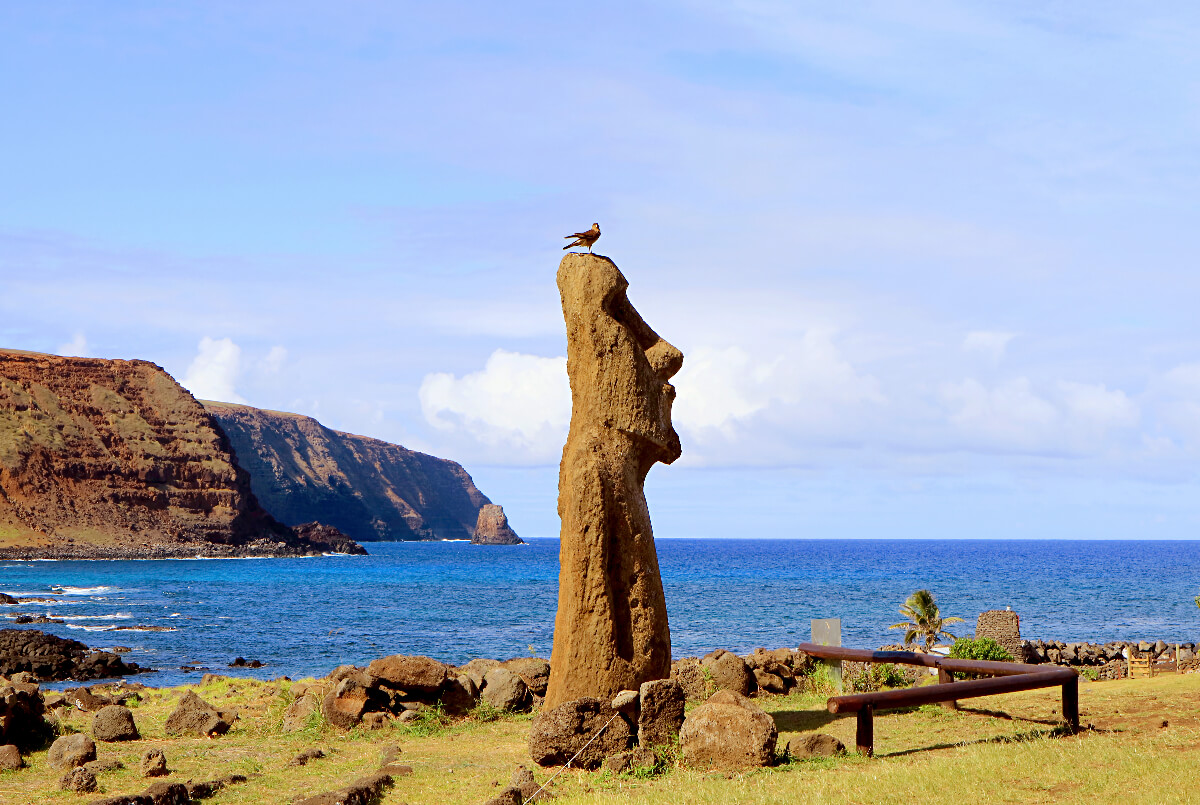
The first inhabitants arrived on the island between 800 and 1200 AD and they created a thriving and industrious culture as evidenced by the numerous and enormous stone moai and other artifacts. The original settlers were South-East Polynesians and eventually divided into two groups based on lineage. By the 15th century there were two confederations (hanau) of social groupings (mata). The western and northern portions of the island were settled by the Tu’u, whose territory included the sites of “Royal Miru ” and the royal capital of Anakena.
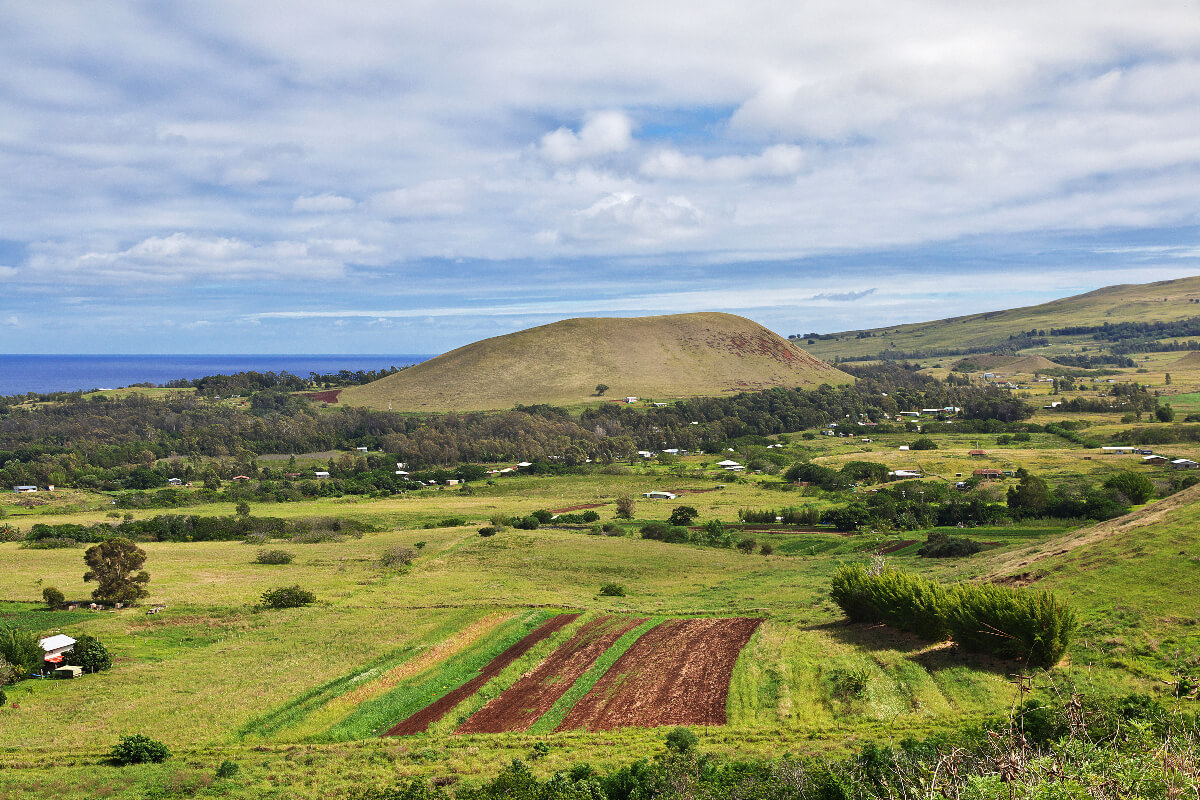
The eastern portion of the island belonged to the “Otu Itu ”. Shortly after the Dutch visit from 1724 until 1750, the “Otu Itu” fought the Tu’u for control of the island. The fighting continued until the 1860’s and famine followed the burning of villages and agricultural fields. Social control vanished as the ordered way of life gave way to lawlessness and predatory bands as the warrior class took over. Homelessness prevailed, with many living in caves, and from 1770 on a period of statue toppling (huri mo’ai) commenced which was an attempt to break the socio-spiritual powers represented by the statues. By the 1860’s no statues were left standing. In addition, aggressive land clearing for agriculture and introduction of the Polynesian rat led to deforestation and by the time of European arrival (the Dutch explorer, Jacob Roggeveen, landed there on Easter Sunday in 1722), the island’s population had dwindled to less than 3,000. European diseases, Peruvian slave raiding expeditions in the 1860’s, and emigration to other islands such as Tahiti further depleted the population, reducing it to a low of 111 native inhabitants in 1877. Chile annexed Easter Island in 1888 and in 1966 the Rapa Nui were granted Chilean citizenship. In 2007 the island gained the constitutional status of “Special Territory”. The 2017 Chilean census registered 7,750 people on the island of whom 3,512 considered themselves Rapa Nui.
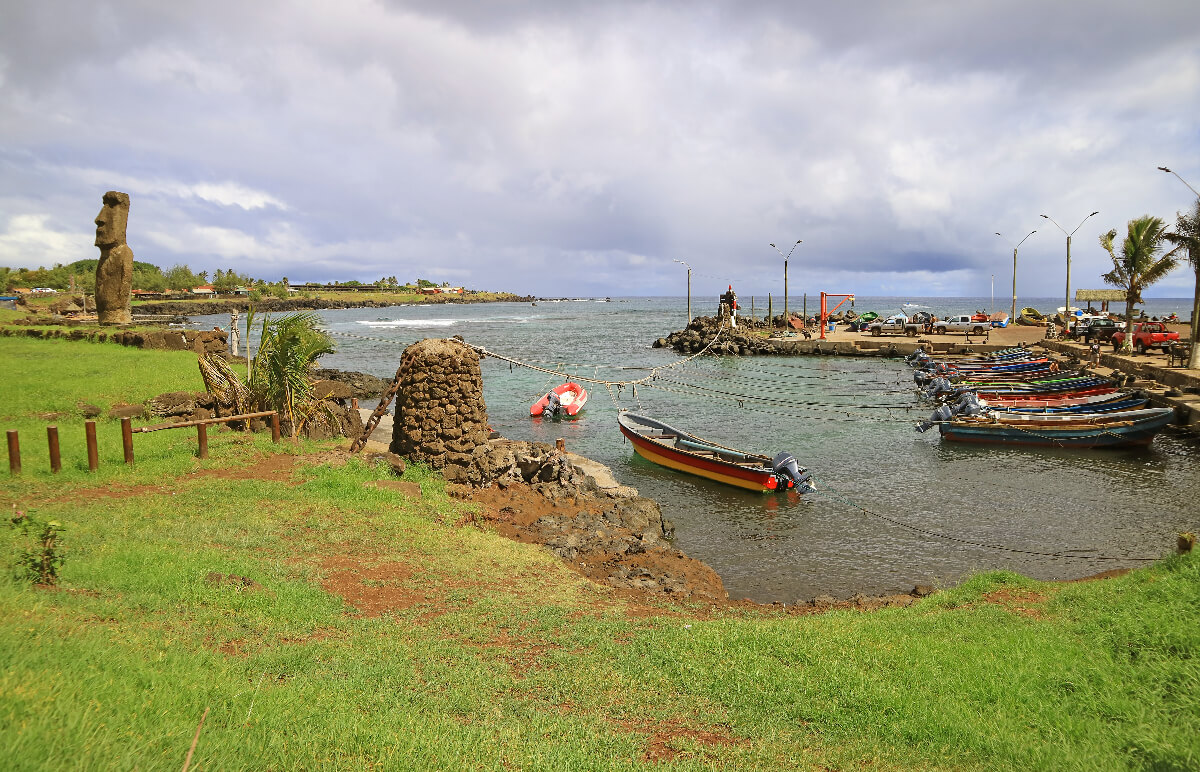
Easter Island is one of the most remote inhabited islands in the world. The nearest inhabited island is Pitcairn Island with 50 residents and is 1,289 miles away. The nearest continental point is Chile 2,182 miles distant.
The island, except Hanga Roa, where the surviving Rapa Nui were confined, was leased by Chile to the Williamson-Balfour company and was run as a sheep farm until 1953. The island was then managed by the Chilean Navy until 1966 at which point the entire island was reopened to its population and the Rapu Nui were given Chilean citizenship. Following the 1973 Chilean coup, the land was broken up and distributed to investors and military bases were constructed. In 1987, the Mataven International Airport was enlarged.
Culture
Mythology is a large part of the native culture. The most important myths are:
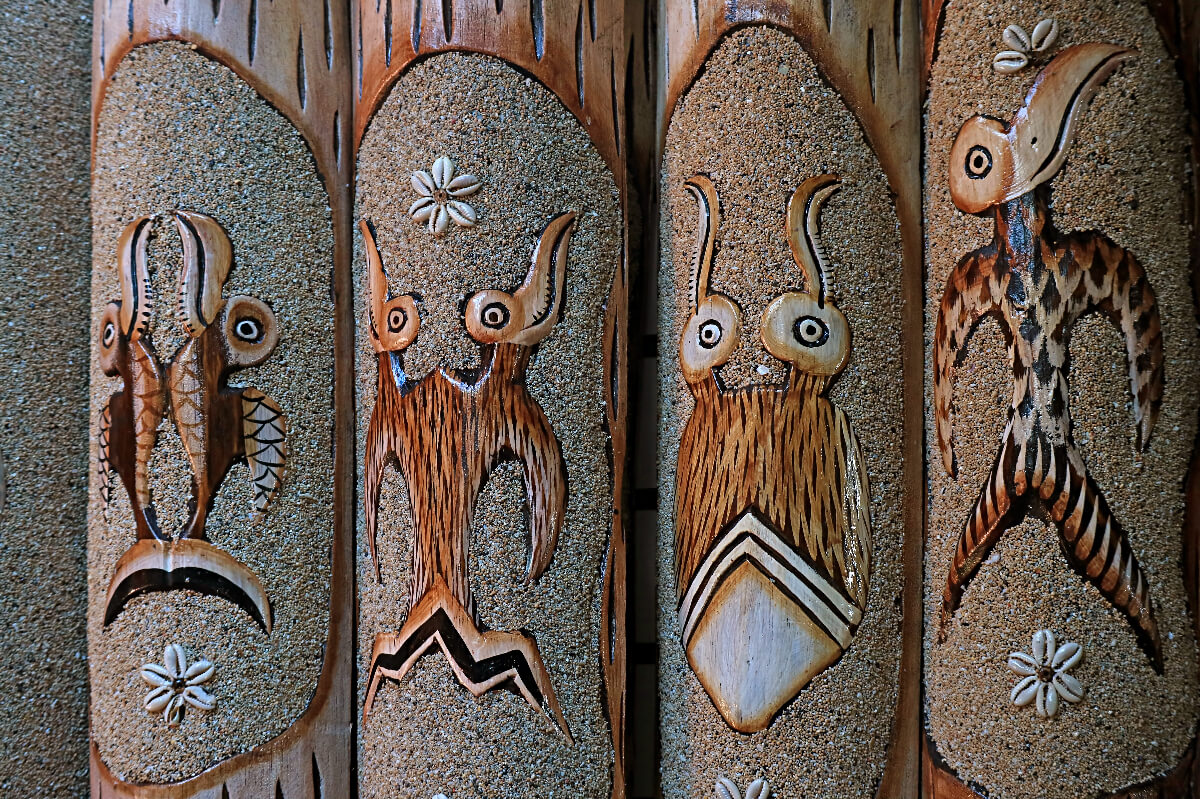
Tangata manu, the Birdman cult which was practiced until the 1860’s.
Makemake an important god.
Aku-aku, the guardians of the sacred family caves.
Moai-kava-kava is a ghost man of the Hanau epe and
Hekai ite umu pare haonga takapu Hanau epe kai noruego – the sacred chant to appease the aku-aku before entering the family cave.
Stone Work
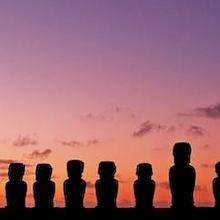
The Rapa Nui people had a Stone Age culture and made extensive use of the local stone. The large stone statues of moai, for which Easter Island is famous, were carved in the period 1100-1680 AD. A total of 887 monolithic statues have been inventoried on the island and in museum collections. Although identified as heads; the statues have torsos most of which end at the top of the thighs. A small number are complete bodies that kneel on bended knees with their hands covering their stomachs. 95% of the moai were carved from compressed volcanic ash which is easy to work and the stone was found at a single site at the extinct volcano Rano Raraku. The native language, Rapa Nui, is a south Polynesian language that has similarities to Hawaiian and Polynesian languages. The official language is Spanish. The island is riddled with caves some of which contain petroglyphs. There are 1,000 petroglyph sites containing 4,000 petroglyphs.
Cuisine Rapa Nui traditional food
Umu Rapa Nui meat, chicken and fish and tubers cooked on the ground in a pit of heated stones.
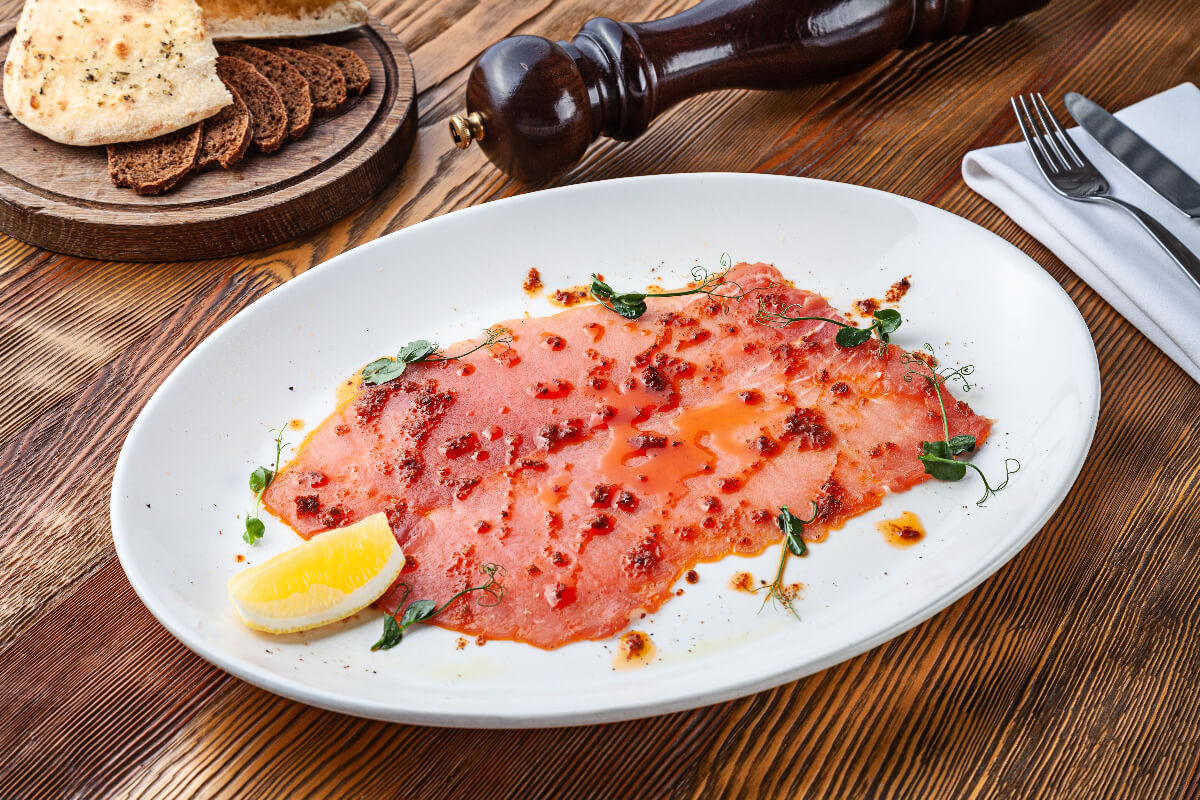
Tuna dishes include:
Tuna Ani, Easter Island Tuna, Kapa Nui, Tuna Ceviche, Tuna Carpaccio, Tuna Patties, French fries with shrimp
Rapa Uni Po’e a dessert very sweet sponge cake
Easter Island honey with no chemicals needed
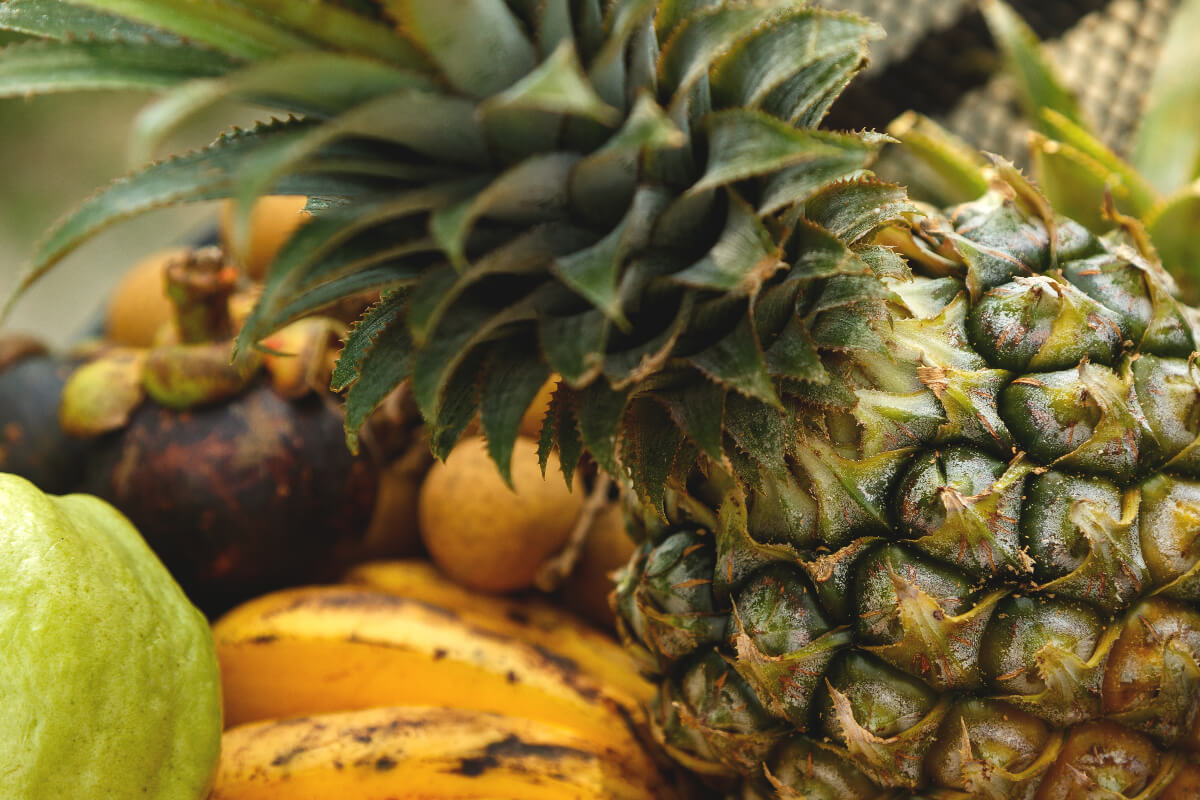
Fruits: Banana, Guava, Pineapple
Sites to visit:
Anakena Beach
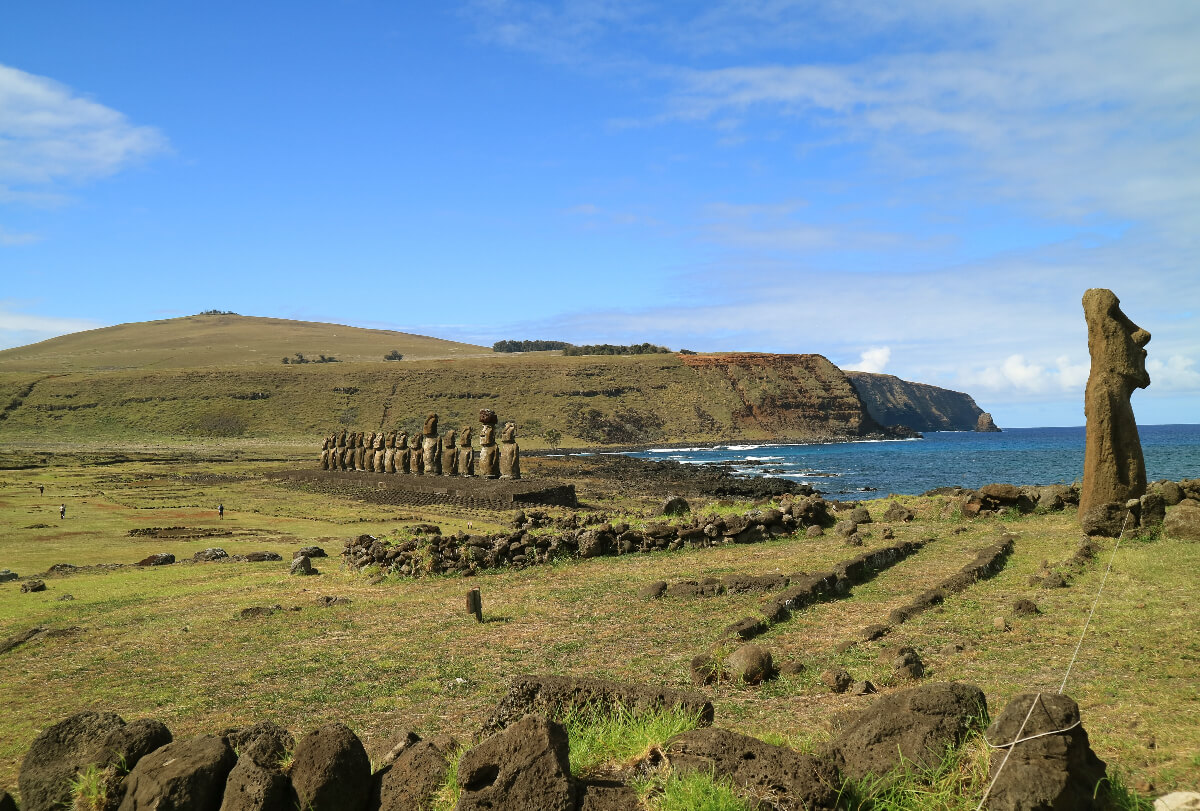
Various Maoi locations including Ahu Tongariki and Ranu Raraku
Ballet Kari Kari
Rapa Nui National Park
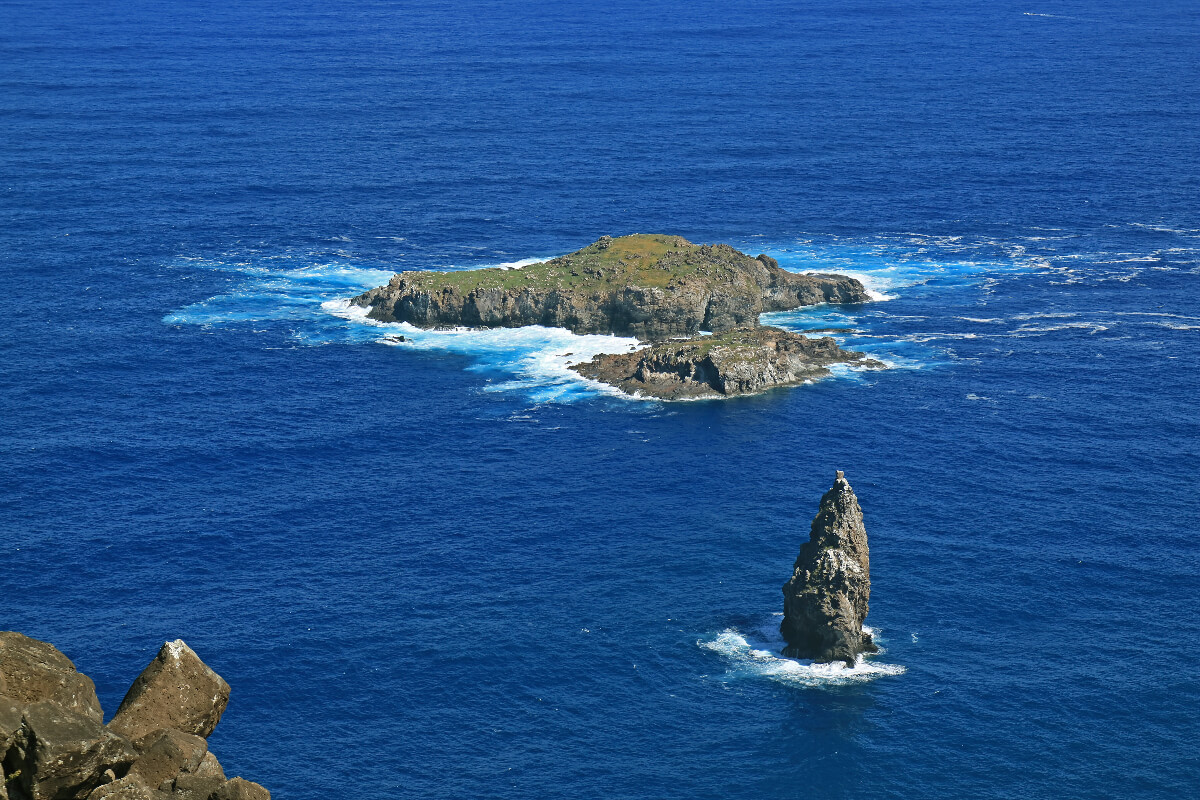
Orongo the ceremonial village where the annual birdman competition was held Ahu Tahai Beach to see the sunrise Anthropological Museum
Holy Cross Church a combination of Catholic and Rapa Nui cultures and art.
No Tour Found