


Corsica is the 13th region of France, to be added to the 12 regions of 2016 reorganization of the mainland. It stands in the Mediterranean Sea, about 100 miles off the coast of the French Riviera. You can reach one of the 2 main cities, Bastia or Ajaccio, by plane or ferry leaving from Nice or Marseille. The Ancient Greeks had a name for this mountainous island, the “Island of Beauty”.
An intense light seems to shine on the dramatic coast of the island. The gulfs of Corsica’s west coast are extraordinary. The jagged headlands and precipitous porphyry cliffs of the Gulf of Porto can’t be compared to any other splendor of nature. These cliffs and red islets are part of a protected natural site covering land and sea, named Reserve of Scandola, a Unesco Heritage Site. South of the Gulf are the “Calanques de Piana”, a décor of flamboyant orange needles and cliffs falling over 900 feet into the deep blue sea waters of the Mediterranean. West Add-ons menu > Get Addof Ajaccio are the “Iles Sanguinaires”, for their deep red color; it literally means the bloody islands. Cap Corse, is a finger of mountain, which extends for 25 miles pointing north, where you can visit the villages of Erbalunga and Cannelle and the beaches of Taramone and Barcaggio. Beaches and marinas are all around. Enjoy and find small boats to rent as many of the coastal treasures are better explored from the sea.
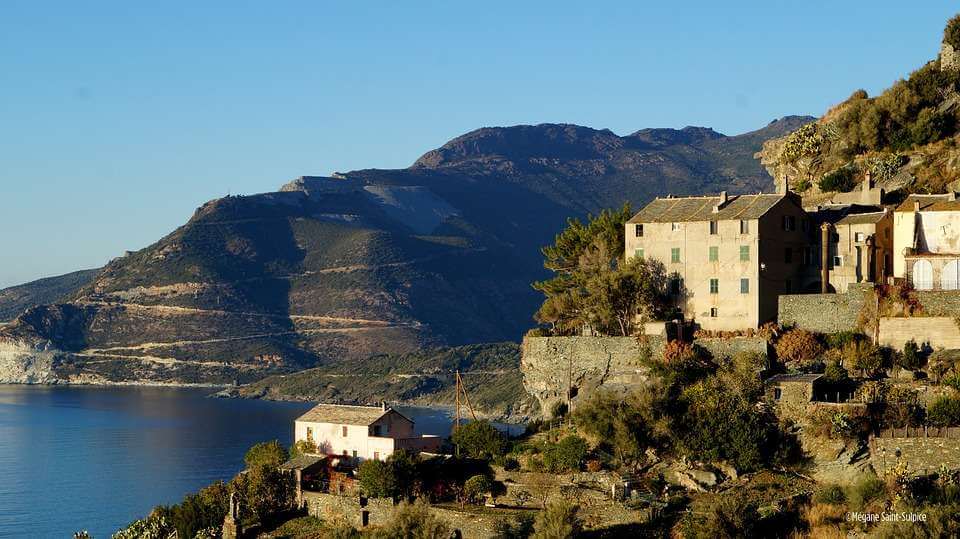
The interior is a maze of winding narrow roads, a delight for sport drivers! Here are villages of tall granite houses overlooking deep gorges and superb forests of oak, Corsican pine and sweet chestnut. “Maquis” and “garrigue” are areas covered with unique vegetation good for sheep and goats. Above the tree line rise high bare summits just a few miles away from the sea. As of today most of the Corsican inland is protected as a Regional Nature Park which offers one of Europe’s finest long distance footpaths for hikers.
In Southern Corsica, also known as Basse-Corse, above the Gulf of Porto, are the Gorges of Spelunca, to be visited by foot, starting from the typical perched village of Ota and arriving in Evisa, another quaint village close to the beautiful forest of Aitone.
In Northern Corsica, also known as Haute Corse, the Restonica Canyon, the lakes of Melo and Capitello, the villages of Venaco (great cheese are made there) and Vivario, Asco, Morosaglia and Stretta are all worth a detour. Filitosa is a major site dating from prehistory with tables, menhirs, statues and circular buildings going back 6000 years. Cucuruzzu is a site from the bronze age, 2000 years old.
Bastia is the capital of Haute Corse to the North. It is quite a busy city where everyone takes their time! Around the old fishing harbor stand the fish market and Terra Vecchia, the low town with narrow streets and St John the Baptist church facing the sea. The high town, Terra Nova, spreads around the citadel and includes the Romieu gardens, the Government Palace and the baroque St Mary of the Assumption Cathedral.
In Haute Corse you will also find Saint Florent, a charming fish harbor and marina, Calvi overlooking the bay which is sheltering a 4 mile long beautiful beach; a local bar in Calvi is part of what is supposed to be the birth house of Columbus… but careful though, there are more than one in Europe!
Corte the capital of independent Corsica in the 18th century, with the citadel at the top, which dominates the old quarters of the high town perched and balancing on the slopes of the mountain; more recent and modern is the low town of Corte.
In Basse Corse, are Piana, Cargese, Ajaccio, Bonifacio, Porto Vecchio and Sartene.
Piana settles on a table land overlooking the Gulf of Porto facing the famous red rocks. It is classified as one of the most beautiful French villages with its white houses, its baroque church, its squares and fountains which are a refreshment from the surrounding hot sun.
White Cargese offers 2 churches facing each other, one Christian, and one Orthodox, curiously served by the same priest. Greek refugees expelled by the Turks, came here in the 18th century.
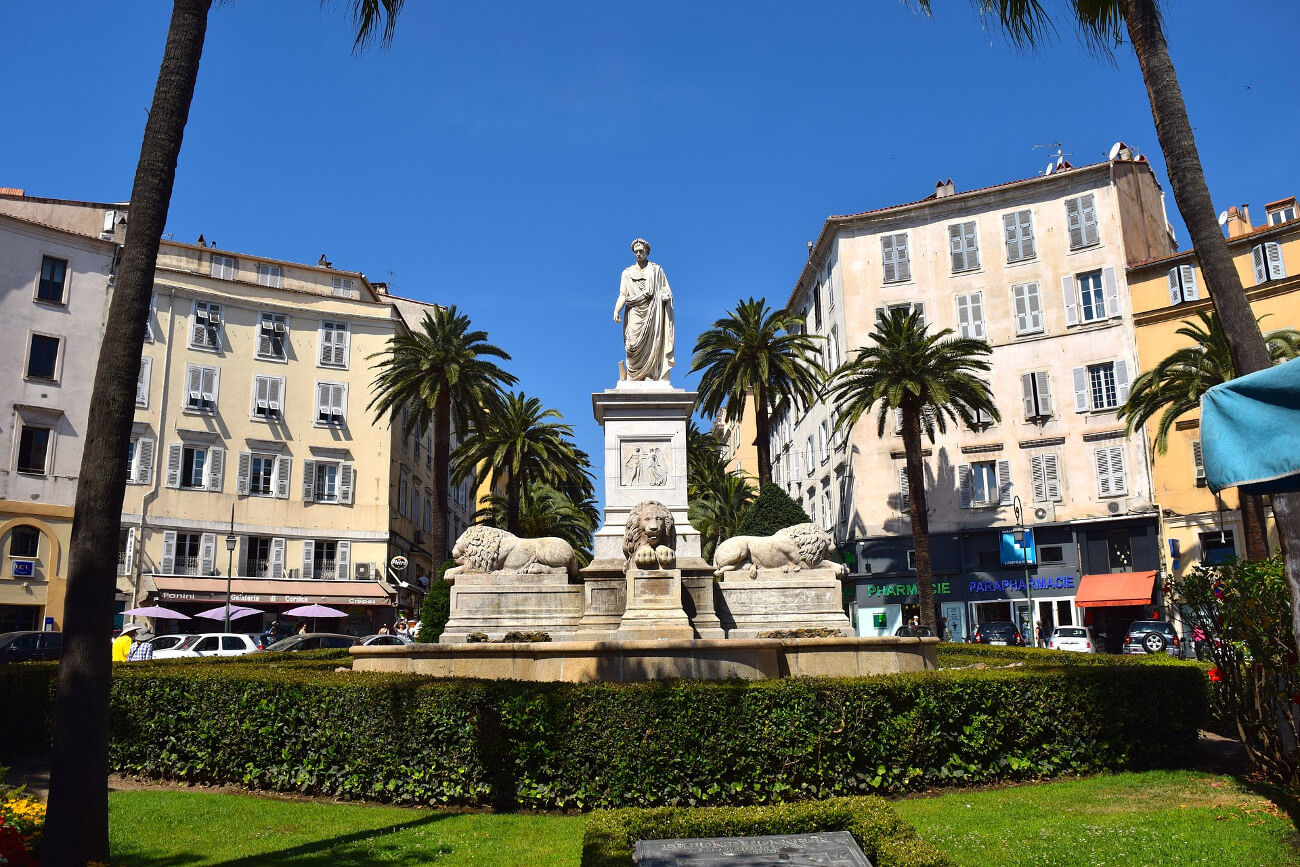
Ajaccio is the birthplace of Napoleon Bonaparte, considered as the “glorious child prodigy” of the island, born in 1769. His memory is still living there. The old town is very pleasant with pastel-colored houses protected by the Genovese Citadel. The Place Marechal-Foch is a fine square where the outdoor social life of Ajaccio takes place in the shade of the palm trees. Musee Fesch and Maison Bonaparte are to be visited.
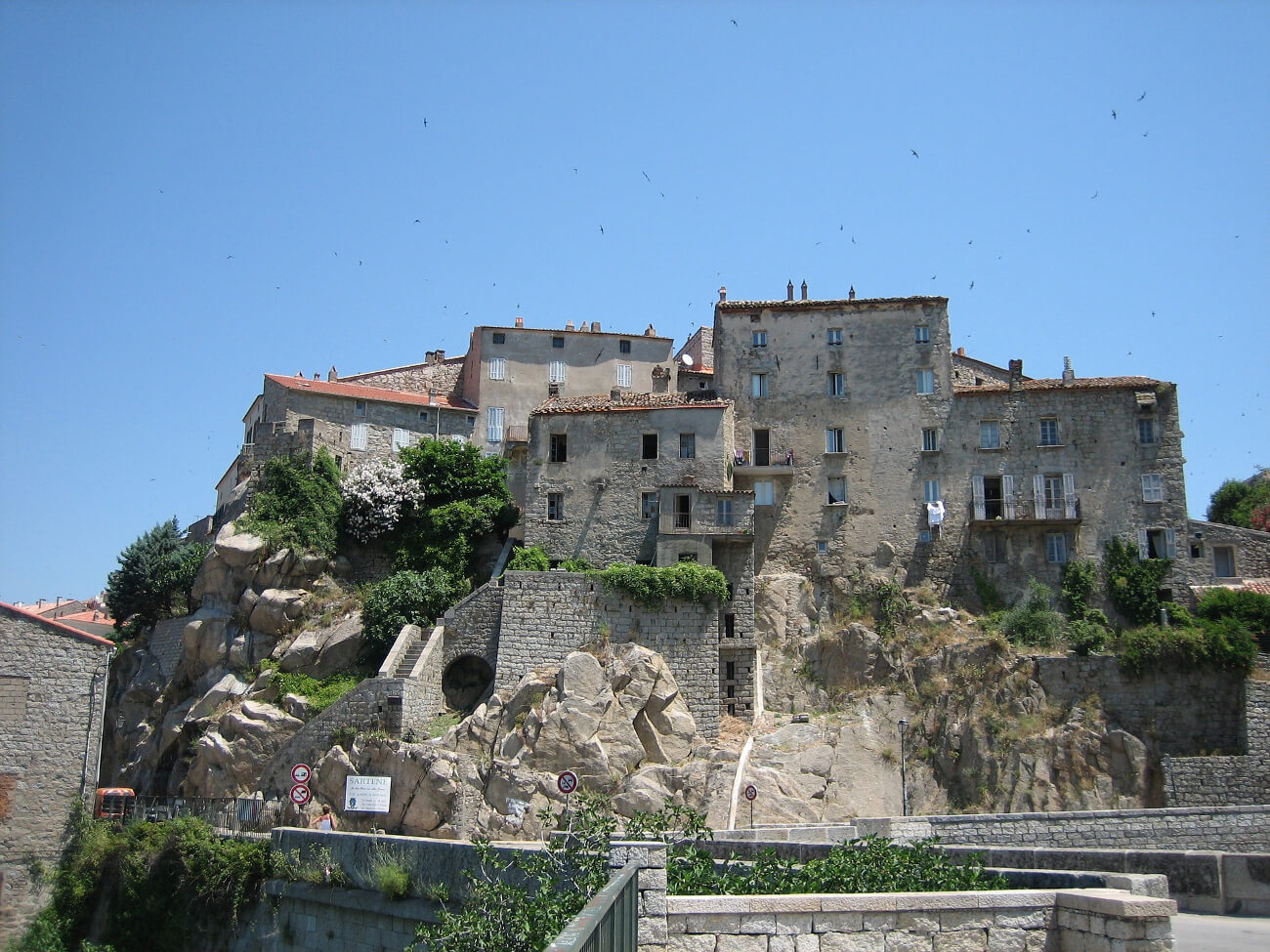
Sartene is built in grey granite. Its medieval quarter is all made of narrow streets and stairs. It is deeply Corsican and known for its men’s choir of polyphonic songs.
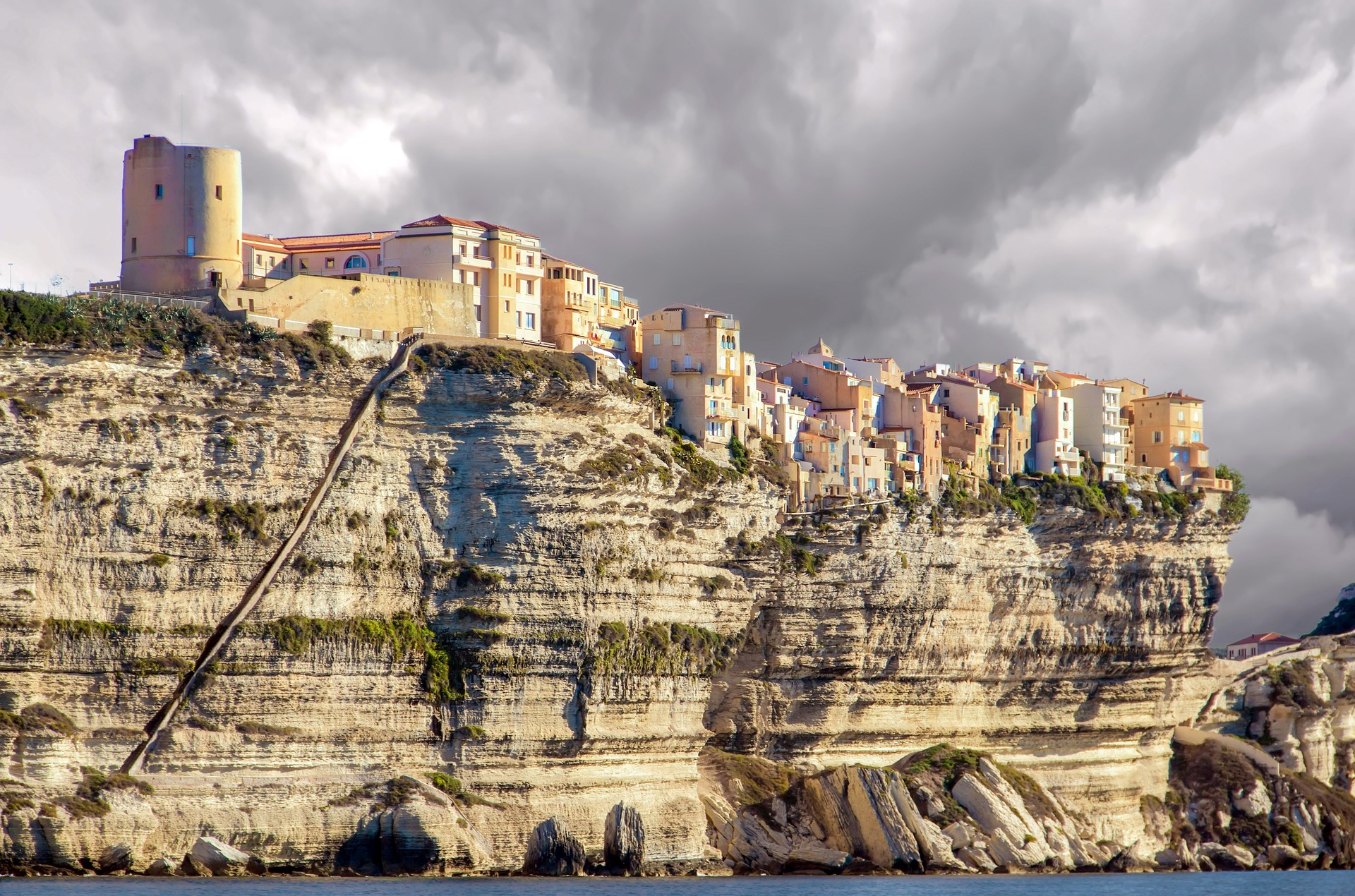
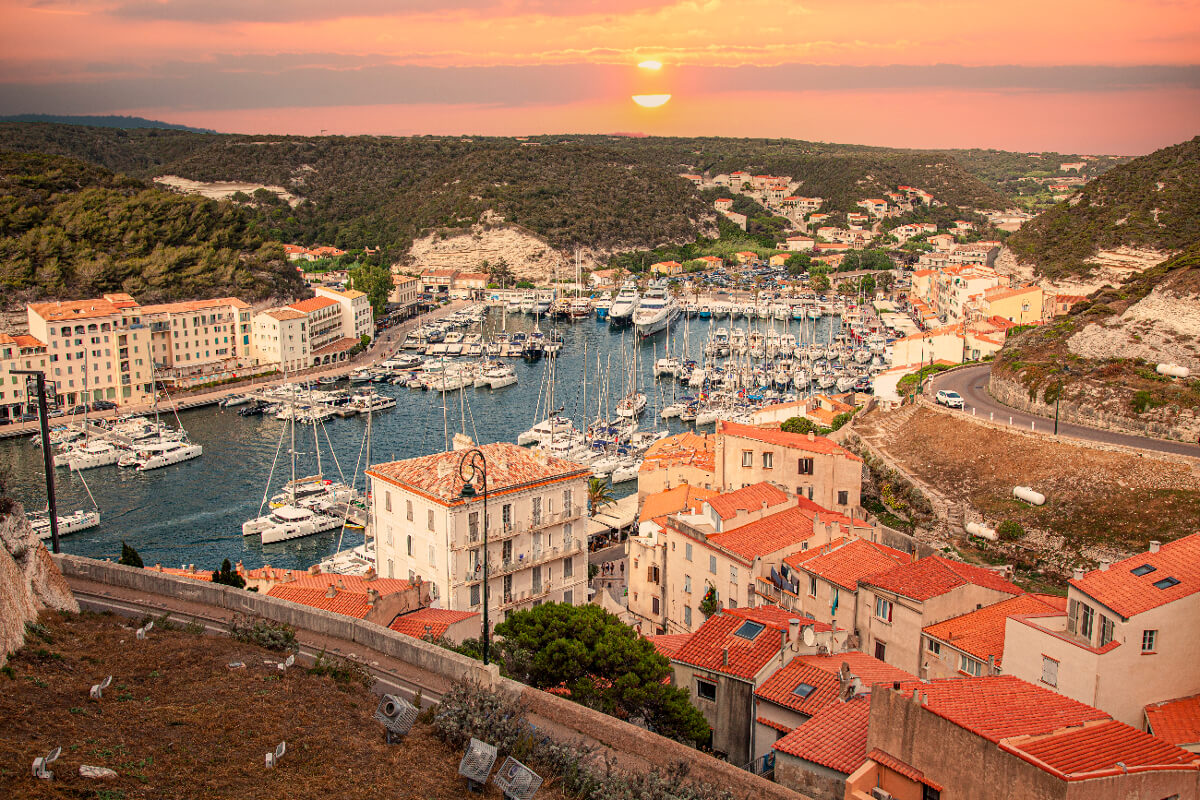
Bonifaccio lines its tall and narrow houses on top of the cliffs, 200 feet above the turquoise waters of the sea. The influence of Pisa and Genoa are present all around in the arcades and loggias of the architecture. The famous King of Aragon, 187 steps sculpted into the cliff, drops directly down to the sea.
Porto Vecchio is a tourist paradise, especially in the summer vacation months with the beaches, bars, restaurants, posh designer boutiques scattered around the marina and in the High Town.
No Tour Found
No Tour Found