


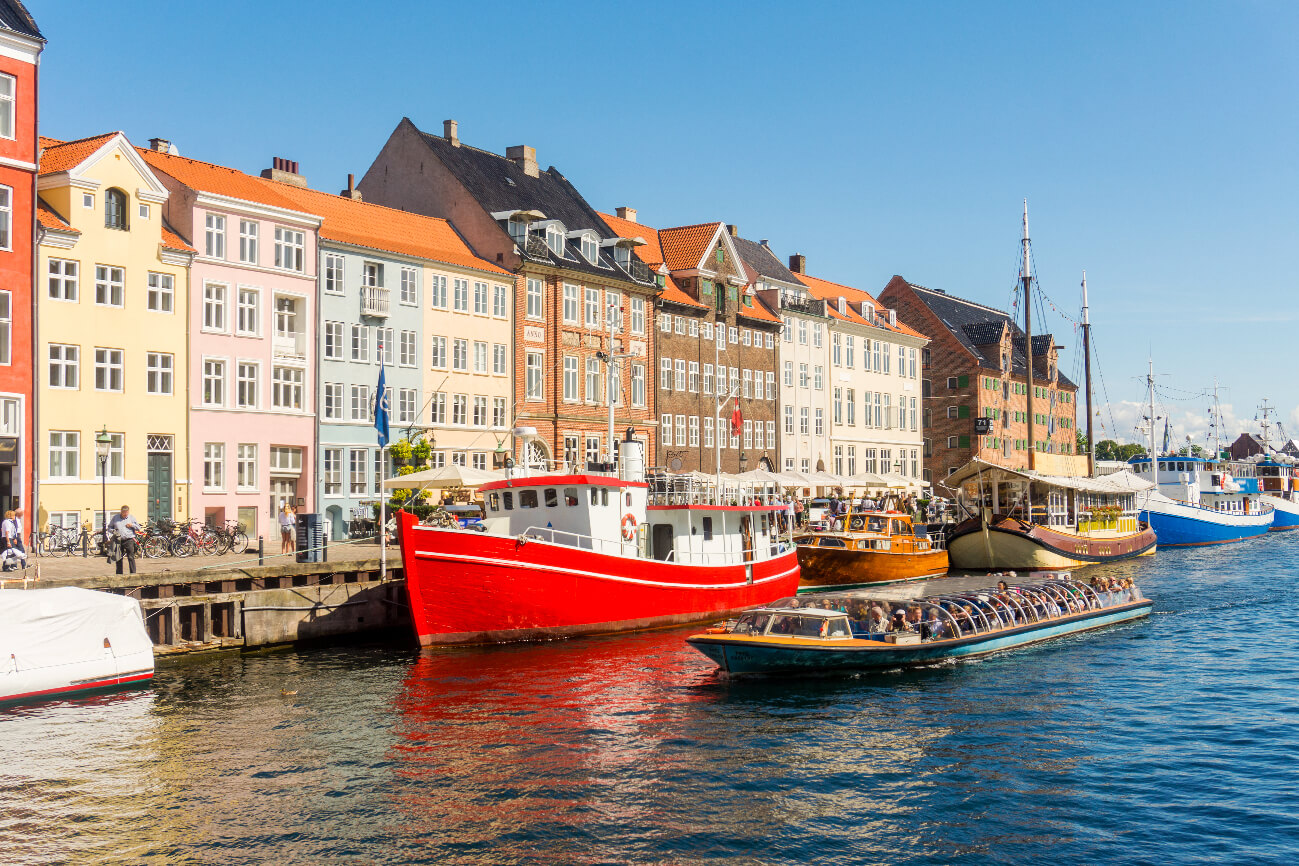
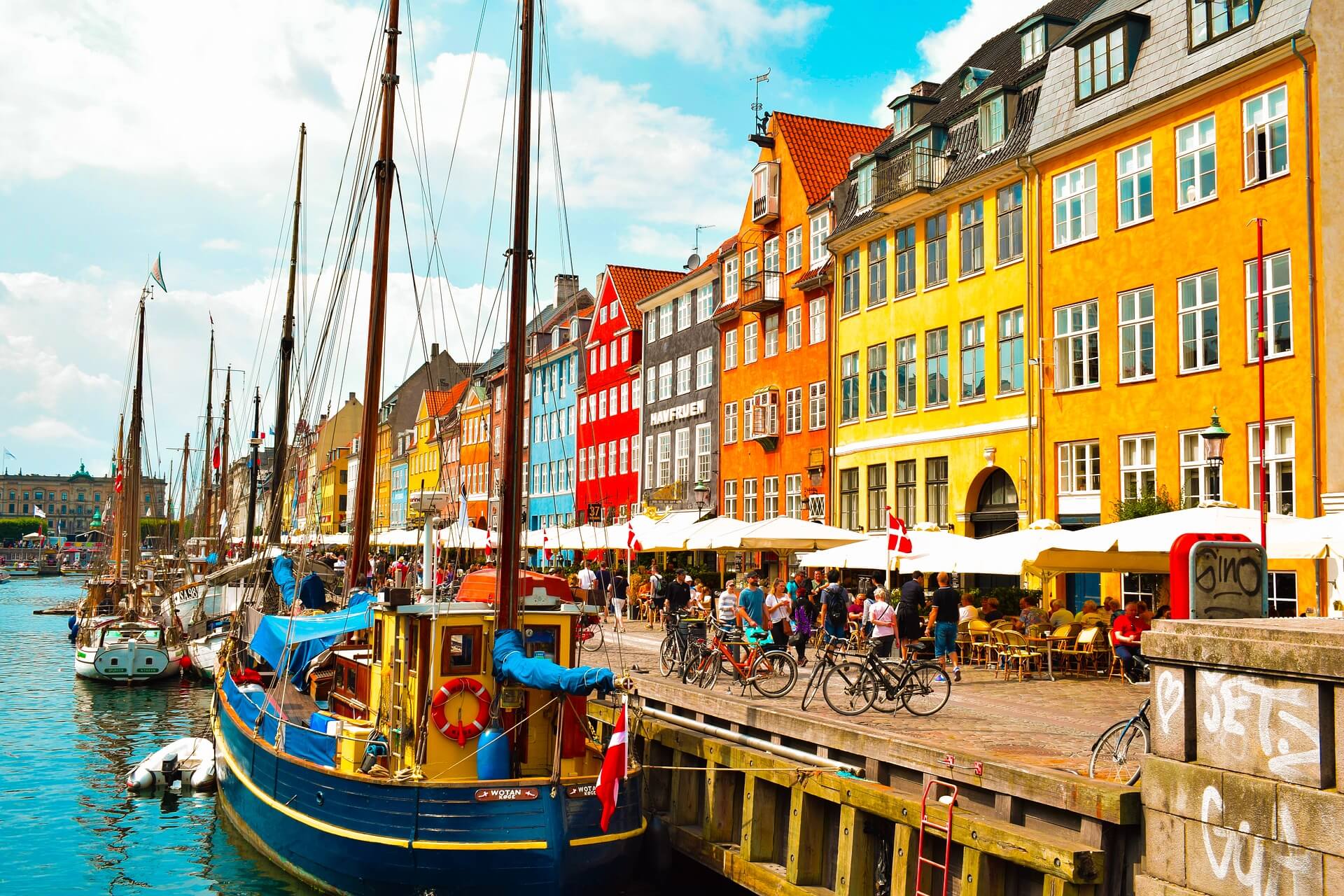
Denmark, officially the Kingdom of Denmark, is a Nordic Country in Northern Europe. Denmark proper is the southernmost of the Scandinavian countries and consists of a peninsula, Jutland, and an archipelago of 443 named islands with the largest being Zealand, Funen and the North Jutlandic Island. The islands are characterized by flat, arable land and sandy coasts, low elevation and a temperate climate. Denmark lies southwest of Sweden and south of Norway and is bordered to the south by Germany. The Kingdom of Denmark is a constitutional monarchy and a unitary state comprising Denmark proper and two autonomous territories in the North Atlantic Ocean; the Faroe Islands and Greenland. Denmark proper has a total area of 16,580 square miles and including the two autonomous territories is 854,000 square miles. Demark proper has a population of 5.85 million of which 800,000 live in the capital city of Copenhagen. The unified kingdom emerged in the 8th century AD as a seafaring nation in the struggle for control of the Baltic Sea. Denmark, Sweden and Norway were ruled together under one sovereign ruler in the Kalmar Union, established in 1397 and ending with Swedish secession in 1523. The areas of Denmark and Norway remained under the same monarch until 1841. Beginning in the 17th century there were several wars with the Swedish Empire and a large amount of land was won by Sweden. After the Napoleonic Wars, Norway was ceded to Sweden, while Denmark retained the Faroe Islands, Greenland and Iceland. The Constitution of Denmark was signed in 1849 ending the absolute monarchy which had begun in 1660. It establishes a constitutional monarchy organized as a parliamentary democracy. The government and national parliament are both seated in Copenhagen. Home rule was established in the Faroe Islands in 1948 and Greenland in 1979. Prehistory saw the first archeological finds in the EEM Interglacial Period which ran from 130,000-110,000 BCE. Modern people inhabited since 12,500 BCE and agriculture was evident in 3900 BCE. The Nordic Bronze Age from 1800-600 BCE was marked by burial mounds which included lurs and the Sun Chariot. During the pre-Roman Iron Age 500 BCE-1AD native groups began emigrating south and the first tribal Danes entered in the German Iron Age 1-400 AD. The Roman provinces traded with the Danes and there is also evidence of a strong Celtic Culture as reflected in the finding of the Gundestrup Cauldron. From the 8th to the 10th centuries AD, the wider Scandinavian region was the source of the Vikings. This age was characterized as expansion by Viking seafarers who colonized, raided and traded in all parts of Europe. Danish Vikings conquered parts of England and Normandy, France. The Danes became a Christian nation in 965. Denmark converted to Lutheranism in 1536. Denmark has a temperate climate with mild winters and cool summers. Denmark has two ecoregions, the Atlantic and Baltic mixed forests. The land is 13% forested and animals include Roe deer, polecats, hares, hedgehogs and sea life includes Harbor porpoises, herring and a large variety of other fish.
Culture
Denmark shares a similar basket of cultures with its Scandinavian partners, Norway and Sweden. It is one of the most culturally progressive nations in the world. In 1969 it legalized pornography and in 1989 introduced gender-neutral marriages which are performed by the Church of Denmark, the national church which has a membership that includes 74% of the population. The major holiday is Jul (Danish Christmas) celebrated throughout the month of December. There are five UNESCO World Heritage sites in Denmark; the Moravian Church Settlement, the Jelling Mounds, Kronborg Castle, Roskilde Cathedral and the Par Force Hunting Landscape. Danish architecture was firmly established in the Middle Ages with Romanesque, then Gothic Churches and cathedrals sprang up around the country. From the 16th century, Dutch and Flemish designs were popular and were used to build magnificent royal castles and palaces in the renaissance style. The 19th century saw the National Romantic Style. The first known Danish literature is from the 10th and 11th centuries. In the late 19th century literature was seen as a way to influence society. Romanticism influenced Hans Christian Anderson. Painting has been a prominent form of artistic expression with impressionism and abstract painting and surrealism.
Cuisine
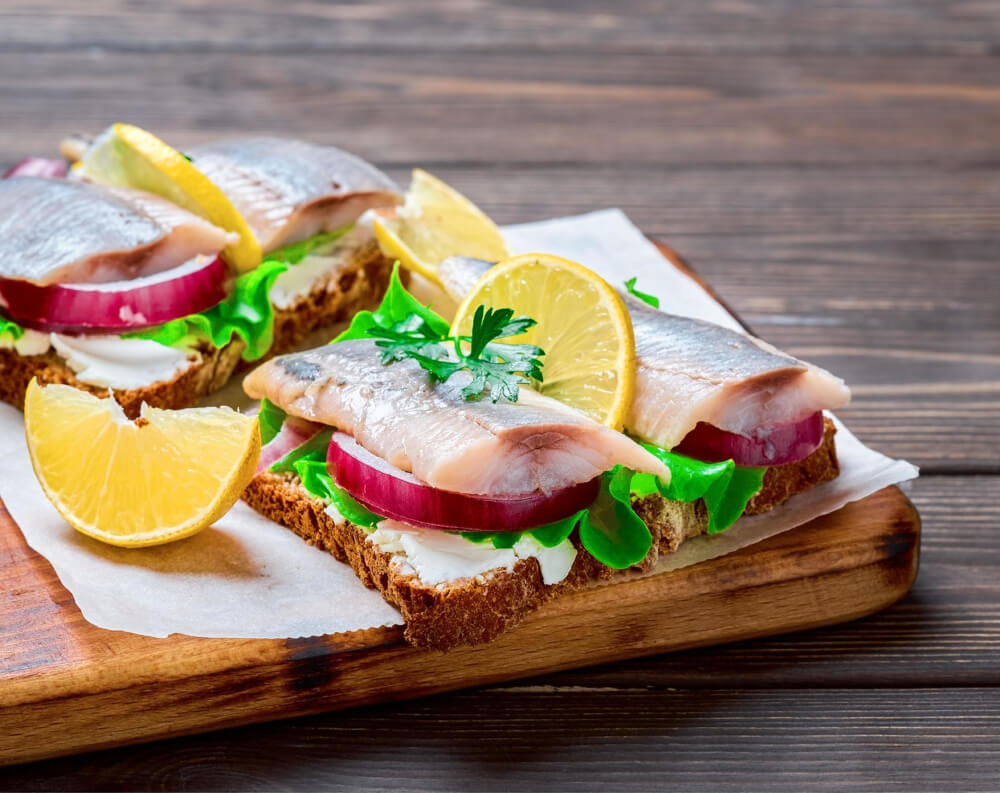
The traditional cuisine of Denmark, like that of other Nordic countries, consists mainly of meat, fish, and potatoes. Danish dishes are highly seasonal stemming from the country’s agricultural past, its geography and its long, cold winters. Open sandwiches on rye bread are known as smorrebrod, which is a usual lunch and can be considered a national specialty. Hot meals consist of ground meats such as frikadeller and hakkebøf or kogt torsk with mustard and sauce trimmings. Denmark is known for its Carlsberg and Tuborg beers, akvavit and bitters.

Cities
Copenhagen
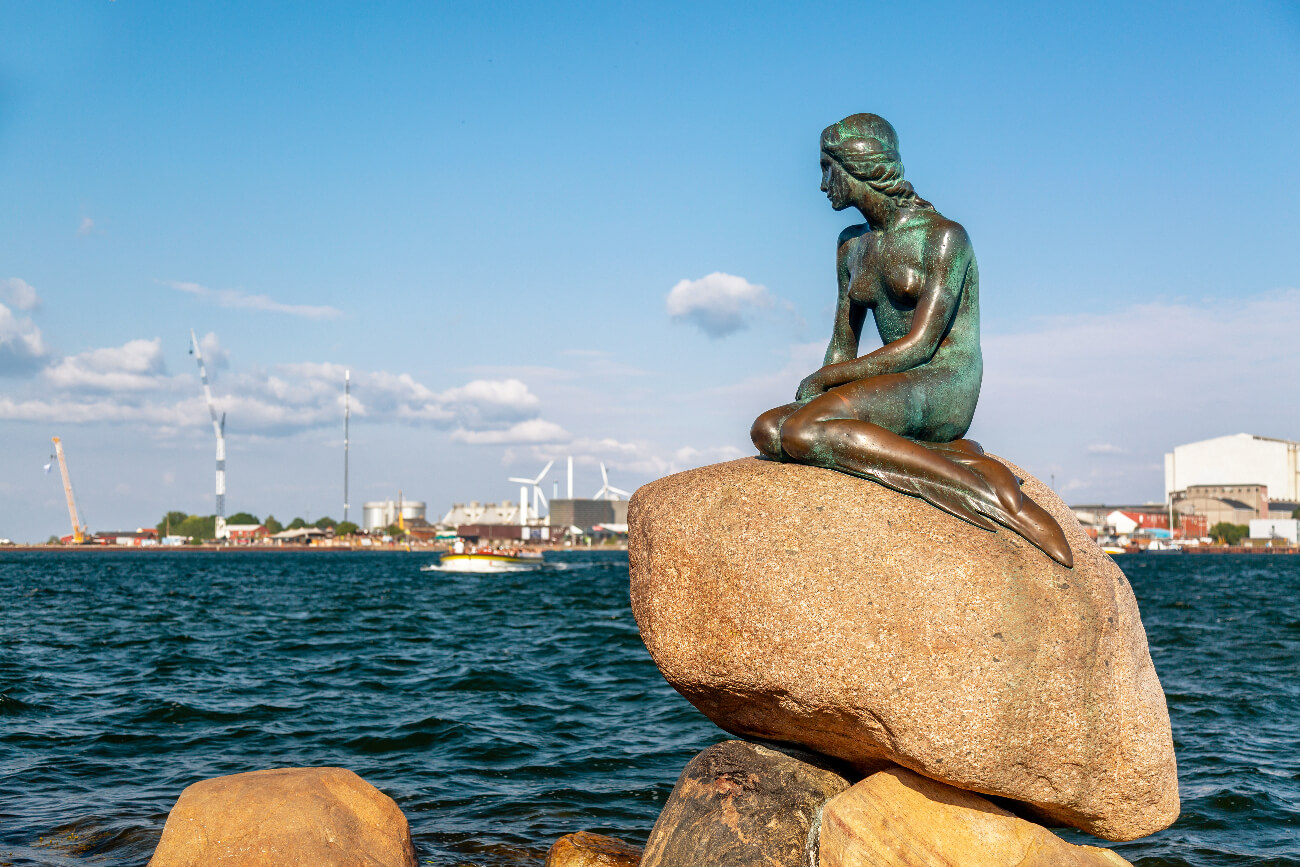
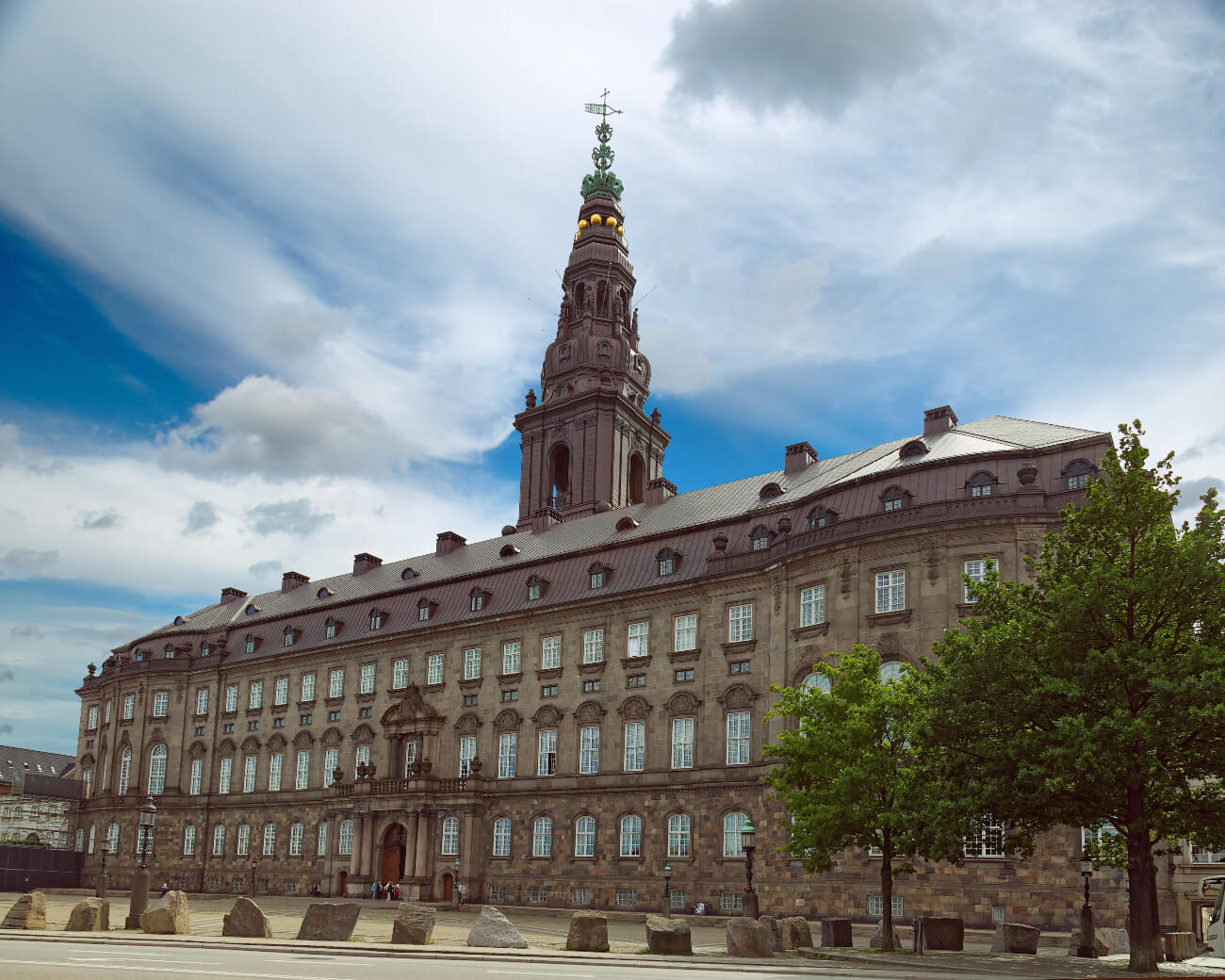
Copenhagen has a population of 800,000 and is located on the eastern coast of the island of Zealand. It was originally a Viking village founded in the 10th century. Copenhagen became the capital of Denmark in the 15th century and was the administrative city and capital of the Kalmar Union which governed all of Scandinavia. The city is now the administrative, economic and political center of the country. Attractions in the city include Tivoli Gardens, the Little Mermaid Statue, the Amalienborg and Christianborg Palaces, Rosenborg Castle and many museums, restaurants and nightclubs.
Tourist Attractions
In and Near Copenhagen, Tivoli Gardens, restaurants and tall ships. National Museum of Denmark, Museum of Natural History, 17th century Oresund Bridge, Round Tower Observatory built 1642. Lyngby Open Air Museum
Nyhavn multicolored houses
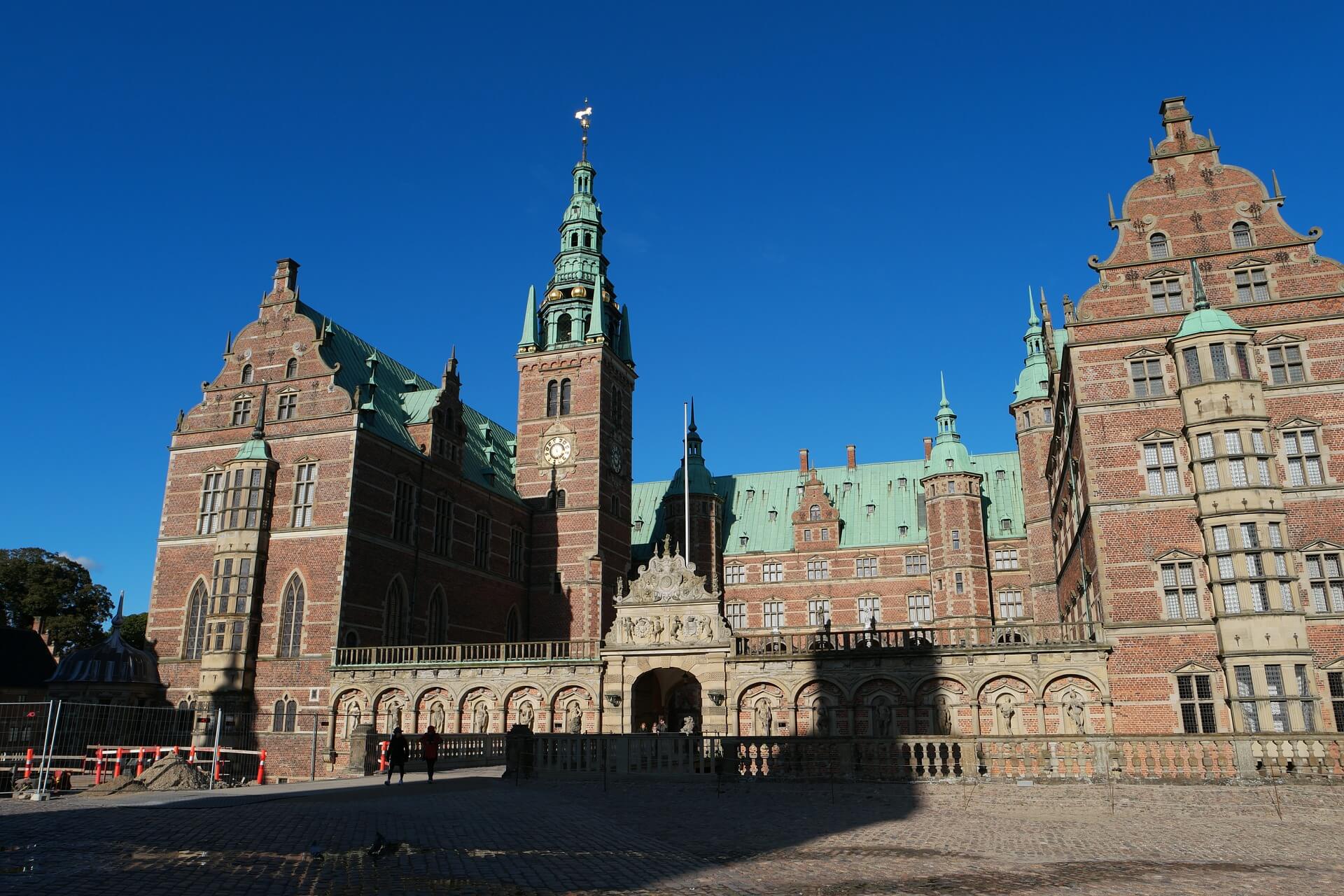
Frederiksborg Palace
Christianborg Palace 800 years old
Outside Copenhagen:
Kronsberg Castle the setting for Hamlet
The Viking Ship Museum
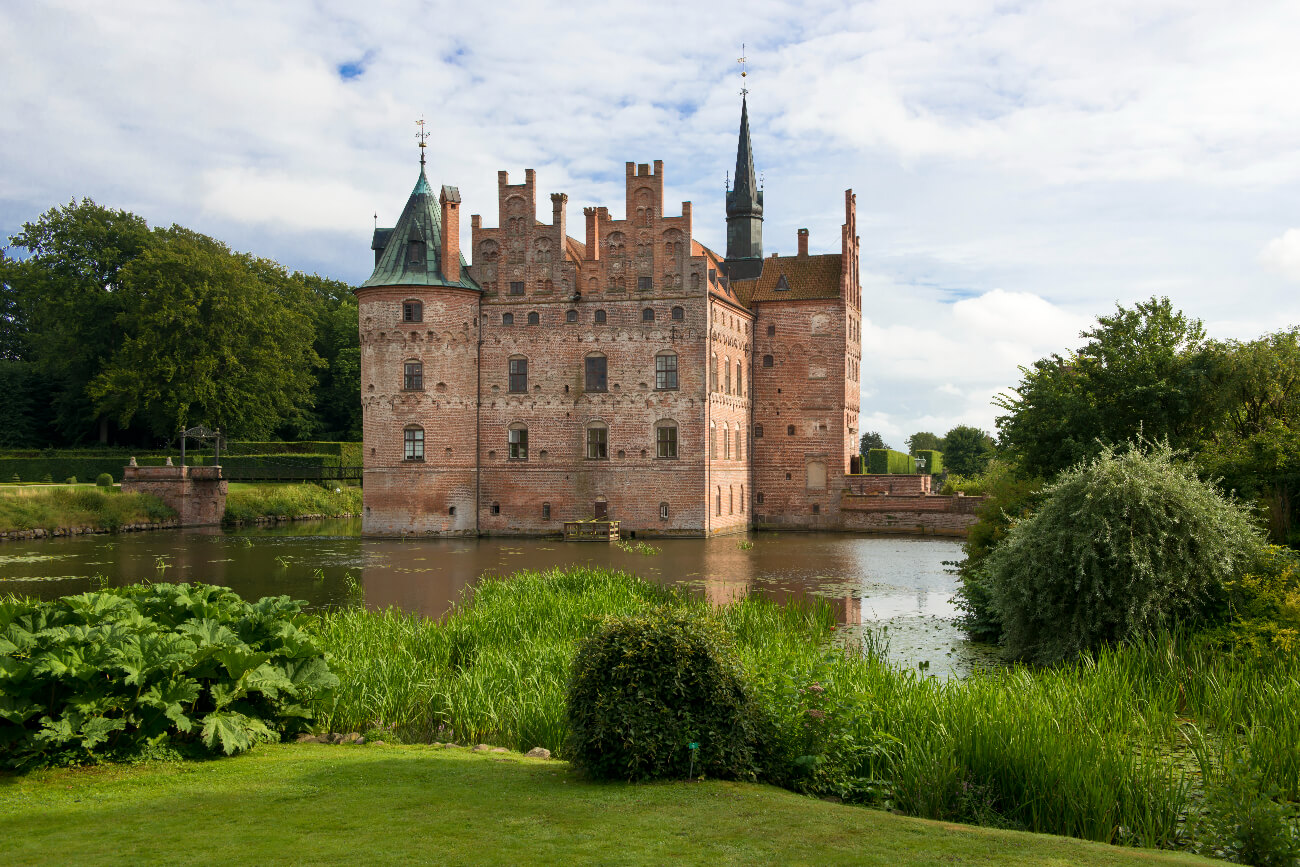
Egeskov Castle walls and moat were built in 1554.
No Tour Found
No Tour Found