


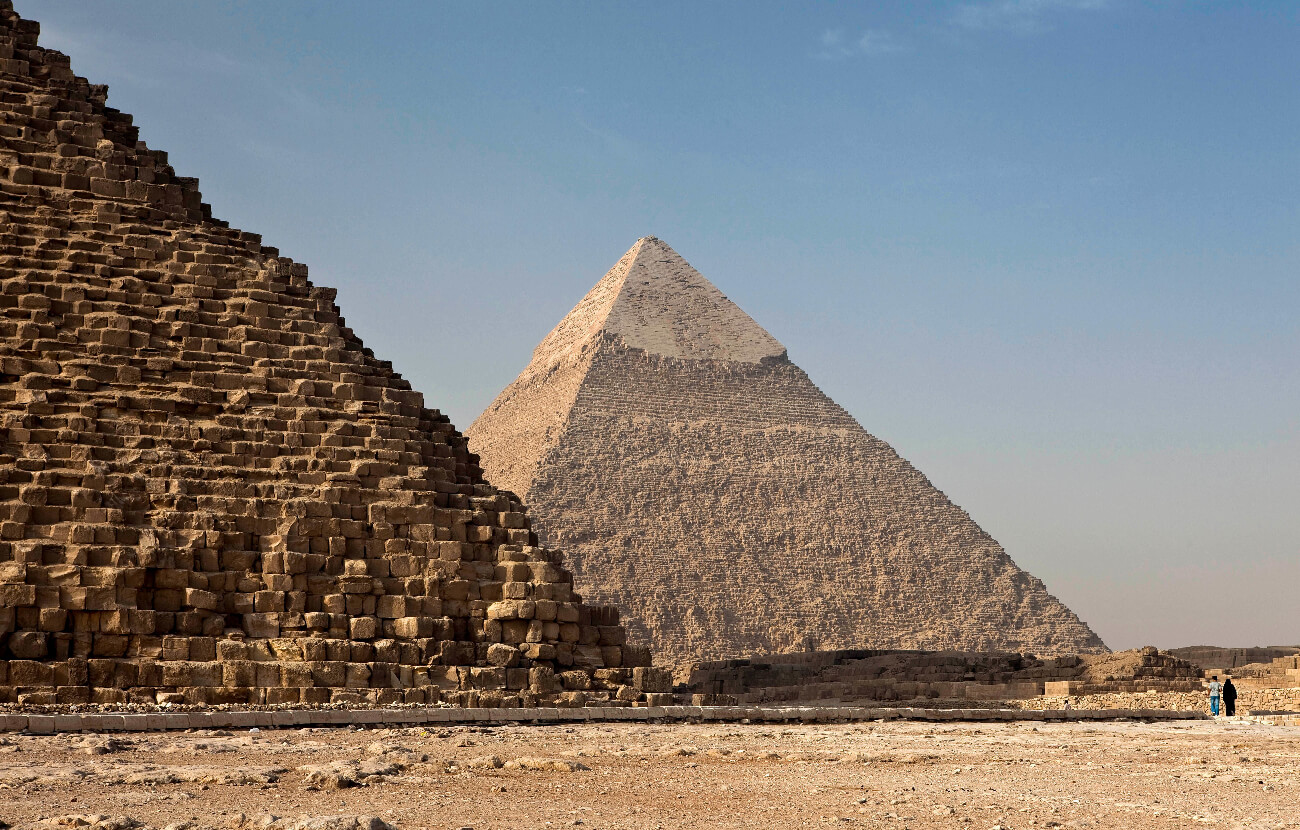
The Greek historian, Herodotus, called Egypt, “The Gift of the Nile”.
For almost 3,000 years (3100 BCE until its conquest by Alexander the Great in 332 BCE) Ancient Egypt was the dominant civilization in the Mediterranean World. From the great pyramids of the Old Kingdom to the military victories of the New Kingdom, Egypt was the driving force in military, political and religious evolutions. The picture that emerges is of a culture with few equals in the beauty of its art, its architecture and the richness of its religious traditions.
The history of the independent Empire of Egypt is divided into nine time periods:
Egypt is located in the northeastern part of Africa and is bordered by Libya to the west, Sudan to the south, Israel in the northeast, the Mediterranean Sea to the north, the Red Sea and the Gulf of Aqaba to the east. The topography of the country is dominated by the Nile River which flows 750 miles. Egypt is divided into four regions:
Lower Egypt consists of the Nile Valley and Delta.
The Eastern Desert consists of 86,000 square miles and makes up 1/4 of the land.
The Western Desert encompasses 263,000 square miles and about 2/3 of the land of the country.
The Sinai Peninsula totaling 23,000 square miles.
Egypt lies within the northeastern desert belt and has a climate with low annual rainfall and lots of sunshine. Winters are cool and mild (November – March) and summers are hot (May-September).
The population is predominately Arabic and belongs to the Sunni sect of Islam and there is a substantial Coptic minority (about 20 million) who belong to the Coptic Orthodox church. The population is heavily concentrated along the Nile River Delta.
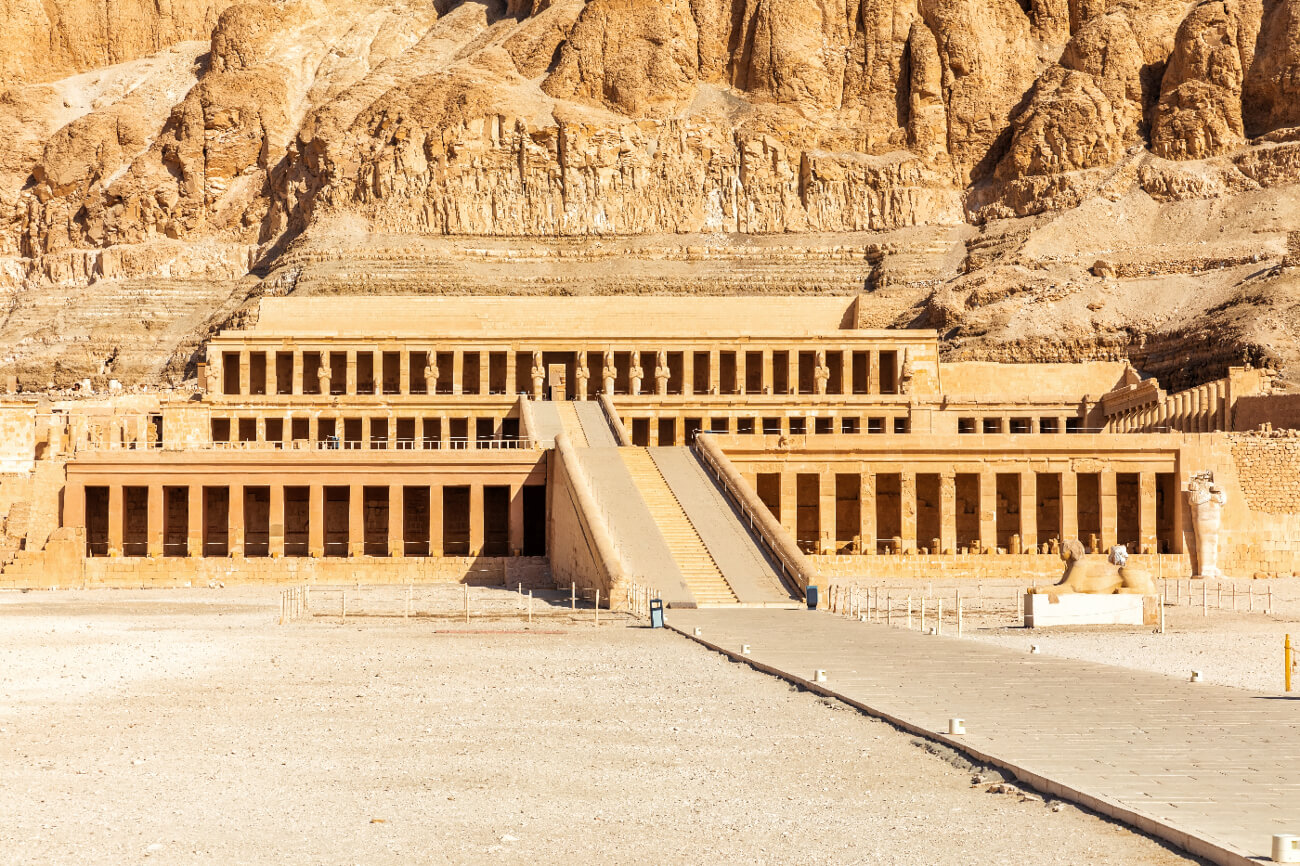
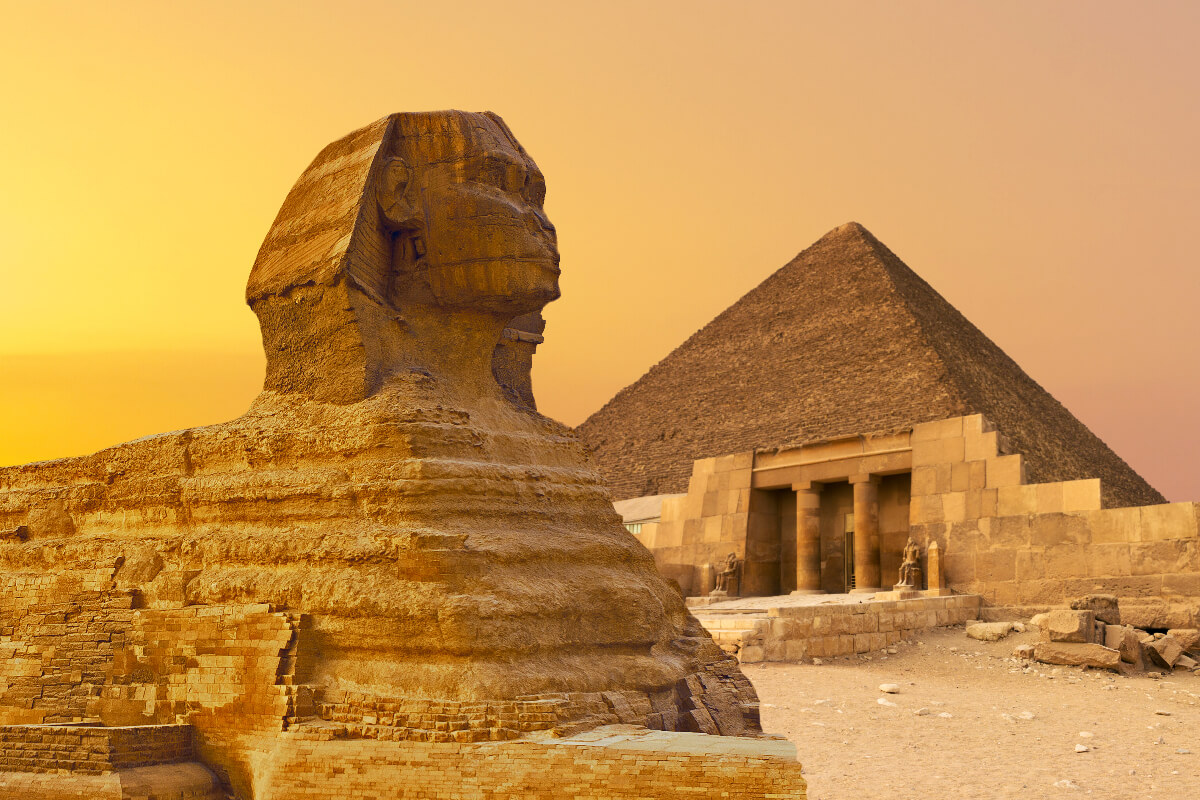
Very few, if any countries of the world, have more engaging, interesting and important historical sites than Egypt. Numerous locations are designated as UNESCO World Heritage Sites. Representing the Ancient World are the city of Memphis and its necropolis, the Pyramid fields including the Pyramid of Giza, the stepped Pyramid at Dahshur, and the city and necropolis at Thebes. Upper Egypt includes the villages of Karnak and Luxor and the many tombs and ruins associated with “The Valley of the Kings” and “The Valley of the Queens”.
Sites from Roman and Byzantine times include the Byzantine Monastery of Saint Catherine’s on Mount Sinai, and the early Christian Church at Abu Miner, near Alexandria. From the Islamic period, there is the old city of Cairo, often called Islamic Cairo which has beautiful Mosques, Citadels, Madrasahs, Bathhouses and Fountains.
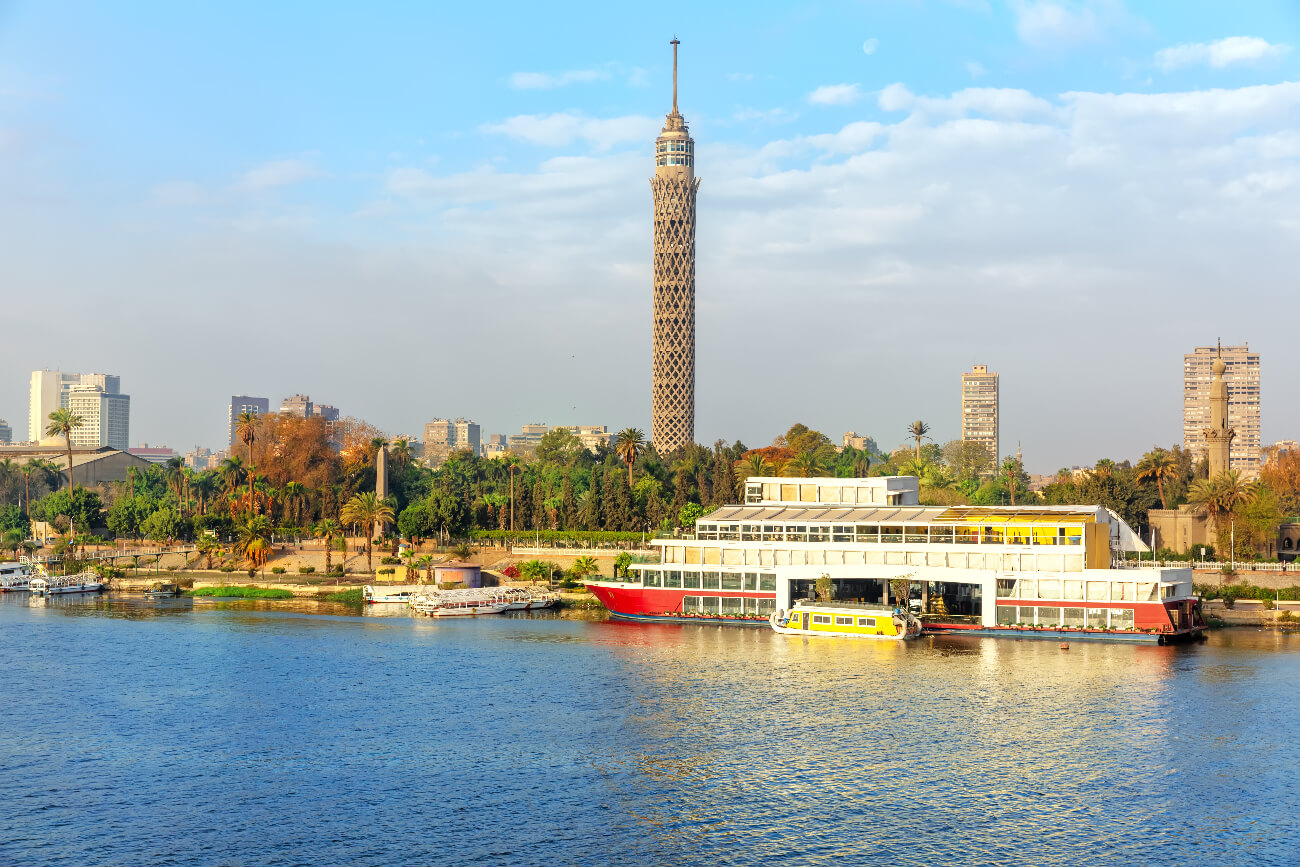
Contemporary European influence can be seen in Alexandria and Cairo. Ultramodern structures include the new incarnation of the ancient library in Alexandria and the Bibliotheca also in Alexandria. Important construction in the late 19th and early 20th centuries included the Egyptian Museum (1902). The Coptic Museum (1910), and the Museum of Islamic Art (1881) which are all located in Cairo as well as the Greco-Roman Museum (1892) in Alexandria. The Grand Egyptian Museum (GEM) is to open soon in Giza about one mile away from the Pyramids. It will be the largest archeological museum in the world and you will be able to see the famous Tutankhamun collections with pieces never shown before.
Places Not to be Missed:
Luxor Once an Ancient Egyptian capital, Luxor, today, is the world’s greatest open air museum. From the tomb of Tutankhamen to the Valley of the Kings and the magnificent sunset views at the majestic temple complexes of Karnak and Luxor to the exciting and fun Nile cruises the experience is not to be forgotten. Luxor has given its name to the southern half of the ruins of the Ancient Egyptian city of Thebes.
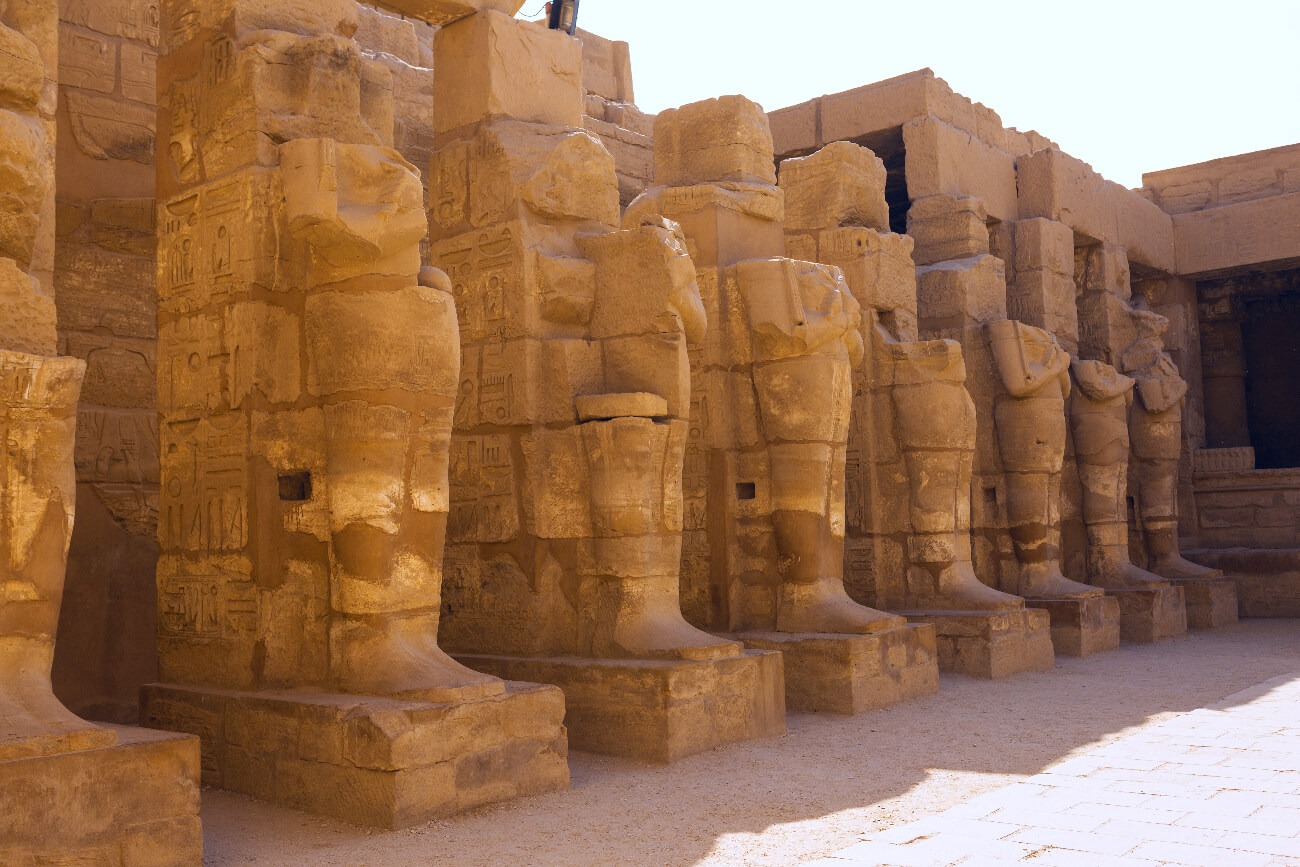
 Karnak The Karnak Temple Complex comprises a vast number of temples, chapels, and pylons and is known today as the world’s greatest open air museum. Karnak is located near Luxor and began to be built around 2000 BCE and construction continued for nearly 2000 years.
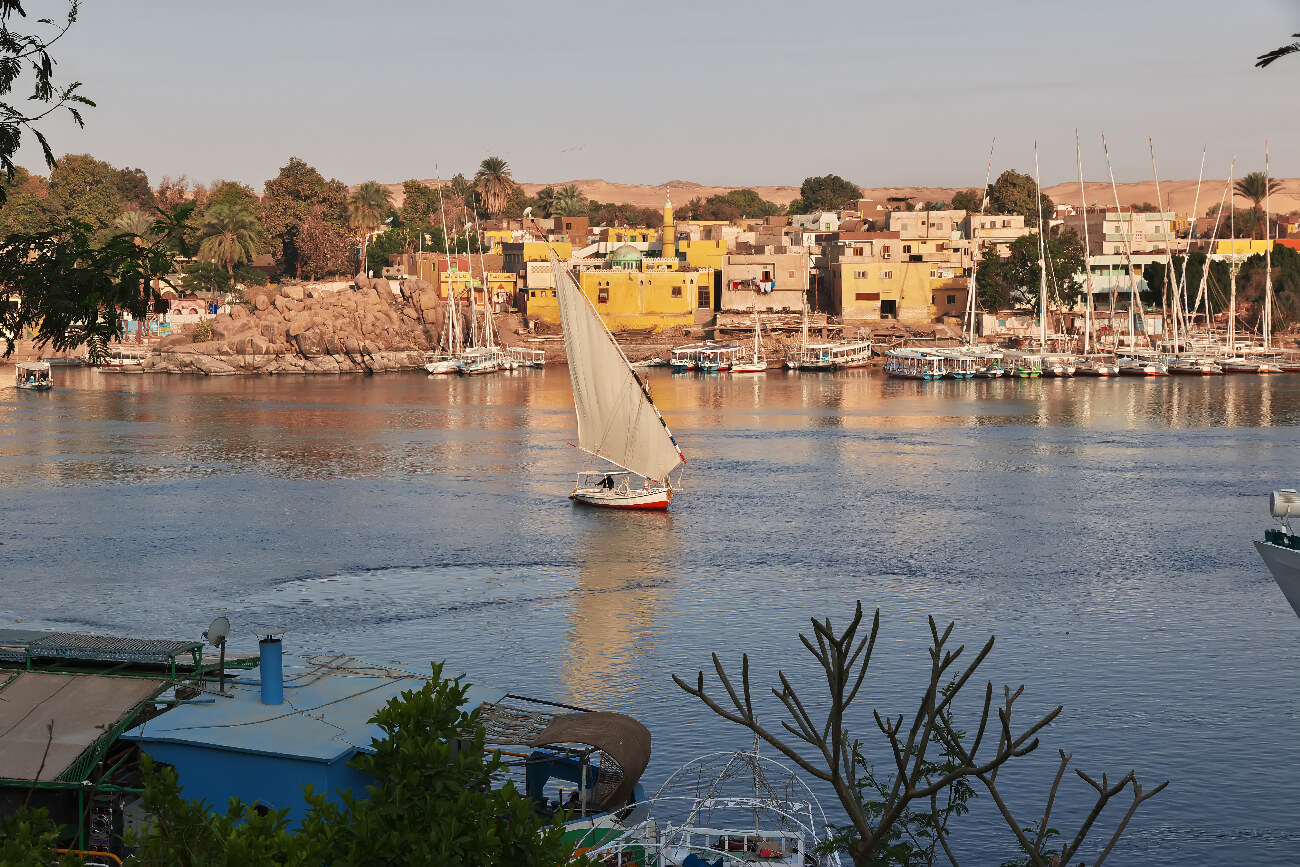
Aswan is located just north of the huge Aswan Dam on the east bank of the Nile. The city is part of the UNESCO Creative Cities Network in the category of Craft and Folk Art. Places to visit include the Nubian Museum, the Nubian Village and the temple of Philae.
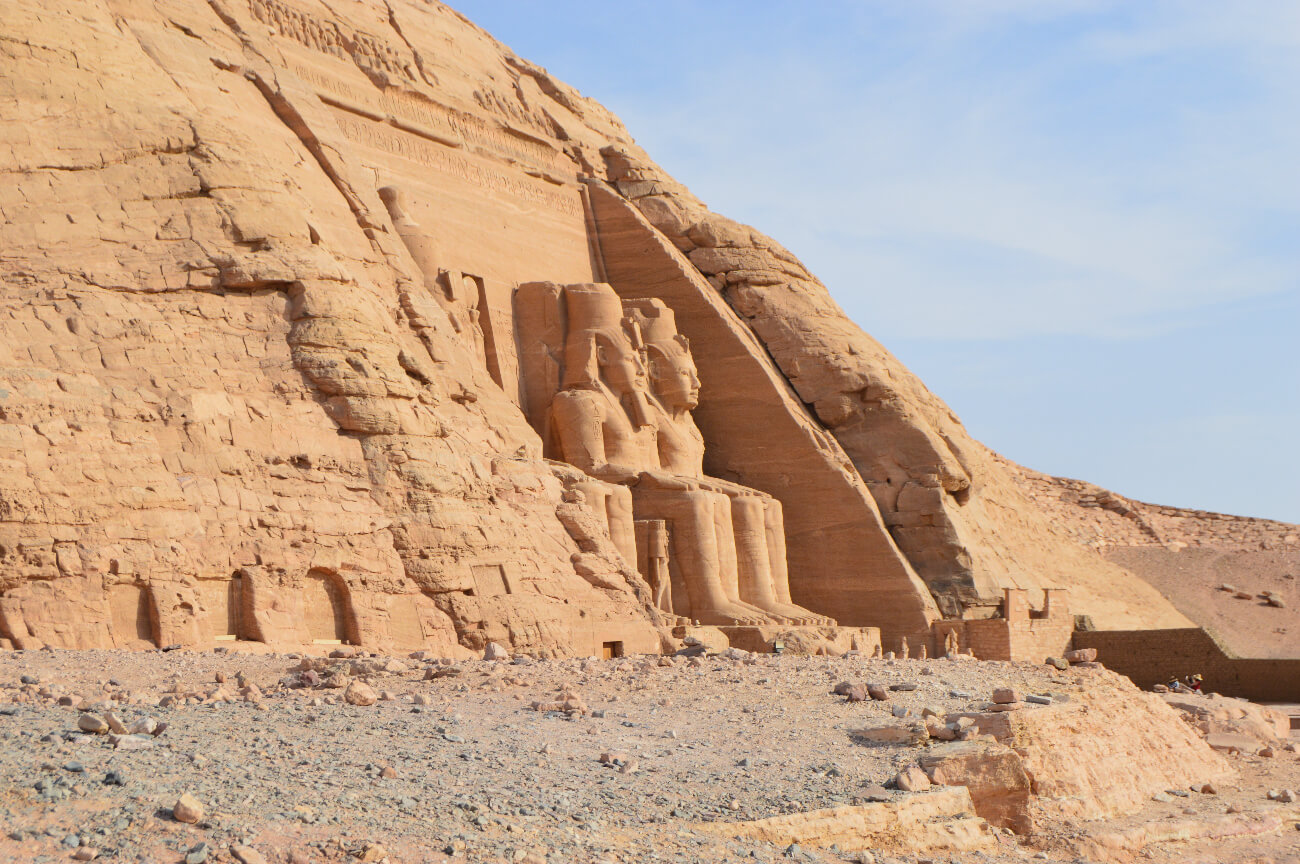
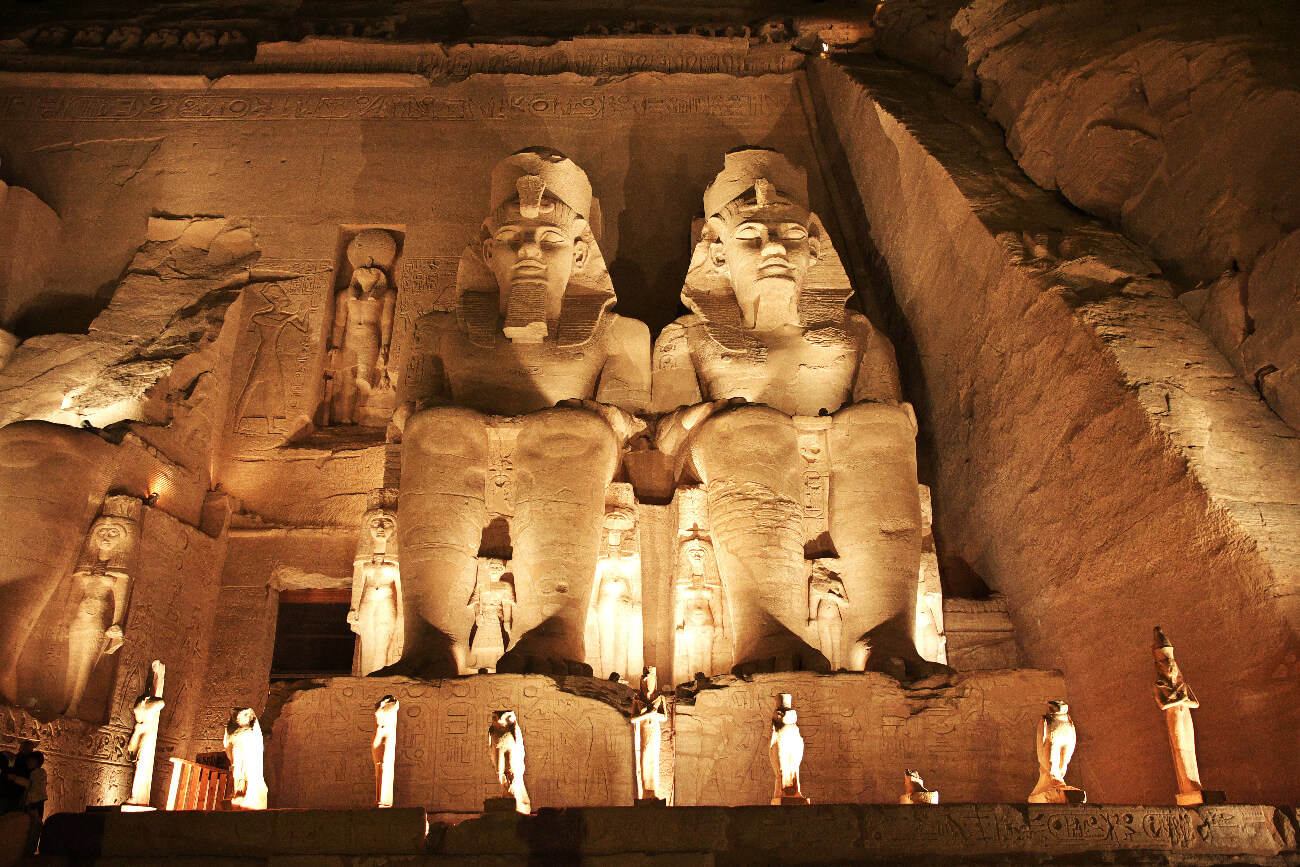
Abu Simbel are two massive rock-cut temples in the village of Abu Simbel near the border with Sudan. The complex is part of the UNESCO World Heritage Site known as “The Nubian Monuments”. The twin temples were carved out of the mountain side in the 13th century BCE and are monuments to King Ramesses II and his wife Nefertari. A hill was built in 1968 to move up the whole monument, stone by stone, so as not to disappear in the waters of the reservoir of the Aswan High Dam.
A Cruise on the Nile River Journey along the historic life line of Egyptian civilization passing and visiting temples. tombs, pyramids and villages as royalty and the upper class of Greece and Rome did centuries ago.
No Tour Found