


The Grand Est is composed of the regions of Champagne, Ardenne, Lorraine and Alsace
The region Champagne Ardennes covers 4 administrative sections called “departements” in French: Ardennes, Aube, Haute Marne and Marne. Each one is administered from its prefecture and each one has its own unique character. The informed traveler will look for the quiet and green ambiance of the Ardennes, and the wine enthusiasts can spend a few days enjoying the scenery and tasting the globally renowned local sparkling wines!
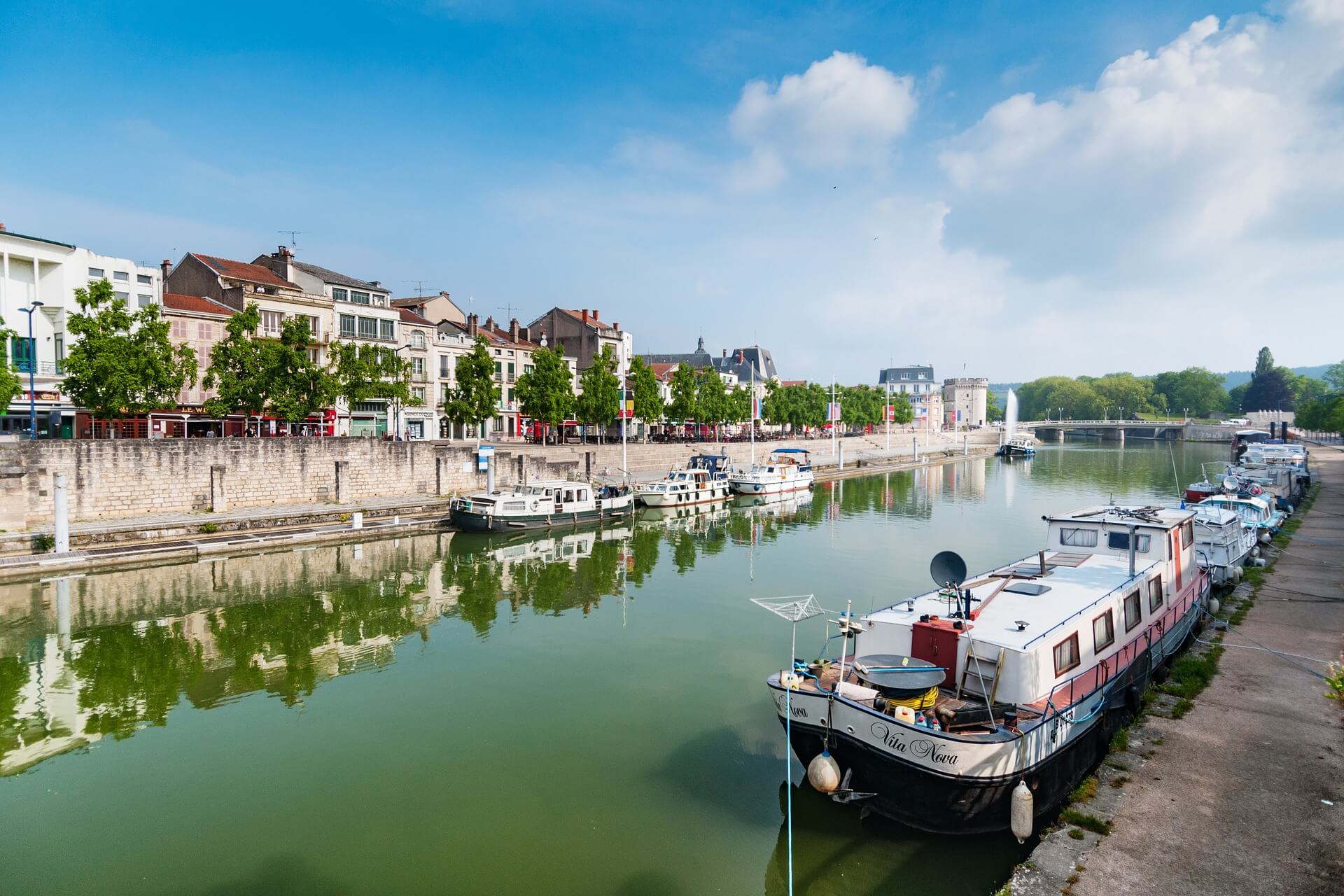 The Ardennes Massif is a vast plateau cut by the Meuse River and its tributaries. It extends to Wallonia in Belgium, and into Luxembourg and Germany. Two main rivers and valleys, the Meuse and the Sambre, are crossing the French part. It is a region rich in dense forest which is especially appreciated for its long hiking trails. The 2 largest cities are Charleville-Mezieres and Sedan.
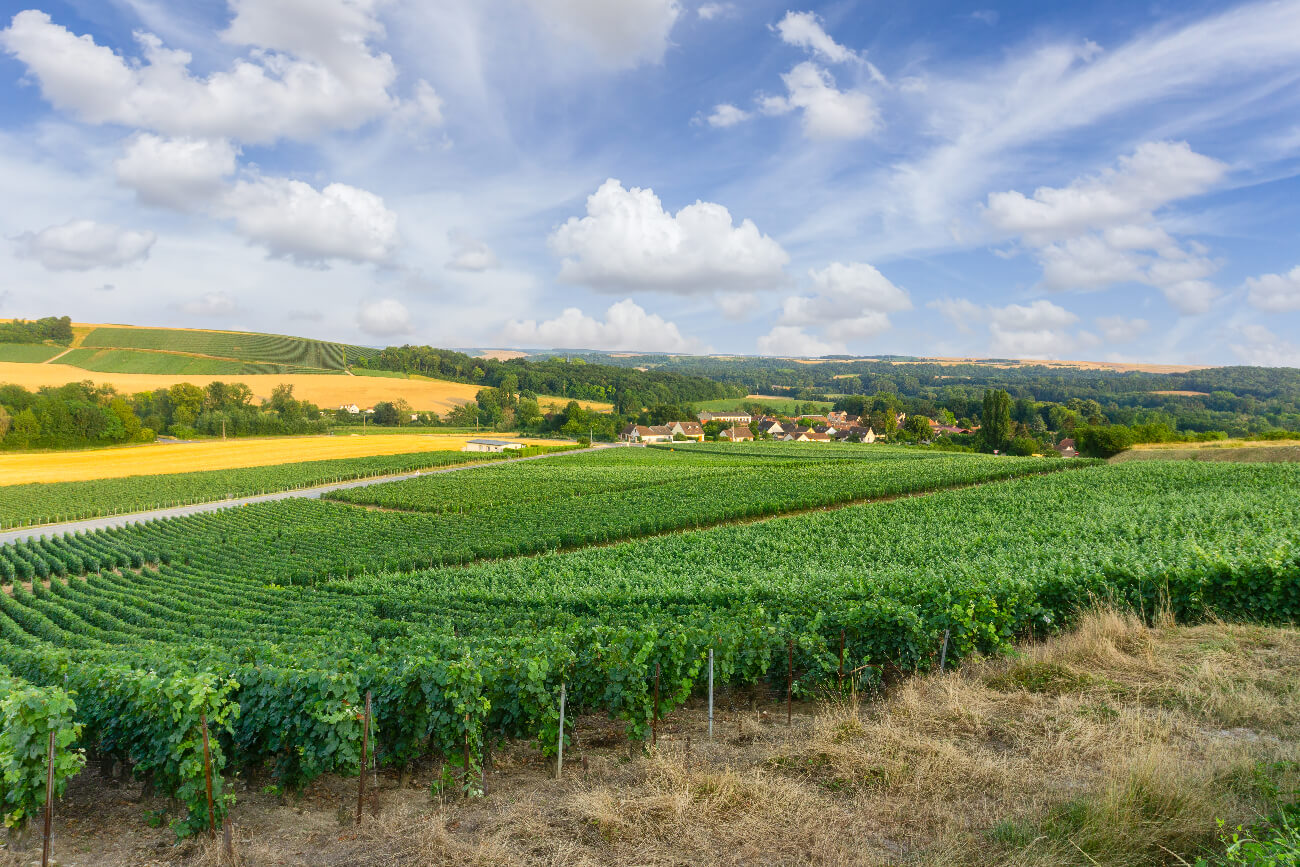 Only 2% of French wines are from the Champagne region, but they are arguably the most prestigious. Wines have been produced locally since Roman times, but it was Dom Perignon who in the 17th century utilized the first double fermentation of wine to make it sparkling. This same process is still utilized today with the use of sugar cane and yeast. Champagne is a branded and blended wine and its vineyards extend over 74,000 acres. The prestige of the local names are due to the expertise of the master-blenders. More than 300 million bottles of Champagne are produced each year.
Reims
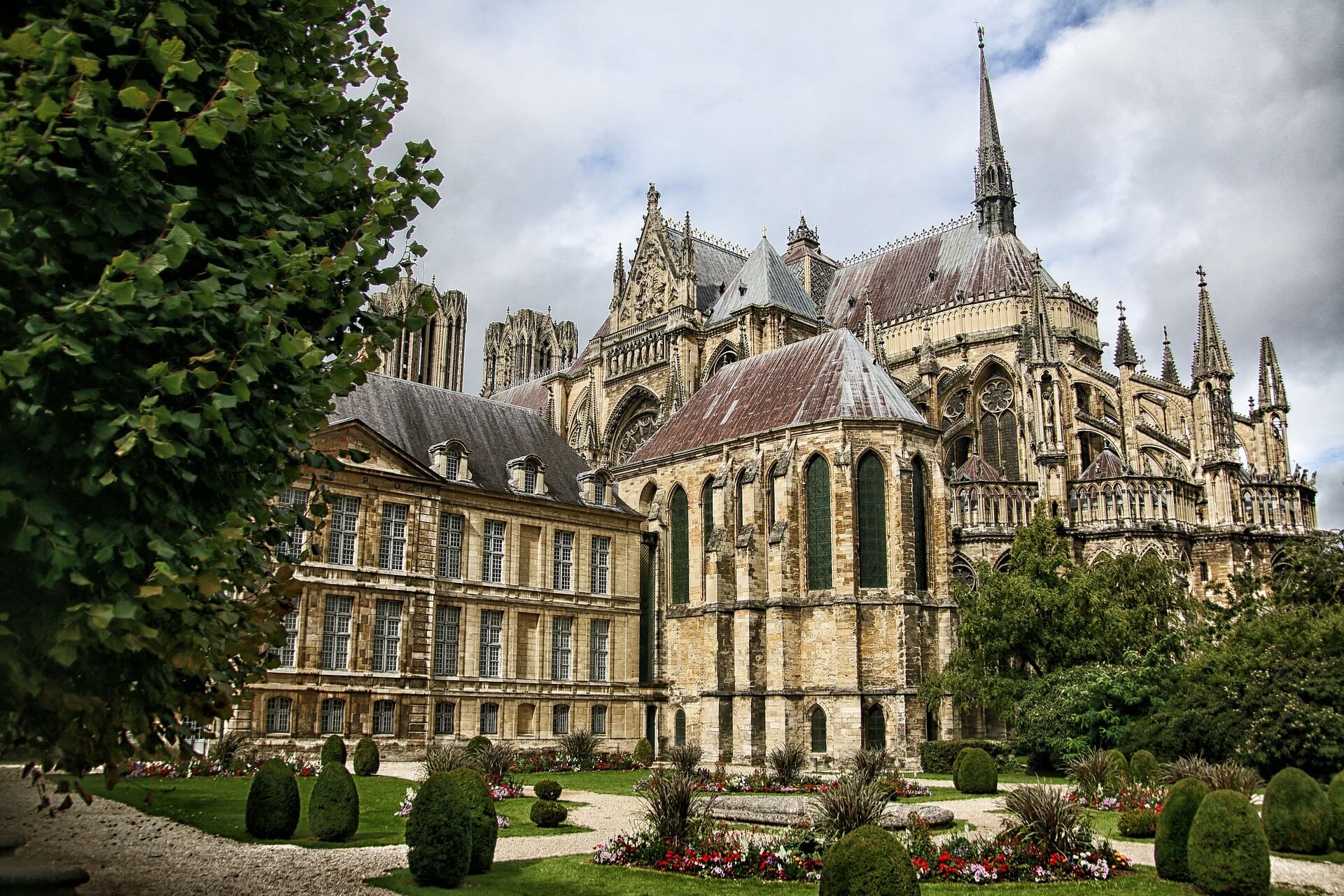
Reims could be a day round trip from Paris, or a hub from which to visit the region for a few days. Built on the banks of the River Vesle, It is the center of the Champagne wine industry where most of the great Champagne Houses have cellars open to visitors.
The Cathedral Notre Dame de Reims was the place where the Kings of France were crowned. It is one of the great 13th century French cathedrals, with more than 2,300 sculptures, stained glass by Chagall, and the world famous Smiling Angel on the North portal. Also worth a visit are the 12th century Basilica of St Remi, the Fine Art Museum, and the Foujita Chapel.
Epernay
Should you prefer a small community rather than a big town, then Epernay could be your choice. The mile long Avenue de Champagne offers visitors the opportunity to sample from the large number of Champagne Houses. It could also be the overnight base for touring the region.
Dom Perignon
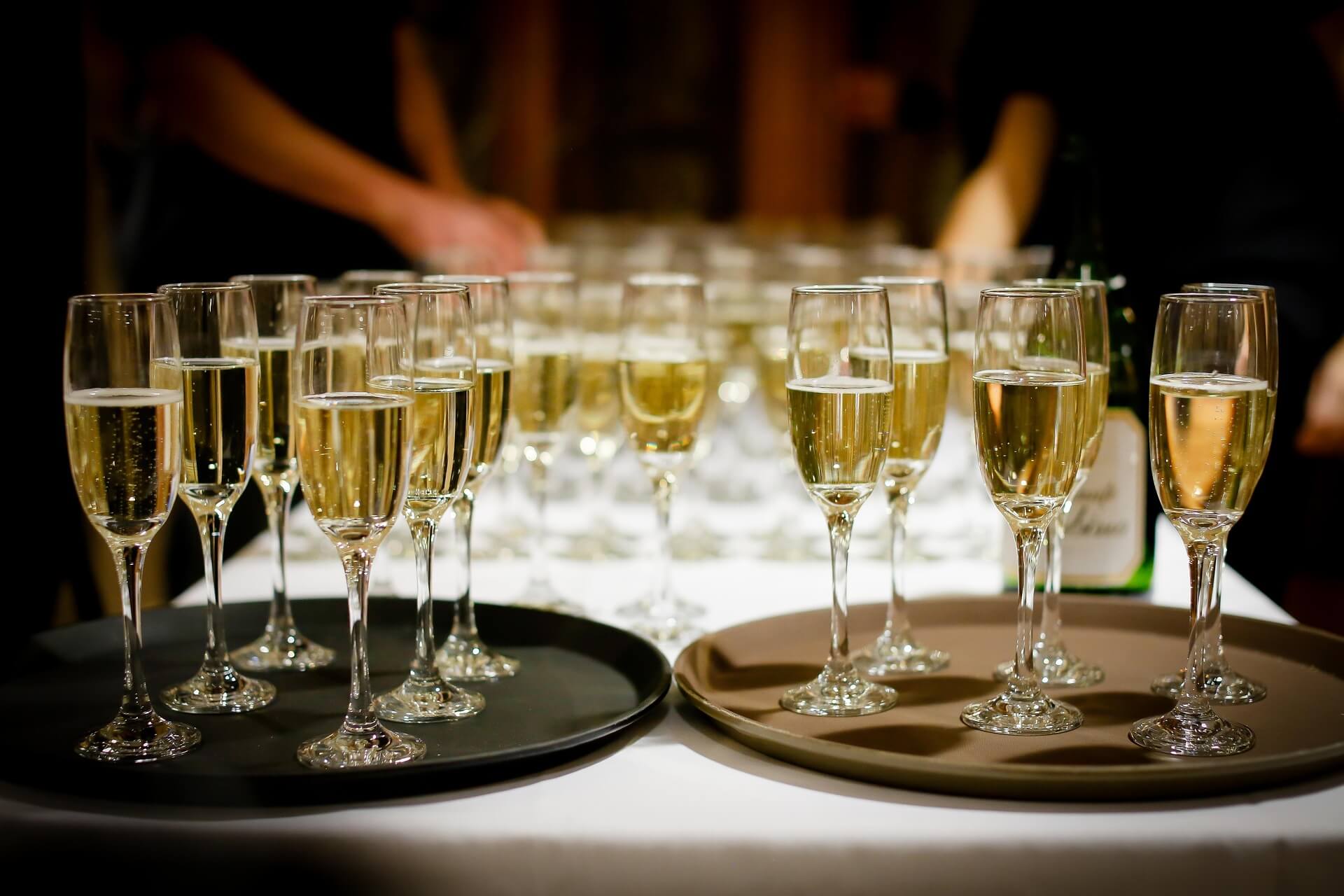
Dom Pierre Pérignon was a 17th-century Benedictine monk who lived in the Abbey of Hautvillers, where he was also the cellar master. He believed that hard work brought a monk closer to God, which ignited his dream of creating “the best wine in the world.”
But contrary to the legend Dom Perignon did not create the Champagne method. Adding sugar to a wine to initiate a 2nd fermentation was documented six years before Dom Pérignon even entered the Abbey at Hautvillers. However, Dom Perignon is responsible for several important innovations in Champagne production, such as developing the technique used to make white wine from red grapes and blending grapes to make a superior wine.
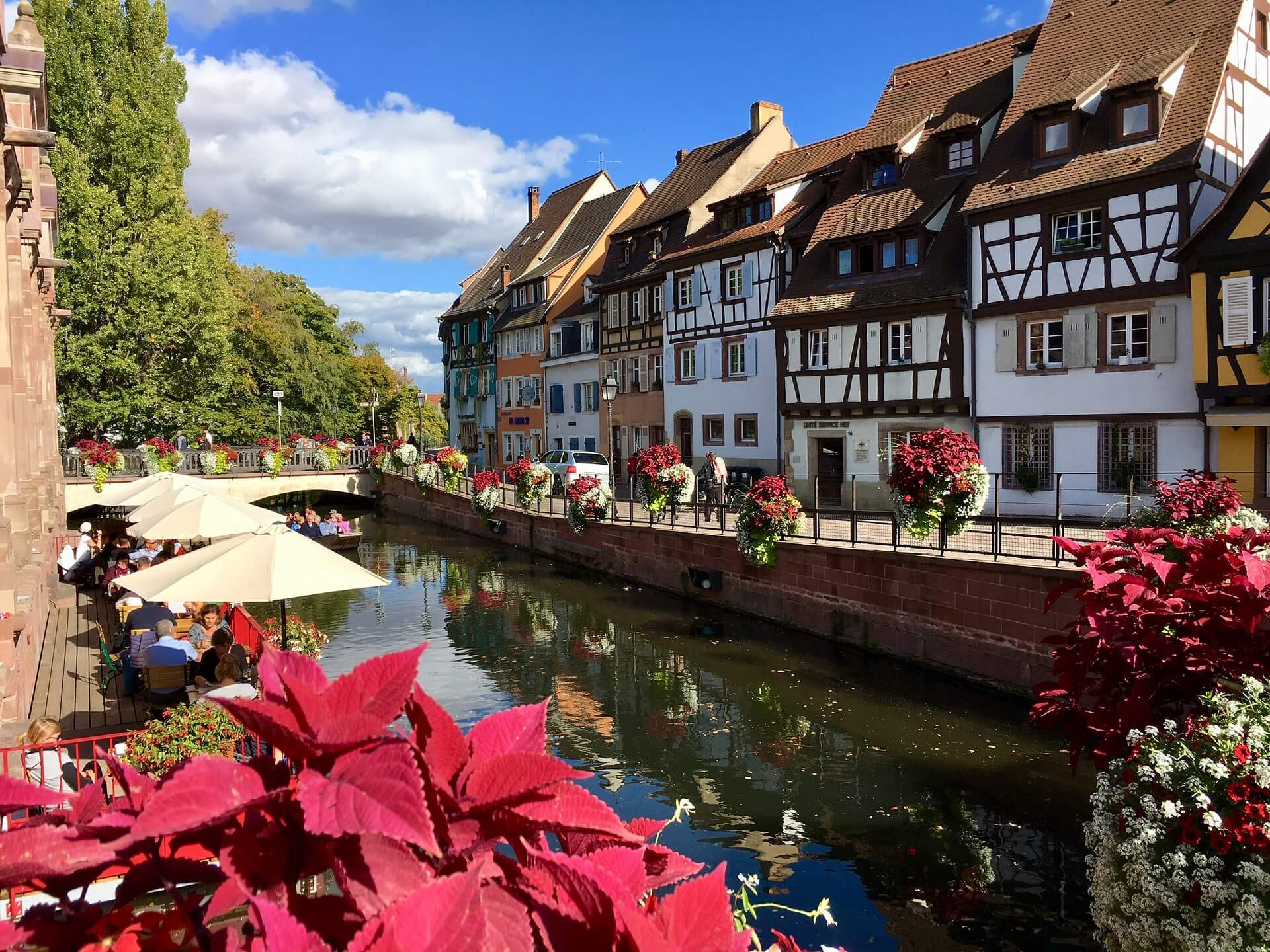
Haut Rhin and Bas Rhin are the two “departments” forming Alsace. The Vosges Mountains are the Natural boundary to the West; the Rhine River to the East; Across the River is Germany. It takes only 15 minutes by tram to go from Strasbourg to Kehl, the nearest German city.It is one of the most fertile regions in central Europe where cereals are cultivated in the alluvial plain and vineyards are producing delicious wines on the foothills of the Vosges.
Historically, Alsace has changed hands between France and Germany a number of times throughout the past centuries. King Louis XIV first established French sovereignty over the region and it remained French for over 200 years. After France’s defeat in the Franco-Prussian war, the region was annexed by Germany in 1871 and stayed in German hands until 1914. The Vosges mountains were fought over by both countries during World War I – the summit, changed hands eight times during 1914 alone and around 30,000 soldiers of both nationalities lost their lives here during the war. In 1922, France reclaimed the region from a broken Germany along with many villages and its capital city, Strasbourg. However, the Nazis took the city back during World War II and tried to de-Frenchify it by removing statues of famous French people and by banning berets. At the end of World War II, Alsace switched back to France and has been French ever since. The people restored their monuments, tried to reduce the amount of German spoken in school and put up public signs saying ‘It is chic to be French”’.
Strasbourg
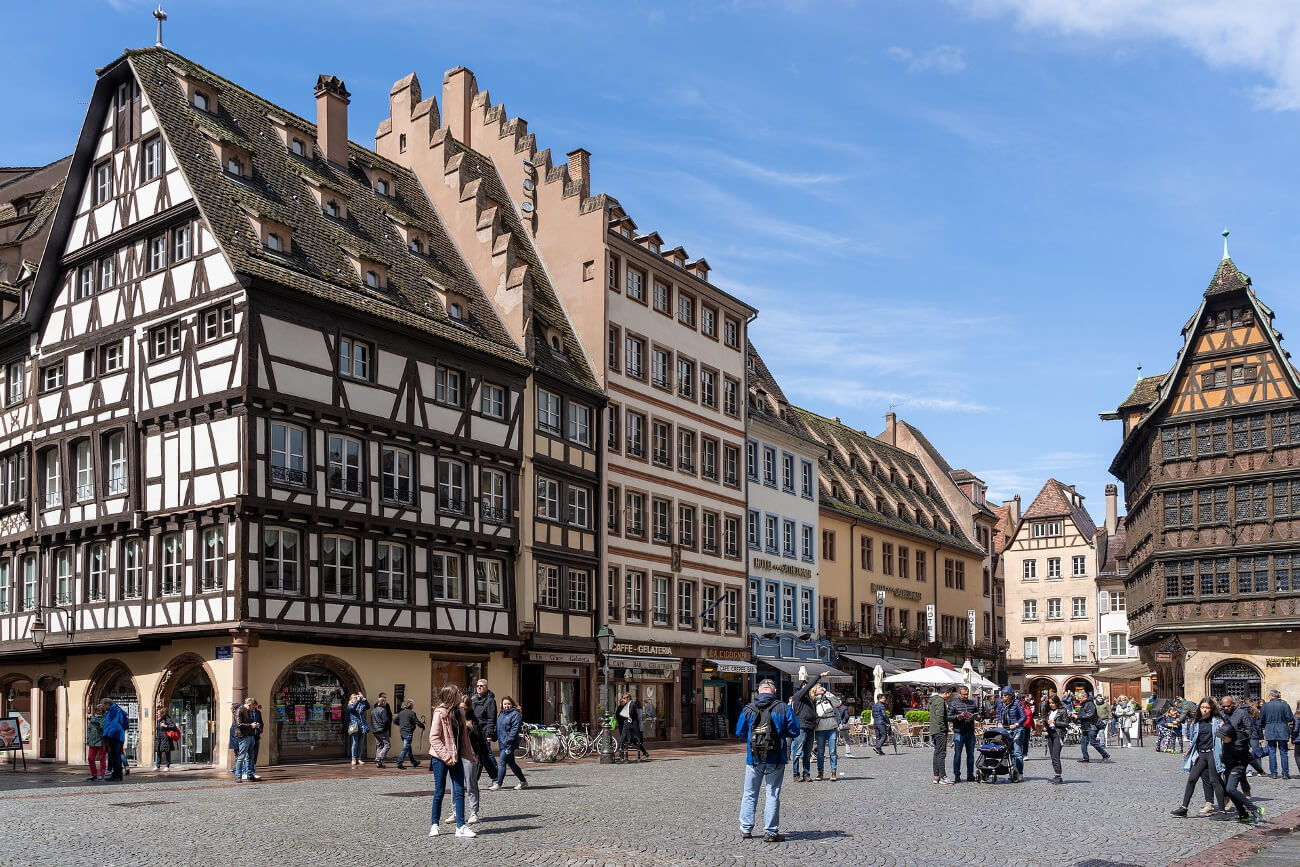
Strasbourg is the capital city of the Region Grand Est and the seat of the European parliament.
The Palais de l’Europe is used for the Parliamentary Assembly of the Council of Europe.
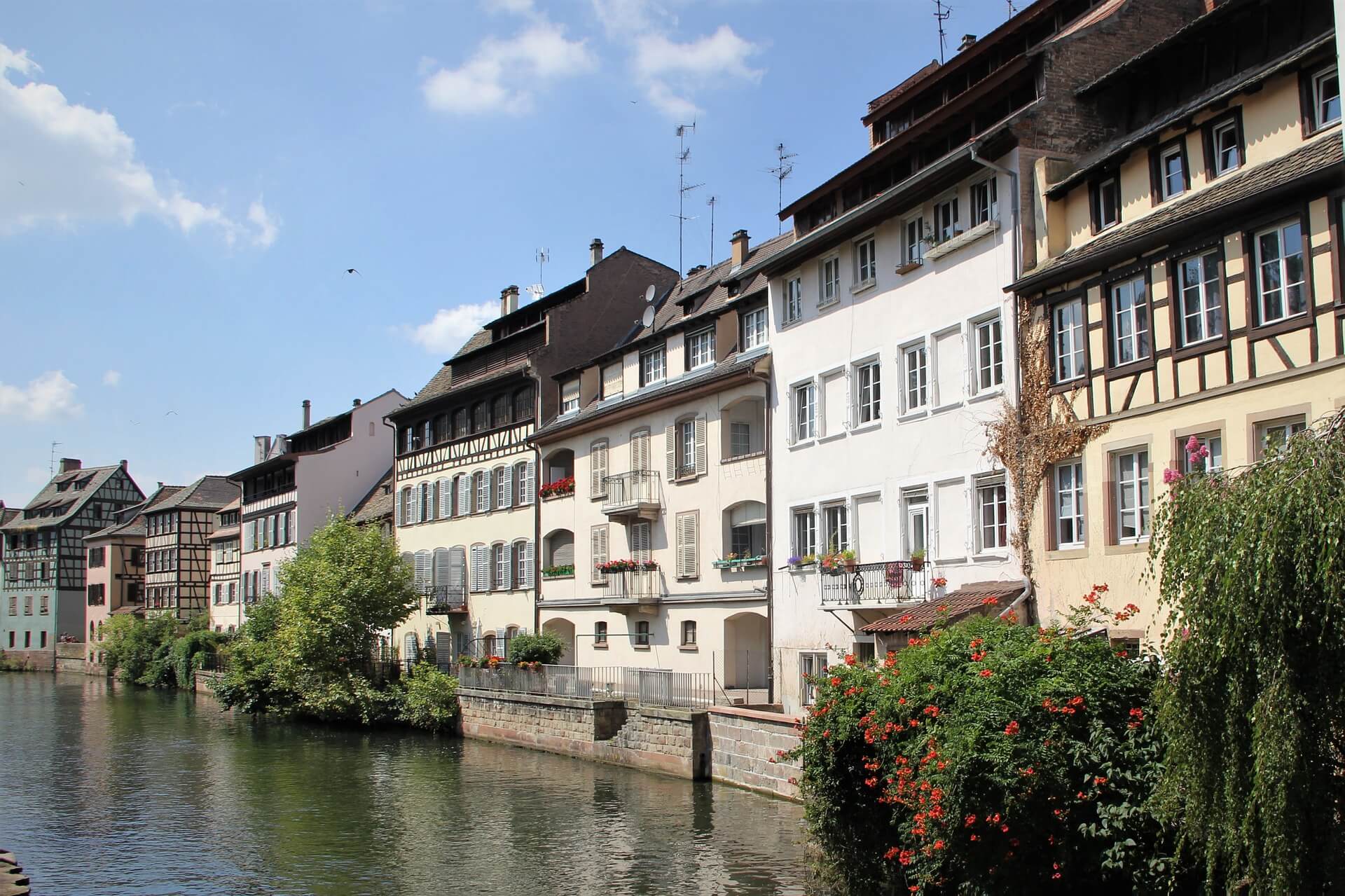
Taking time to walk around the city will be a very pleasant experience. Along cobblestone streets you will pass by the Cathedral Notre Dame; it defines the city with its 142 feet spire which was the highest point of the Christian world in the 19th century. You’ll also see the Astronomical clock, the Maison Kammerzell dating from 1427, the Palais Rohan which houses the Museum of Fine Arts. Lose yourself in the “Petite France” among the maze of narrow and picturesque canals, covered bridges, and half-timbered homes adorned with flower bedecked balconies.
Colmar
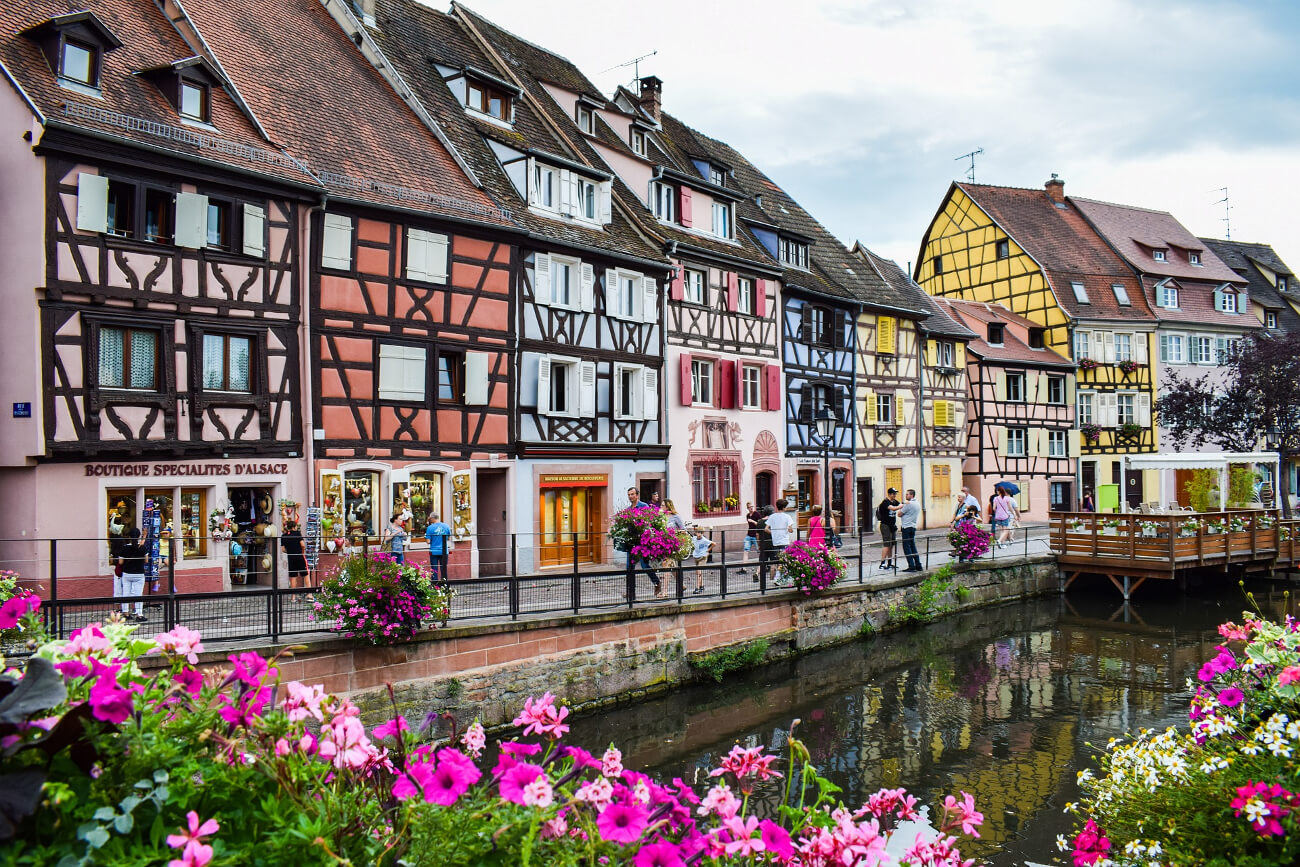
A typical Alsatian small town with its half timbered medieval houses, its cobbled stone narrow streets, its many fountains, ancient churches and Renaissance houses. The Musée d’Unterlinden, formerly a convent, houses the 16th-century Isenheim Altarpiece, the masterwork of the German religious painter Matthias Grunewald. Frederick Auguste Bartoldi, the sculptor who did the New York Statue of Liberty was born in Colmar in 1834; his birthplace is now a museum.
Colmar is also the capital of the Alsatian Wines, the most famous vine variety being Riesling and Gewurztraminer. It is on the picturesque Wine Road which crosses more than 100 miles of vineyards and a multitude of quaint small villages and towns, one being more charming than the other.
Mulhouse
Famous for its museums, Mulhouse is the 2nd largest city in Alsace; it is mostly an industrial town, nicknamed the “French Manchester”
The Cité du Train, situated in Mulhouse, France, is one of the ten largest railway museums in the world. It is the successor to the musée français du chemin de fer, the organization responsible for the conservation of major historical SNCF railway equipment.
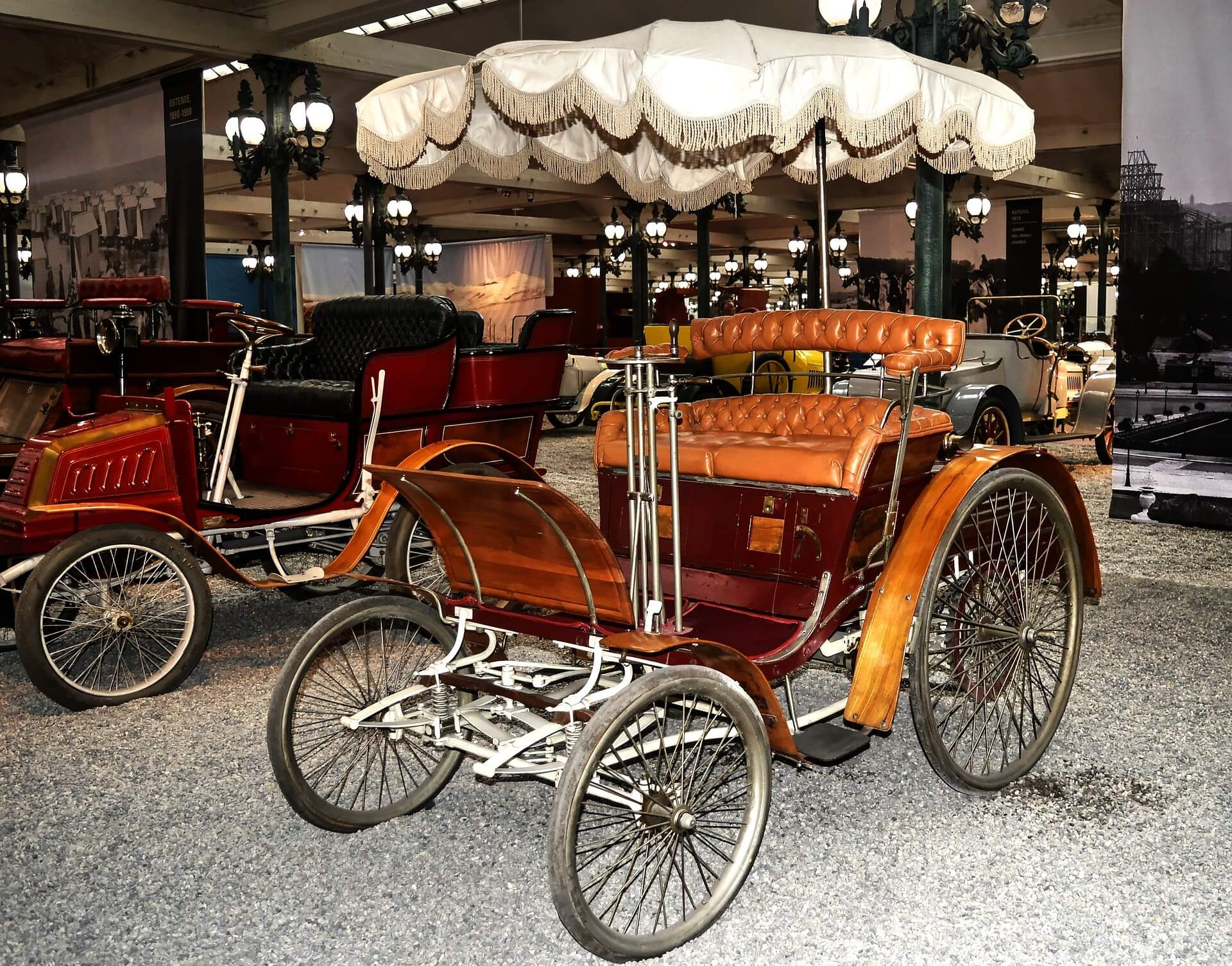
The City of the Automobile: Considered a jewel among the museums of Mulhouse, and for good reason – the unique collection at the old Schlumpf Museum makes it the most prestigious automobile museum in the world!
Alsatian Gastronomy
Tarte à l’oignon is a fragrant, savory onion tart. Essentially, it is an open-face pie that is filled with a rich and flavorful custard of eggs, bacon, and onions. Although it is a cousin to the famous quiche Lorraine, it is not as deep as the traditional quiche.
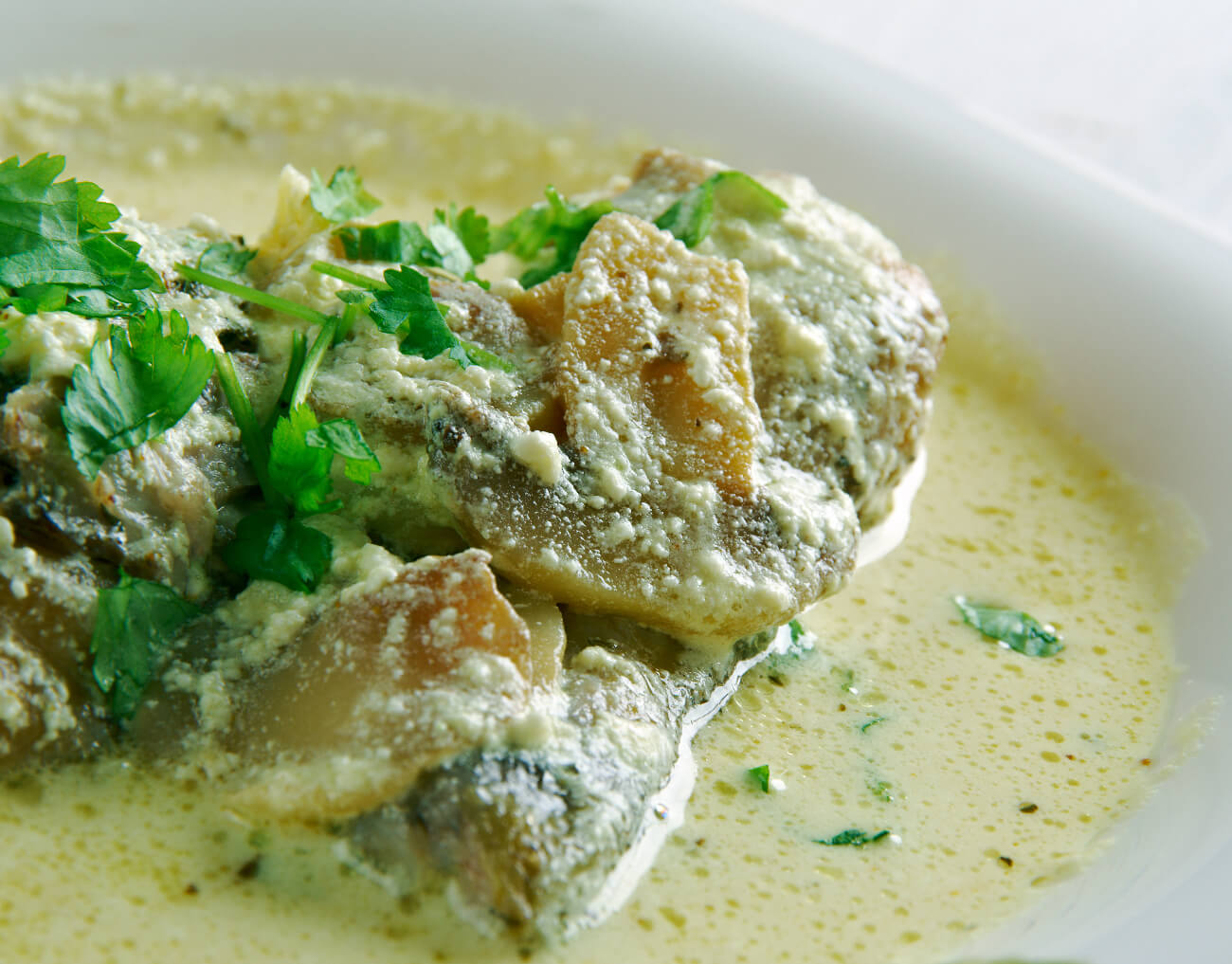
Coq au Riesling is an Alsatian version of the classic coq au vin. It consists of chicken, mushrooms, onion, lardons, and dry Riesling wine from Alsace. It is said that the dish is even better when reheated the next day due to the flavors that deepen when left in the fridge overnight. The chicken can be served over egg noodles, white rice, boiled potatoes, or the more traditional spätzle, making for a great comfort dish, especially on a cold winter’s night.
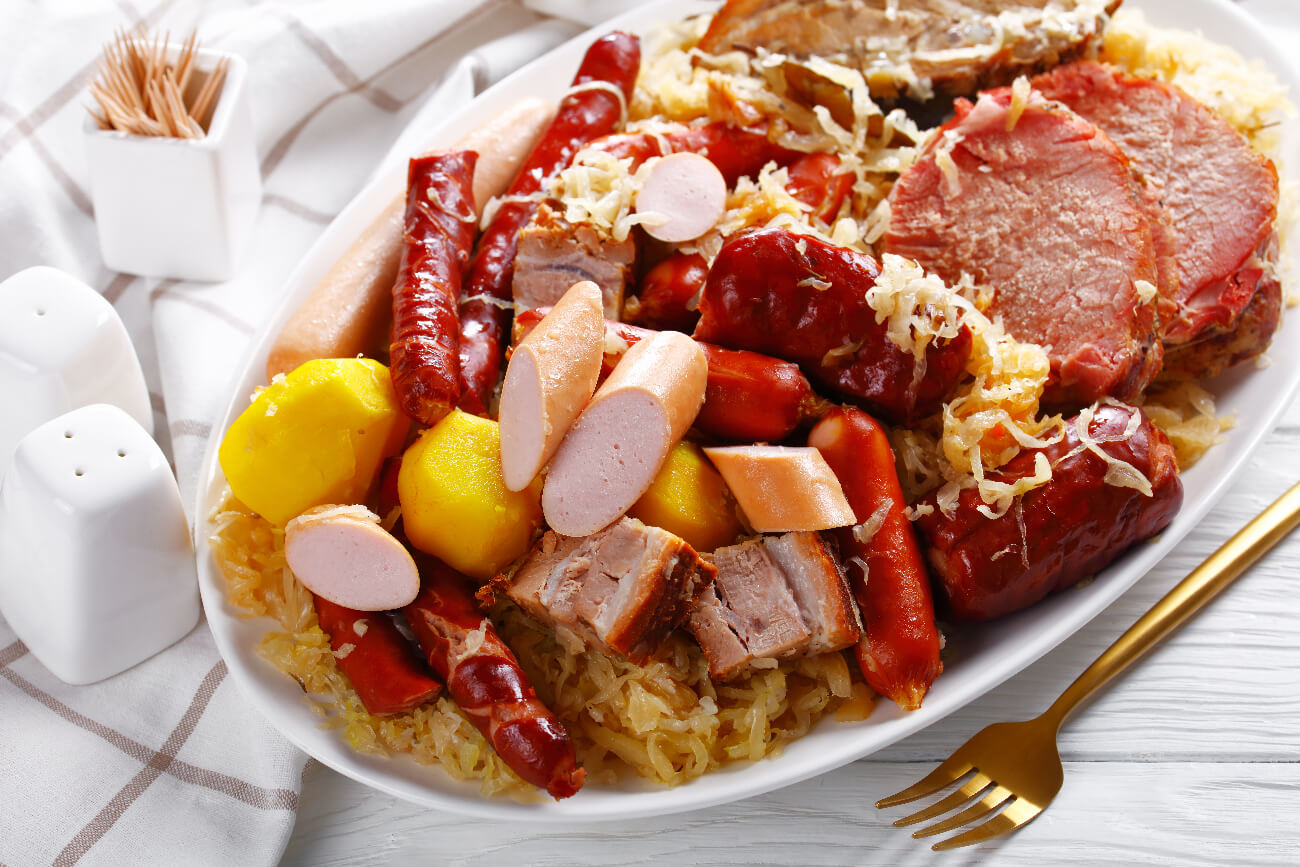
Choucroute Garnie is a typical winter dish. At its base is the silky, pungent, fermented cabbage known as sauerkraut, infused with flavors of goose fat, onions, garlic, juniper berries, caraway, and white wine such as the local dry Riesling. Sauerkraut is garnished with a hefty number of ingredients such as smoked or fresh beef and pork sausages, pork loin, pork shoulder, and bacon. The ultimate version of the dish, called choucroute royale is served with added calf or pork liver dumplings that are poached and sautéed with onions.
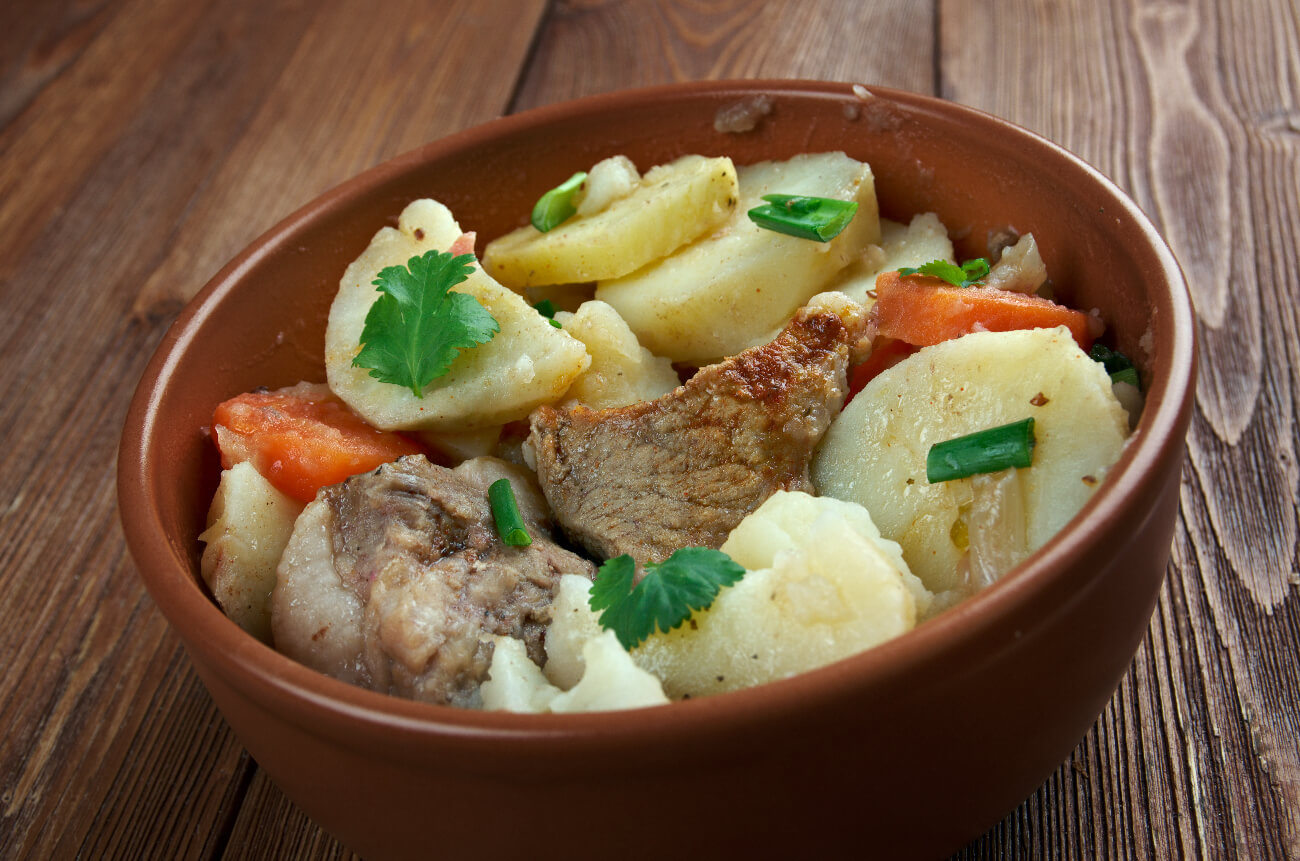
Baeckeoffe is a one-pot dish from the French region of Alsace containing vegetables, potatoes, wine, and three types of marinated meat – pork, beef, and lamb. The name of this typical peasant’s dish is literally translated to baker’s oven, as French women would leave the pots for the baker in the early morning. They left to do the laundry, and when they would return home with their children after school, they would pick up the pot from the baker. Another theory about the origin of the dish says that it was made on Saturday evening and left in the bakers’ oven overnight to cool.
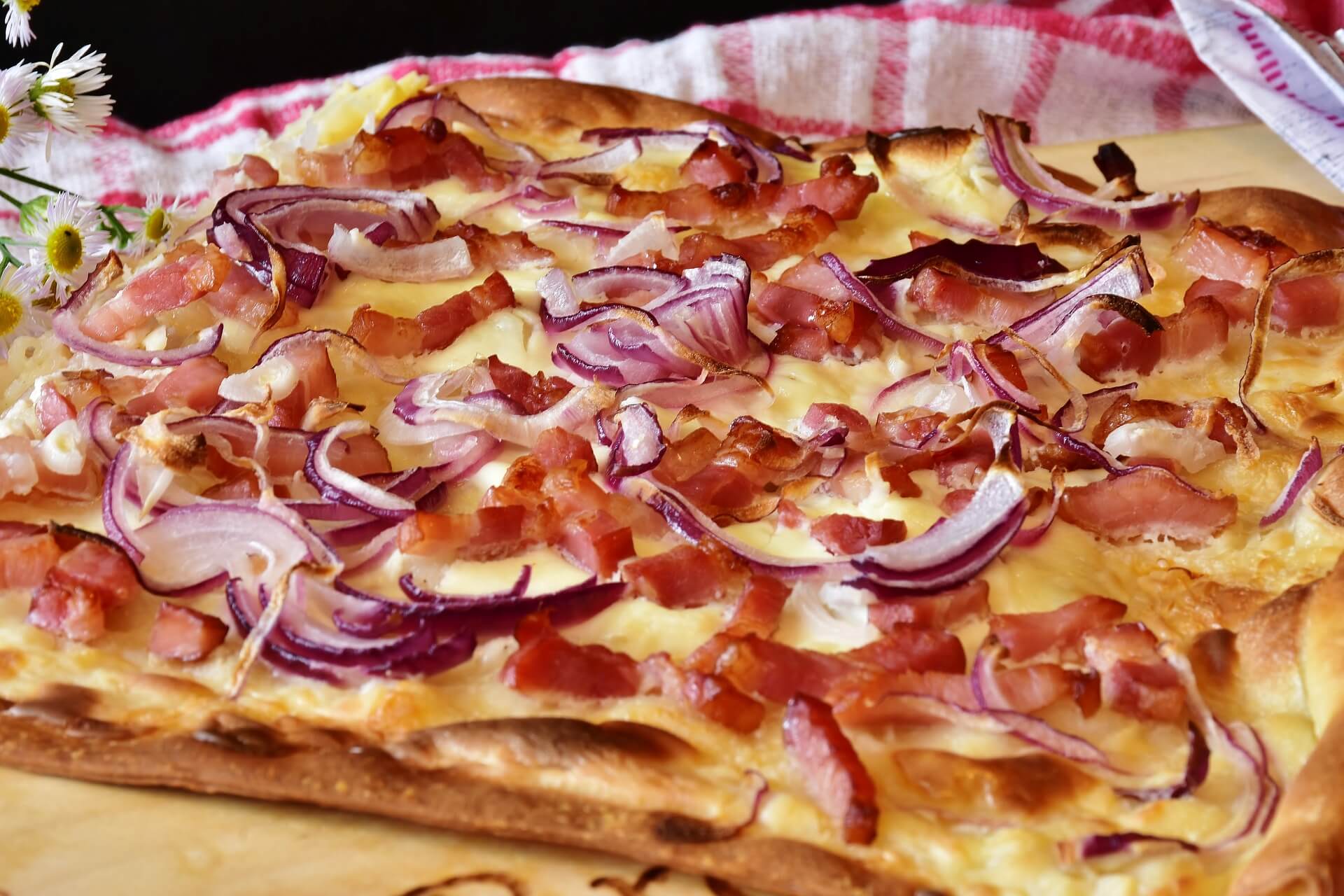
Tarte flambée is a thin, crispy, rectangular flatbread that is topped with tart and spreadable cheese (fromage blanc) or melting ripe cheese (Munster), créme fraîche, crispy bacon, and thinly sliced roasted onions. A pinch of salt, ground pepper, peanut oil and nutmeg add extra layers of flavor to this beloved snack.It is known as flammeküche in Germany.
Champagne-Ardenne expands to the West and Alsace to the East. To the North, three European countries mark the border: Belgium, Luxembourg and Germany. To the South lies the region of Franche-Comté.
For many years, the region was synonymous with coal, iron and steel industries; it was, in the 1960s, the 3rd strongest economic region in France.
Lorraine’s name stems from the medieval kingdom of Lotharingia, which in turn was named after either Emperor Lothair I or King Lothair II. Later it became the Duchy of Lorraine before the Kingdom of France annexed it in 1766.
Metz
At the confluence of the Moselle and the Seille rivers, Metz has 3000 years of history. This peaceful city used to be much more turbulent due to the continual movement between France and Germany.
The Musée de la Cour d’Or is housed in the building of a former Carmelite Convent of the 12th century; the archeological section attests to the importance of the town at the time it was a major cross road in Gallo-Roman times.
Center Pompidou-Metz: It is a branch of Pompidou Arts Center of Paris. It features collections of 20th and 21st century contemporary artThe
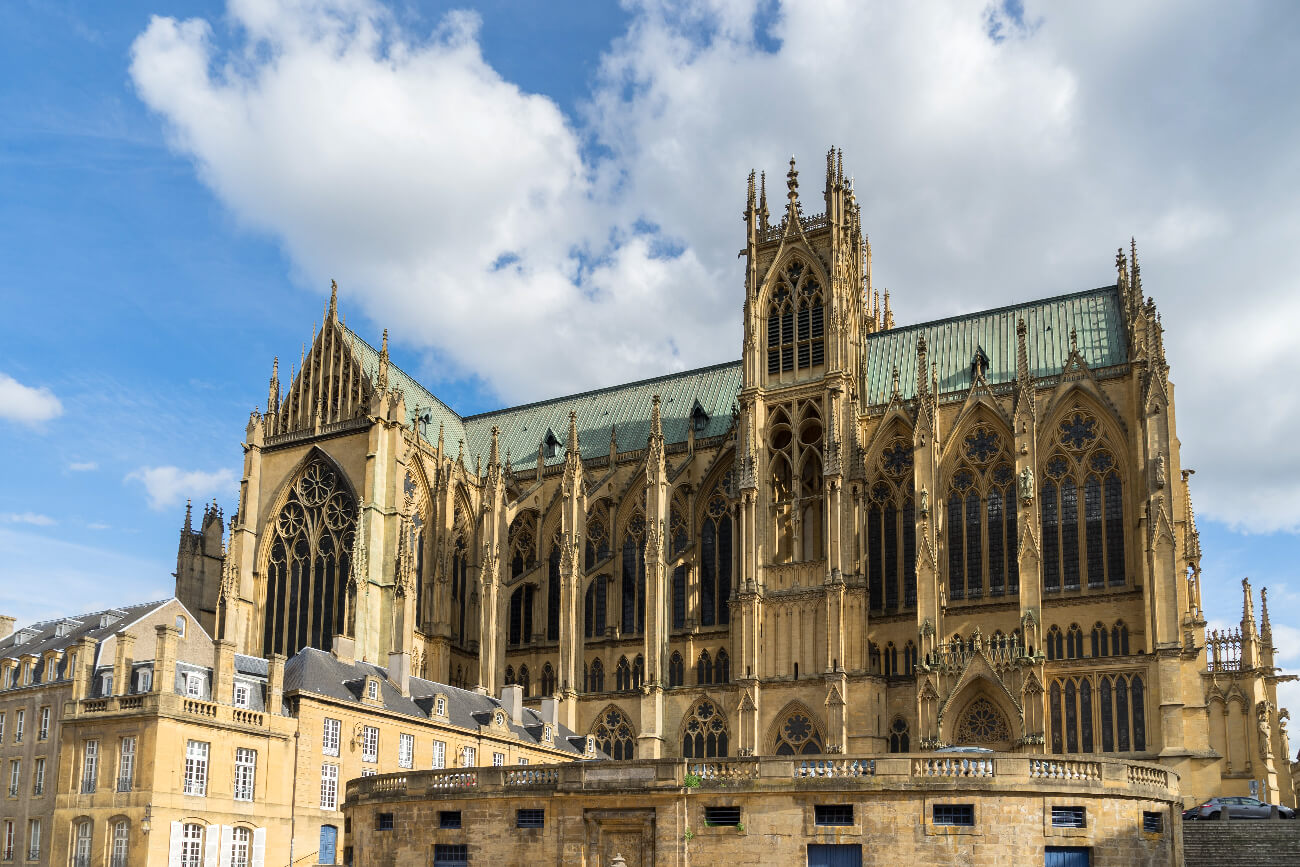
Cathedral Saint Etienne dates from the 13th and 14th century. It is known as the “Lanterne du Bon-Dieu” (God’s lantern),due to its stained-glass windows which cover 60,000 square feet.
Nancy
The history of Nancy begins in the 15th century when the Dukes of Lorraine asserted their independence. Capital of the duchy of Lorraine; it was annexed to France by Louis XV and stayed as the capital of the new French Province.
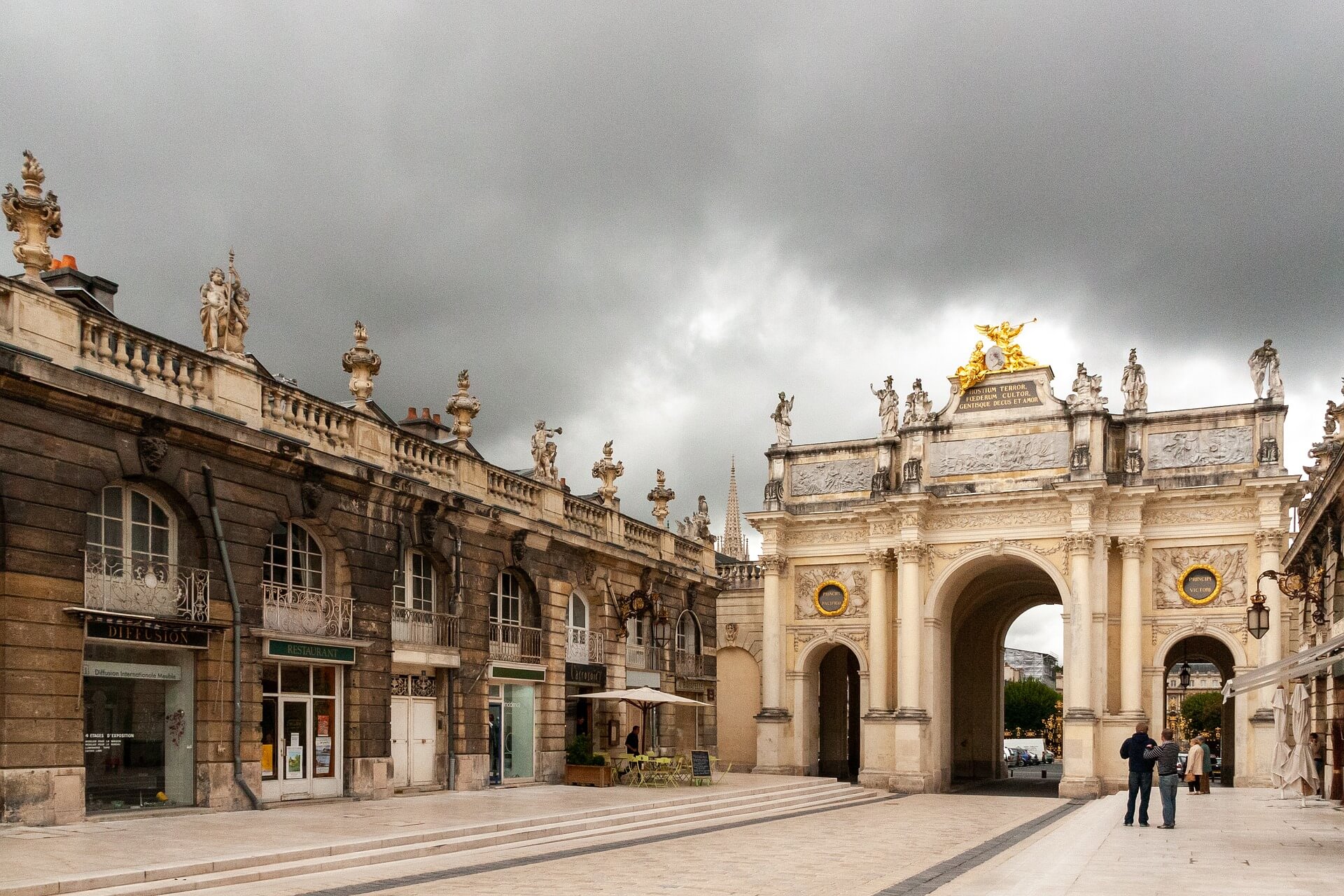
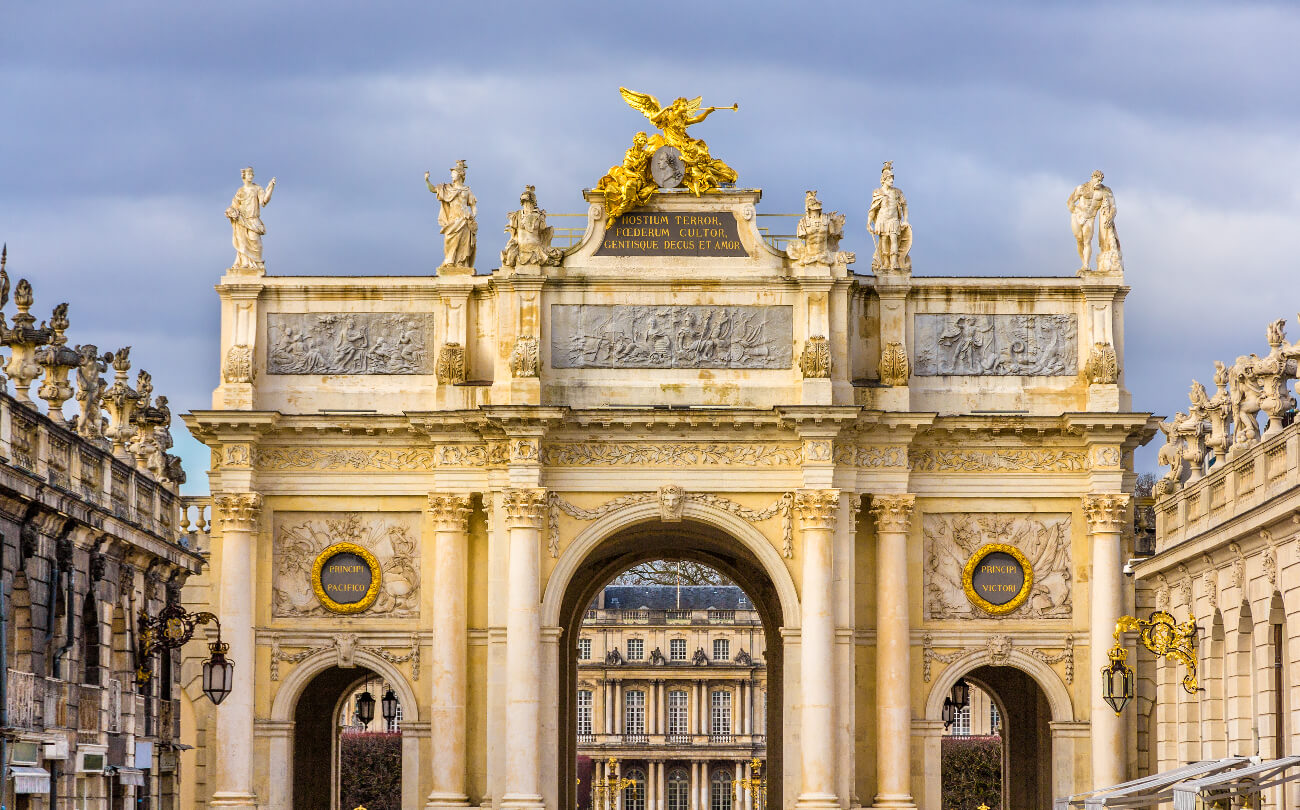
The famous large square, “Place Stanislas”, was built in less than 4 years, between 1752 and 1756, under the direction of Stanislaus I of Poland, Duke of Lorraine. It was the first square to be given the distinction of becoming a Unesco World Heritage Site.
Many buildings are classified as “historical monuments” since Nancy is one of the European centers of Art Nouveau due to the “Ecole de Nancy”.
Praised to be “The best student town in France” it attracts a large international student population in its University city which includes one of the main health center in Europe renowned for its innovations in surgical robotics
Gastronomic Specialties in Lorraine
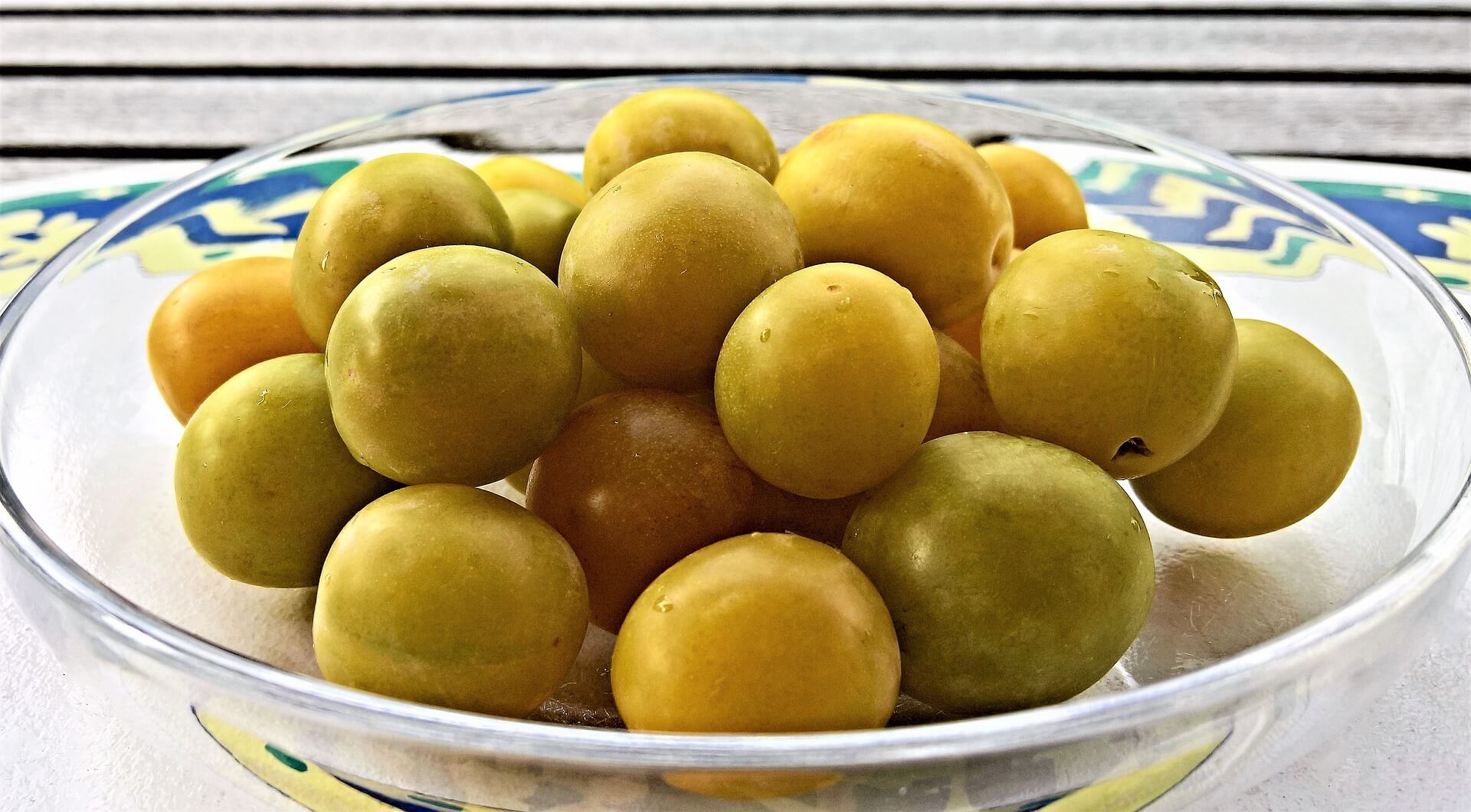
The Mirabelle of Lorraine
Golden, delicate and fragrant, savor Lorraine’s favorite fruit in a variety of ways: tarts, ice cream, jams, brandies. Lorraine has no less than 250,000 mirabelle plum trees and accounts for 70% of worldwide production. From mid-August to mid-September, the little golden prune brightens the region’s markets and countryside.
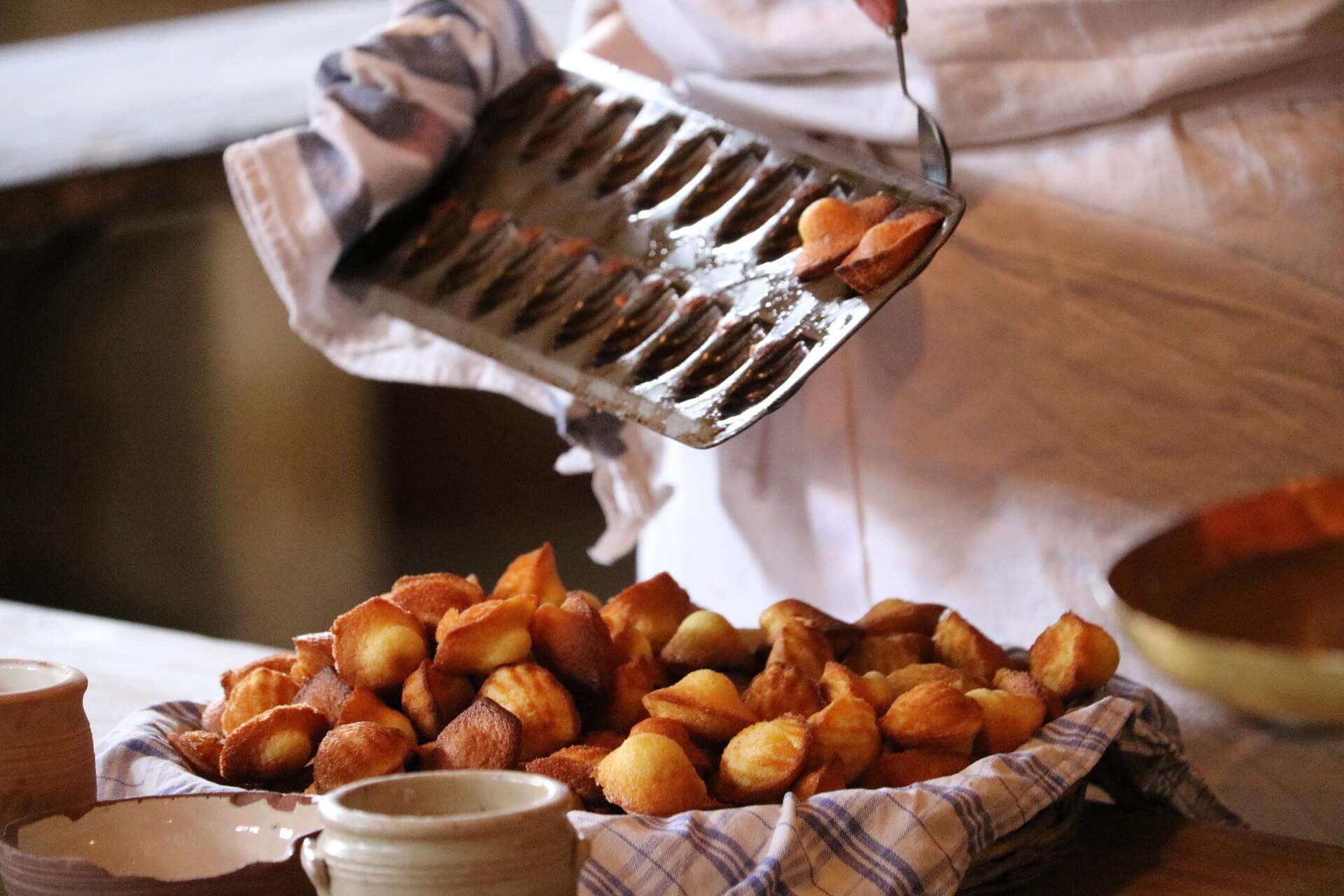
The Madeleine of Commercy
The story goes that the madeleine cake was invented in Lorraine in 1755. Marcel Proust, the famous French writer of the early 20th century, would dunk madeleines in his tea to relive the flavors of his childhood. This plump and golden shell-shaped little biscuit is a pure delight.
No Tour Found
No Tour Found