


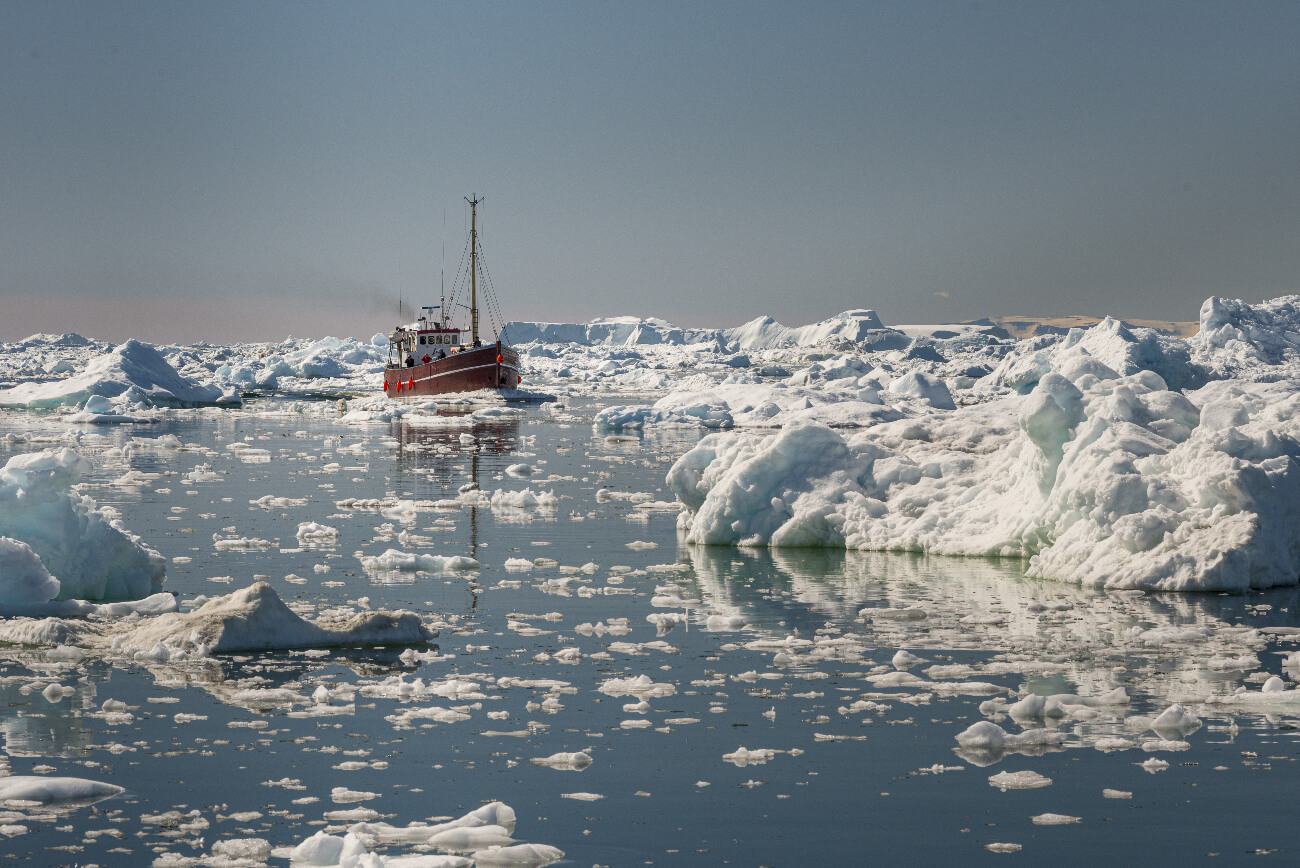
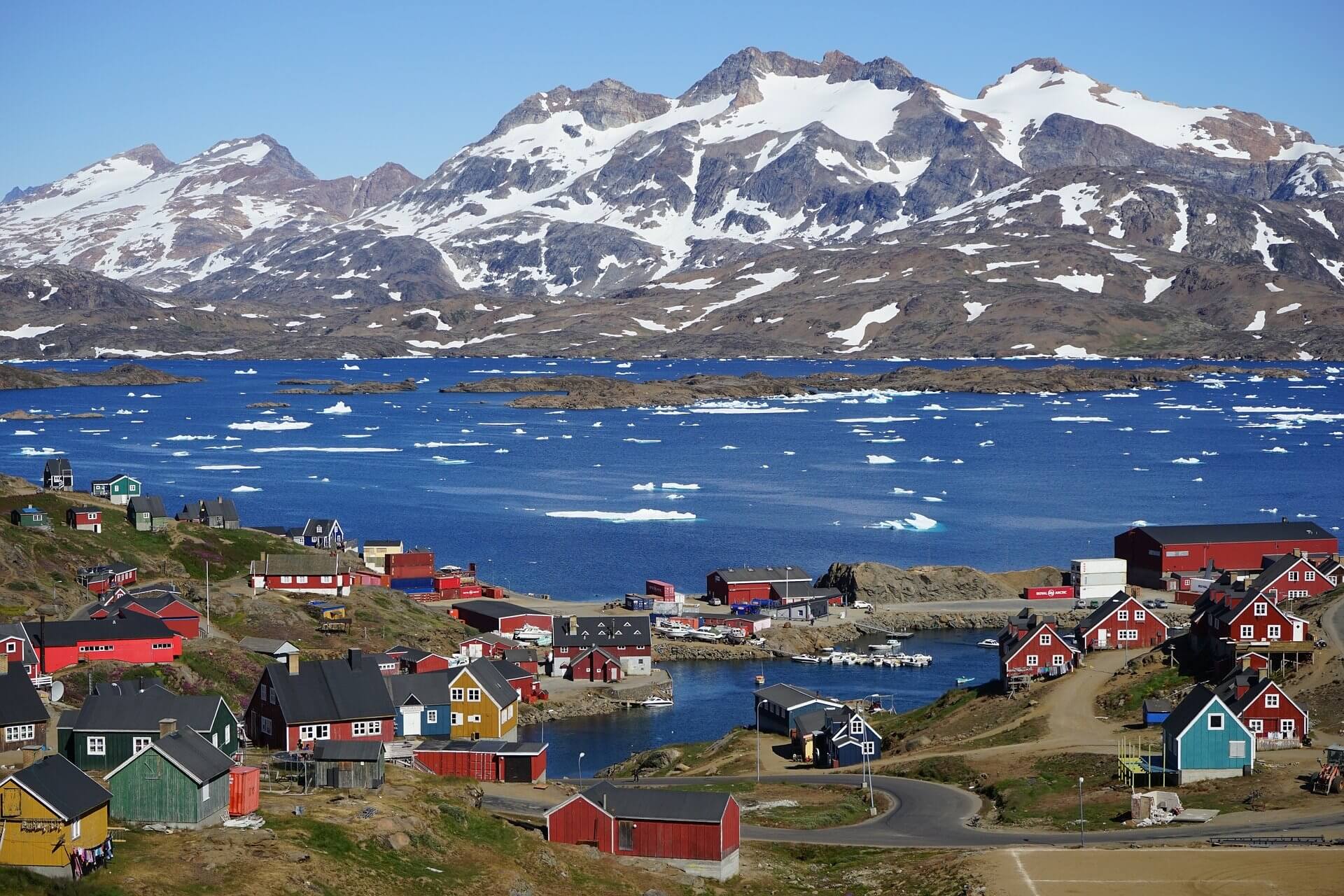
Greenland is the world’s largest island (837,000 square miles) and is located between the Arctic and Atlantic Oceans, and east of the Canadian Arctic Archipelago. Average seasonal temperatures range from 23 to 50 degrees and the coldest temperature recorded was minus 69 degrees in 1991. The closest countries are Canada and Iceland. It is an autonomous territory within the Kingdom of Denmark. Greenland has been politically and culturally associated with Europe and specifically Norway and Denmark since 986 AD. The majority of its residents are Inuit, whose ancestors migrated from Alaska through Northern Canada gradually settling across the island by the 13th century. Today, the population is concentrated along the southern coast. Three quarters of the island is permanently covered by the only permanent ice sheet outside of Antarctica. It is the least densely populated land in the world with 56,000 inhabitants. About a third of the people live in the capital city of Nuuk. Greenland has been inhabited at intervals over the last 4500 years. Norseman (Vikings) settled the uninhabited southern coast in the 10th century AD after first settling in Iceland. In prehistoric times Greenland was home to several successive Palo-Inuit cultures from 2500 to 800 BCE. The Dorset Culture was the first to inhabit the entire coastal area and lasted until 1500 AD and lived peacefully with the Icelanders and Norwegians who settled in Greenland in 986 AD led by Erik the Red. The Dorset Culture lived off whale and caribou hunting. Norse Greenlanders submitted to Norwegian rule in 1261 and later, in 1380, became part of the Danish/Norwegian partnership known as the Kalmar Union. Extremely cold temperature in the 14th and 15 centuries, low prices for walrus ivory and malnutrition forced the abandonment of the Norse settlements of about 2500 people. Greenland then came under the de facto control of the Inuit although the Kalmar Union never forgot about its existence. When the union was dissolved in 1814, Greenland was left to the Norwegians but in 1933, the Permanent Court of International Justice decided against Norway and gave the land to the Kingdom of Denmark. During World War II Greenland was occupied by the USA and returned to Denmark in 1945. In 1953 Greenland was made an equal part of the Kingdom of Norway and Home Rule was established in 1979. Tourism had 2,000,000 visitors in 2019 and was a significant part of the economy after fisheries. Greenland has two ecoregions; the southern and northern Kalaallit Nunaat high and low Arctic Tundras. The sea is rich with fish and flocks of sea birds and invertebrates. Land mammals include polar bears, reindeer, Arctic Fox, hare, musk and Arctic Wolf. Seals and whales are plentiful and there are no reptiles. Both Greenlandic and Danish are used for public affairs and Greenlandic was made the official language in 2009. The country has 100% literacy. The nomadic Inuit were Shamanistic but most converted to Protestant Christianity. The national dish is Suaasat soup made from Seal meat. Ingredients for dishes come from the sea with fish, birds and marine mammals. Coffee, is a flaming dessert, whose ingredients are coffee, whiskey, Kahlua, Grand Marnier and whipped cream.
No Tour Found
No Tour Found