



Hungary is known as the heart of Central Europe. It is famous for its musicians Frantz Litz and Bela Bartock, its delicious paprika goulash, the romantic Danube River, and not least for its capital Budapest, which has one of the best nightlife in Europe with numerous wine bars and nightclubs. Other fun cities to visit are Eger with its Turkish history, Pecs with its extremely mild climate, and Hecks, which is located alongside a warm thermal lake. Lake Balaton is considered the Hungarian “inland sea”, and the Great Plain with Hortobagy National Park is the land of the Hungarian cowboys.
Budapest
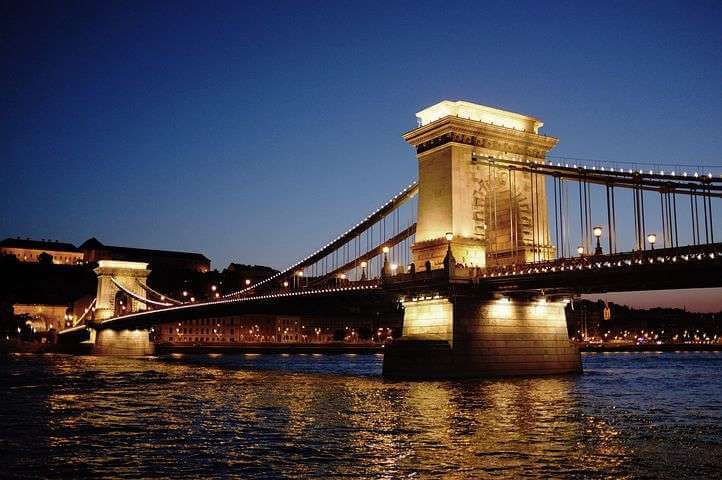
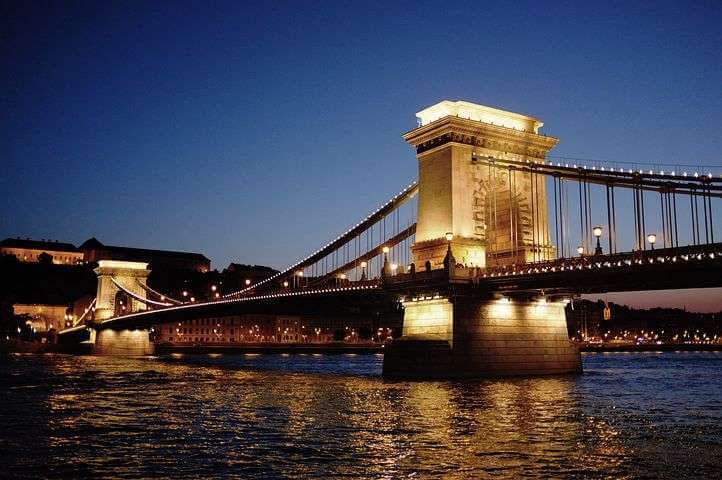
Budapest has developed a reputation as one of the best party towns in Europe. Nightlife and the pleasures of the numerous hot water springs spas are the main attractions. But Baroque, Neoclassical, and Art Nouveau architectural treasures also abound throughout the city. The two parts of the city, Buda and Pest, are divided by the Danube River. The Buda hills are on the West Bank, while on the East Bank is the newer, and larger, Pest, which developed on the edge of the Great Plains.
Buda
To reach the Royal Palace on the hill, you can either climb the challenging Royal Steps, or take the teleferic built in 1870. Along the promenade on the top of the hill you will find a charming medieval city with a magnificent panoramic view over the Danube and Pest to the east. Your visit to Buda should include Fisherman’s Bastion, The Citadella, a fortress built by the Habsburgs in the middle of the 19thc century, and Saint Matthias Church. Six miles away, memories of the country’s socialist past in the Soviet Bloc can be found in Memento Park. Lenin and Marx are among the 40 statues, busts and signs commemorating this part of its history.
The most famous of the many spas in Buda is Gellert Bath. You can enjoy eight different pools with various temperature between 66 and 100 F. Some people say: “it is like taking a bath in a Cathedral”.
Pest
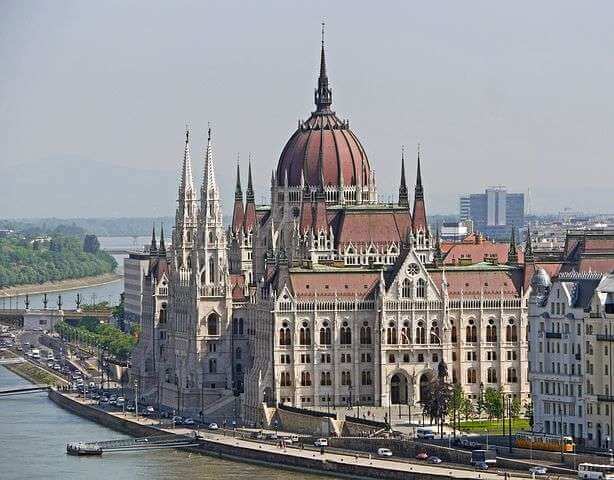
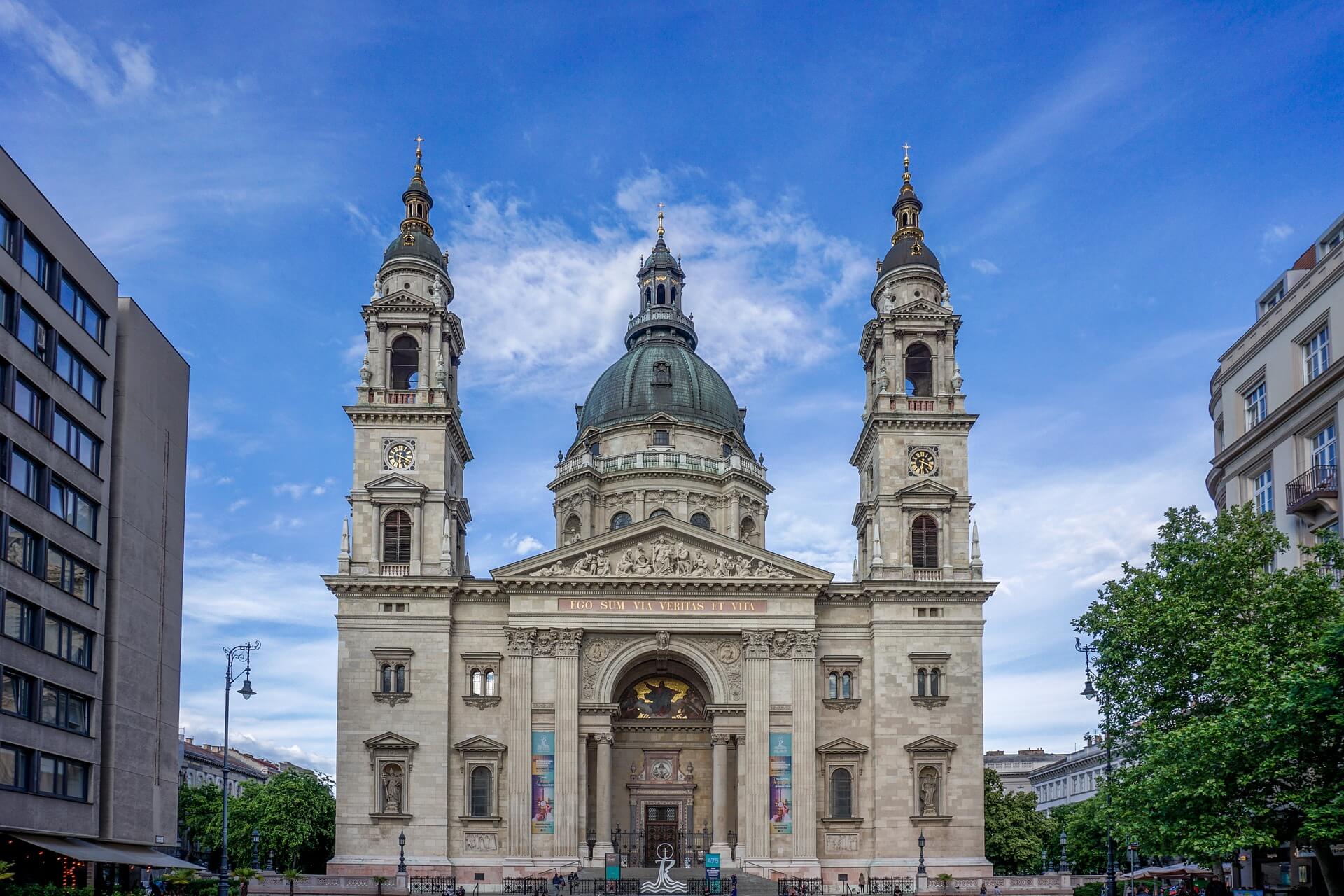
The iconic Parliament Building, which is home to the National Assembly, stands prominently along the riverbank in Pest. It was constructed in Gothic Revival and Baroque style and completed in 1902. Many of its 691 rooms can be visited on a guided tour of the North Wing, which includes most notably the Domed Hall, the Golden Staircase, and the Crown of Saint Stephen. The adjacent Heroes’ Square is the largest square in the city. In the center is a 98 feet column topped with the statue of Archangel Gabriel. It is also known for the MIllennium Monument, which was erected in 1896 to commemorate 1000 years of Magyar history. Saint Stephen Basilica is a beautiful neoclassical cathedral built in 1905. The inside of it is quite dark but the view from the top of the Dome is fantastic. The Great Synagogue of Budapest was built in 1859 and is the largest Jewish house of worship in the world outside of New York City. Moorish elements are incorporated in the unique decorative style. It contains the Hungarian Jewish Museum and Archives, and just north of the Synagogue is the Holocaust Tree of Life Memorial.
The two museums in Pest we recommend are 1) the Hungarian National Museum, which since 1802 has displayed collections of interest related to the Carpathian Basin in general and Hungary in particular, and 2) the House of Terror, which is a rather new museum which opened in 2002. It depicts the dark side of the fascist and communist eras of the 20th century, and was conceived as a memorial to the victims of these regimes who were sequestered, interrogated, tortured, and executed in this building.
The Kerepesi Cemetery, with more than 3,000 gravestones and mausoleums, is one of the largest in Europe and considered a national treasure.
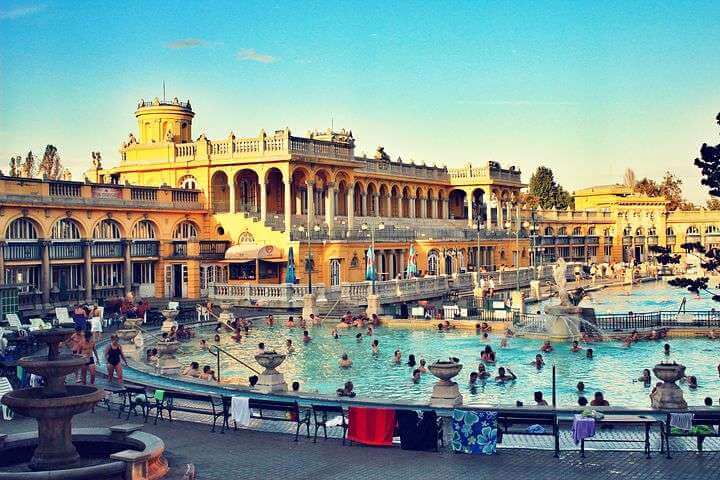
Szechenyi Baths are the most popular in this part of the city, and contain twelve indoor and outdoor thermal pools. Temperatures in the pools can reach 104 F, which is particularly enjoyable in the bitterly cold winters.
The Danube Bend
As the Danube flows through scenic valleys in the region it passes interesting historical towns such as Szentendre, Visegrad, and Esztergom. These can be reached by both cruise ship and road. Szentendre is only 12 miles north of Budapest and is a very pleasant town which can be reached by ferry in the summer and by train all year around. The main square, in the centre of the Old Town, is surrounded by art galleries, cafes and orthodox churches.
Visegrad is further north and 27 miles from Budapest. It is known for its Citadel and Castle, both of which overlook the Danube from the top of a 1150 ft hill. Climbing to the top of the hill and visiting the partially restored Royal Palace,is well worth the climbing effort.
Esztergom is situated a further 17 miles north of Visegrad, and 44 miles from Budapest. Esztergom is home to the largest church in Hungary, Saint Stephen Basilica, built in commemoration of Saint Stephen, who was born in Esztergom in 975 and who became the first King of Hungary. It was a powerful city during the Middle Ages, serving as both the capital city and the seat of the Roman Catholic Church in Hungary. A visit to the Basilica is a must, including the crypt and the treasure. And do not miss the Castle Museum located in the Royal Palace and the Christian Museum, both richly endowed with large collections of religious Medieval Art.
Lake Balaton expands its fresh waters over 50 miles. The dated and old fashioned resort, BalatonFured, used to attract the rich and famous of the 19th century, who built large villas and came for the curative thermal waters. Tihany is a historic village built on the three mile long peninsula of the same name, which includes the famous Benedictine Tihany Abbey built in 1055AD.
Pecs
This region of Hungary is a step back in time, especially if you go to Pecs. It was declared the European Capital of Culture in 2010. The former Zsolnay factory was transformed into the Zsolnay Cultural Quarter and has been divided into various quarters separating craftsmen and the university. Reserve some time to visit the street of artisan’s shops. In the main square of Pecs is the Pasha Gaim Kassim Mosque, built by the invading Turks who occupied the town in the 16th century. It was built using the stones of the former church on the site, and was the largest building of the time. Catholic forces retook the area in the 18th century and reconverted the mosque into the Inner Town Parish Church, keeping some of the Islamic elements.
Eger and Northern Hungary
This region is at the foothills of the Carpathian Mountains. Thanks to its micro climate and the surrounding wooded hills, it is home to some of the best Hungarian wines: the sweet and delicious Tokaj, and Eger’s Bull’s Blood.
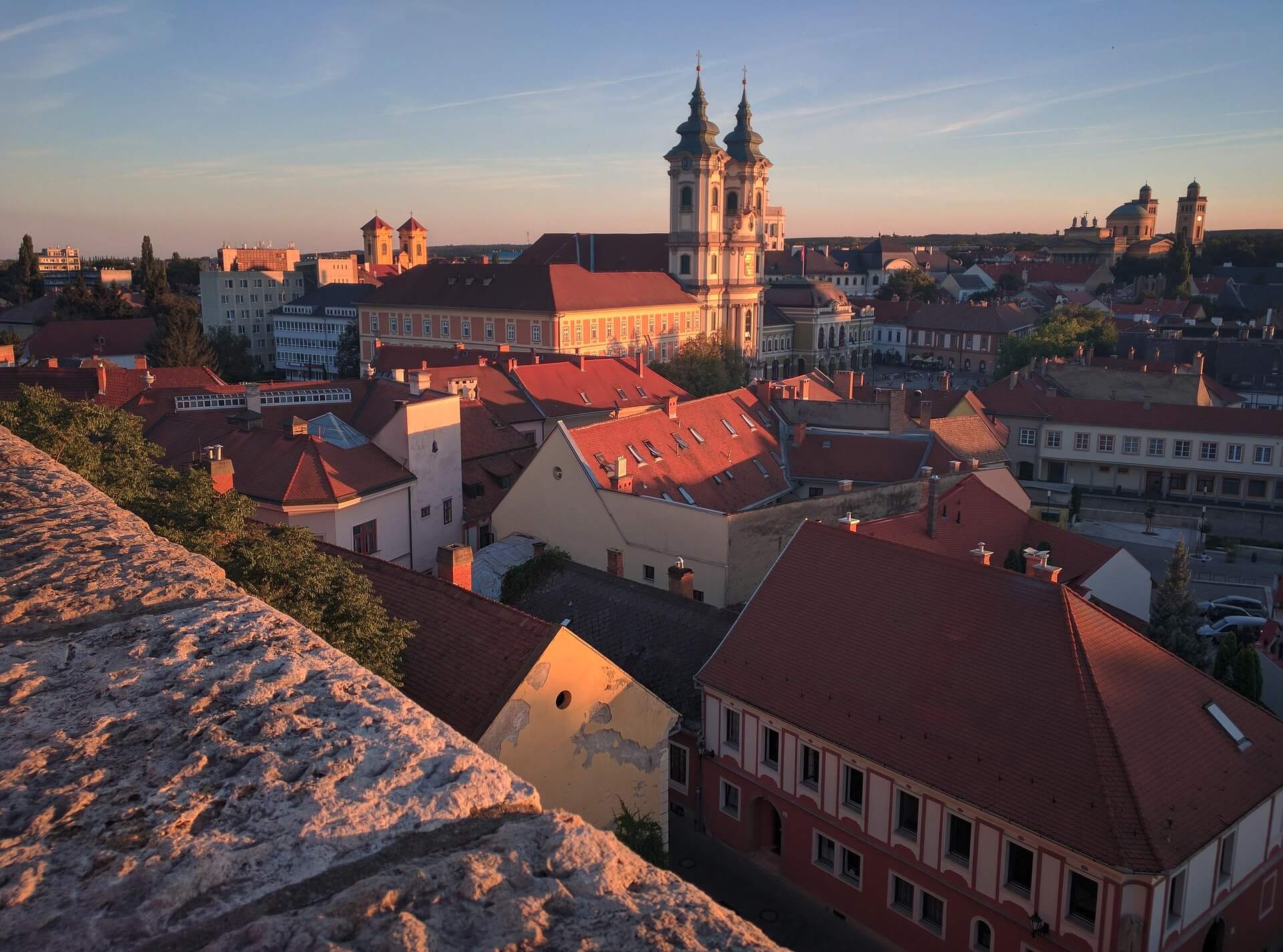
In Eger numerous baroque buildings can be found throughout the city. The Ottoman Minaret reminds all of the Turkish invasion. The siege of Eger was a famous historical moment in 1552 when less than 20,000 defenders inside the Castle resisted and repelled a Turkish army of 40,000 attackers.
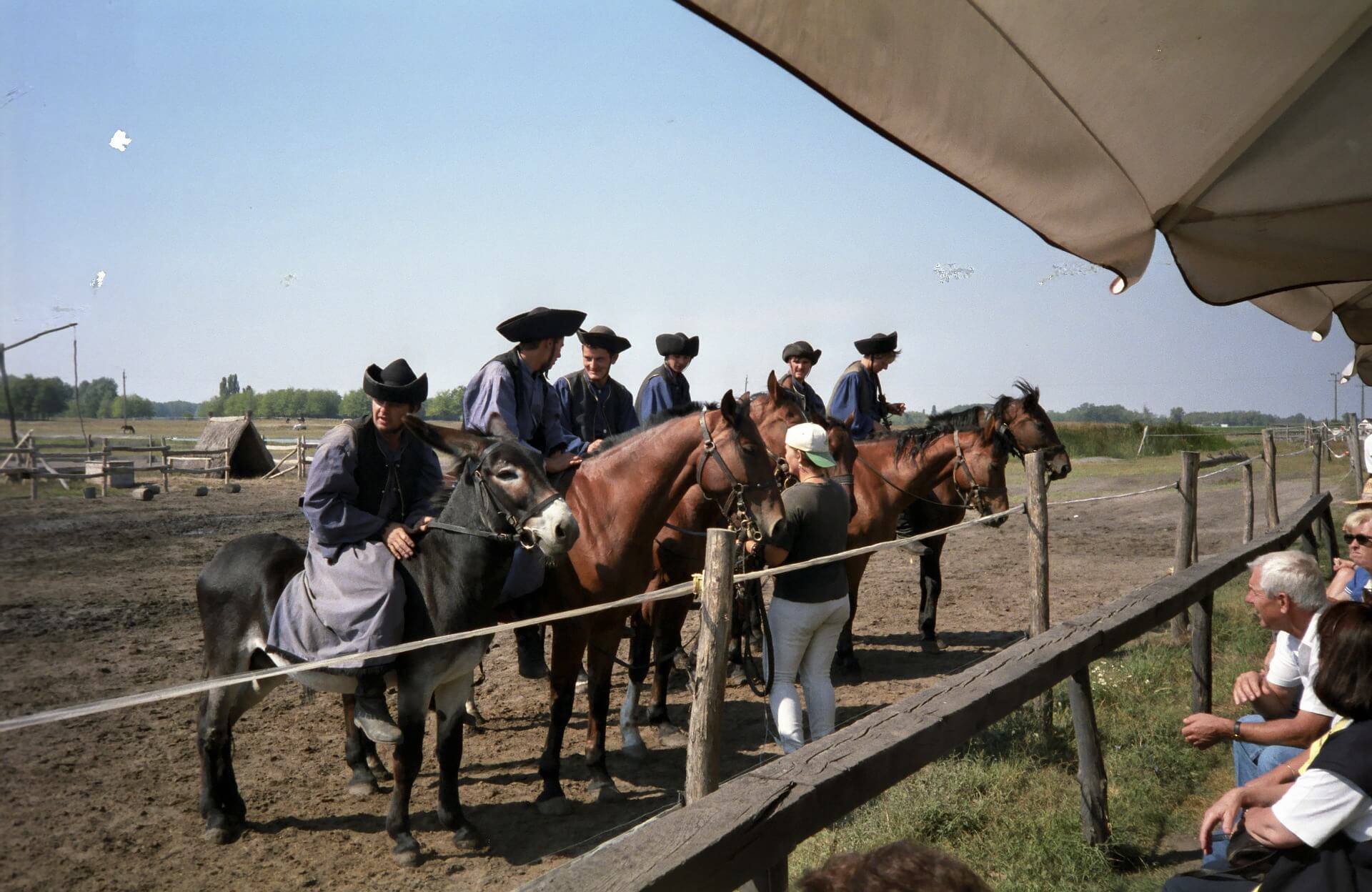
The Puszta is the Hungarian Great Plain, which is covered with large ranches and is considered the outback of the country, much like the American Wild West. Magyar cowboys are excellent horsemen and will demonstrate their skill when you visit. Part of the Puszta is the Hortobágy National Park, a World Heritage Site since 1999. It traces the origins of the Magyars back to the 9th century, when the tribes of the Tarim Basin from China moved first to the Russian Ural Mountains, then to Hungary.
No Tour Found