


Laos, officially the Lao People’s Democratic Republic, is a communist state and the only landlocked country in Southeast Asia. At the heart of the Indochina Peninsula, Laos is bordered by Myanmar and China to the northwest, Vietnam to the east, Cambodia to the southeast and Thailand to the west and southwest. Its present day capital and largest city is Vientiane. Laos has dense primeval forests, underground caves, antique temples and friendly people. Its population is approximately 7.5 million with most people living in the valleys of the Mekong River and its tributaries. Vientiane prefecture has almost 700,000 residents.
Present day Laos traces its historic and cultural identity to the kingdom of Lan Xang which existed from the 14th to the 18th centuries AD and was one of the largest kingdoms in Southeast Asia. The kingdom was a hub for overland trade and became wealthy economically and culturally. Lan Xang means “million elephants” and was founded by a Lao prince, Fa Ngum. With 10,000 Khmer troops he conquered many towns and cities in the Mekong River Basin. He made Buddhism the official religion and the kingdom prospered. In 1520, the capital was moved from Luang Prabang to Vientiane. Eventually Laos was divided into three separate kingdoms-Luang Prabang, Vientiane and Champasak. In the late 19th century, Luang Prabang was ransacked by the Chinese Black Flag Army and France rescued it and restored the kingdom.
In 1893, the three territories came under French rule and were united into present day Laos. The country briefly gained independence after the Japanese occupation in World War II but was re-colonized by France until it won self-ruling autonomy in 1949 and became fully independent in 1953 with a constitutional monarchy. A post-independence civil war broke out and the Communist Pathet Lao supported by the Soviet Union seized power in 1975 after the conclusion of the Vietnam War. The dominant political and cultural Lao people constitute 53% of the population and live in the lowlands with substantial minority groups of Mon-Khmer including the Hmong in the foothills and mountains.
Archeological evidence indicates an agricultural society founded around 4000 BCE followed by a Bronze Age Society in 1500 BCE with the introduction of iron tools in 700 BCE. The climate is mostly tropical savanna and greatly influenced by the monsoon pattern. There is a distinct rainy season from May to October followed by a dry season from November to April. The country is divided into 17 provinces and one prefecture which includes the capital city of Vientiane. The tourism sector of the economy has grown rapidly in recent years with tourist spending in excess of $1.5 billion in 2019. The European Council on Trade and Tourism awarded Laos the “World’s Best Tourist Destination” designation for 2013 for architecture and history. Luang Prabang and Vat Phou are both UNESCO World Heritage Sites. Major festivals include Lao New Year celebrated in the middle of April and is highlighted by a water festival.
Theravada Buddhism is a dominant influence in Lao culture. It is evident throughout the country, expressed in language, temples and the arts and literature. Many elements of Lao culture pre-date Buddhism. Laotian music is dominated by its national instrument, the khaen, a type of bamboo mouth organ that has prehistoric origins. The khaen is traditionally accompanied by a singer in mor lam, the Lao style of folk music. Sticky rice is a food staple and has cultural and religious significance. For example, some farmers plant sticky rice in small quantities near the farmhouse in memory of dead parents or at the edge of the rice field to indicate the parents are still alive.
Tourist Attractions:
The Capital Vientiane
Vientiane was founded during the late 13th century, and in the mid-16th century was made the capital of the Lao Kingdom. In 1828 it was sacked and mostly destroyed. The city still has some of its older structures. Its modern industries include brewing, lumber processing, brick manufacturing, tire, textiles and cigarettes. Vientiane is the principal point of entry to the country.
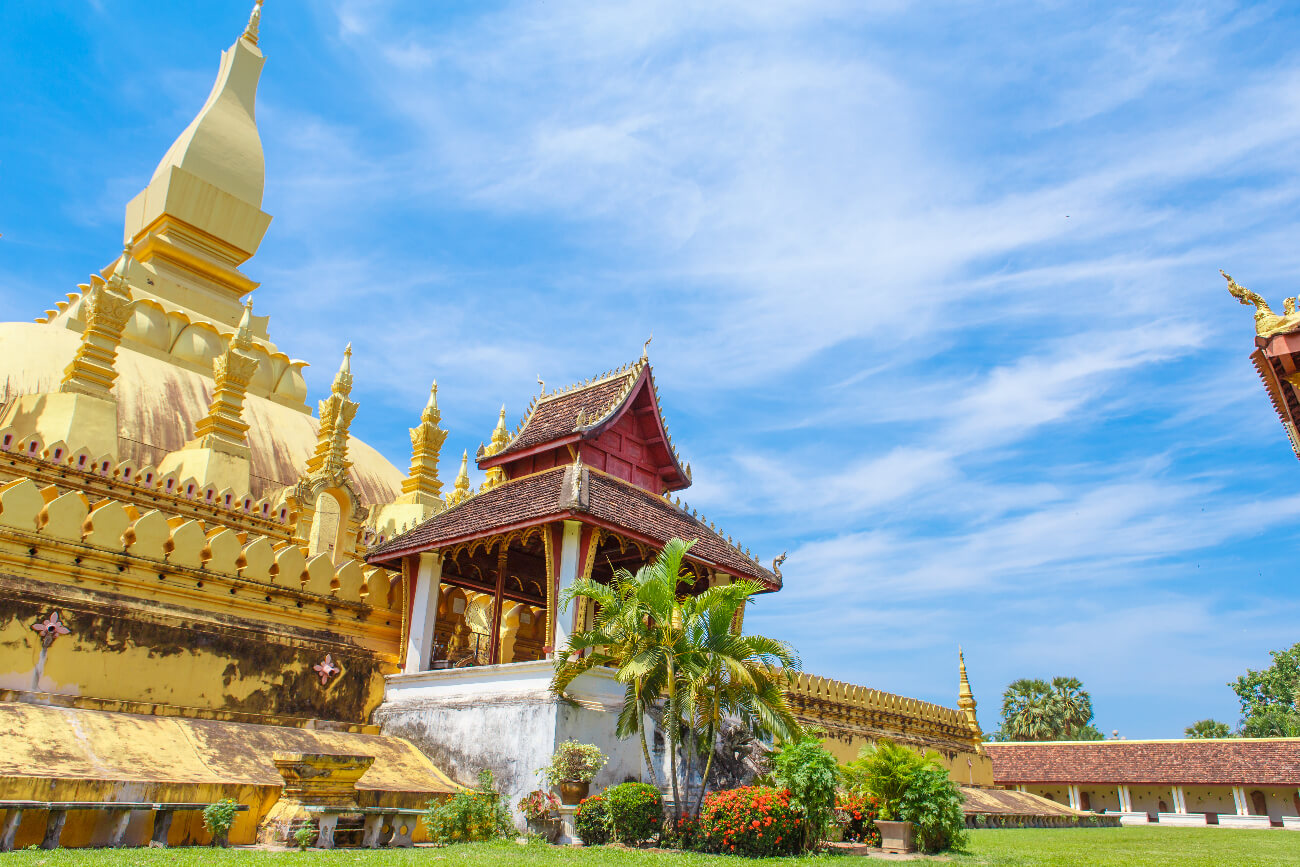
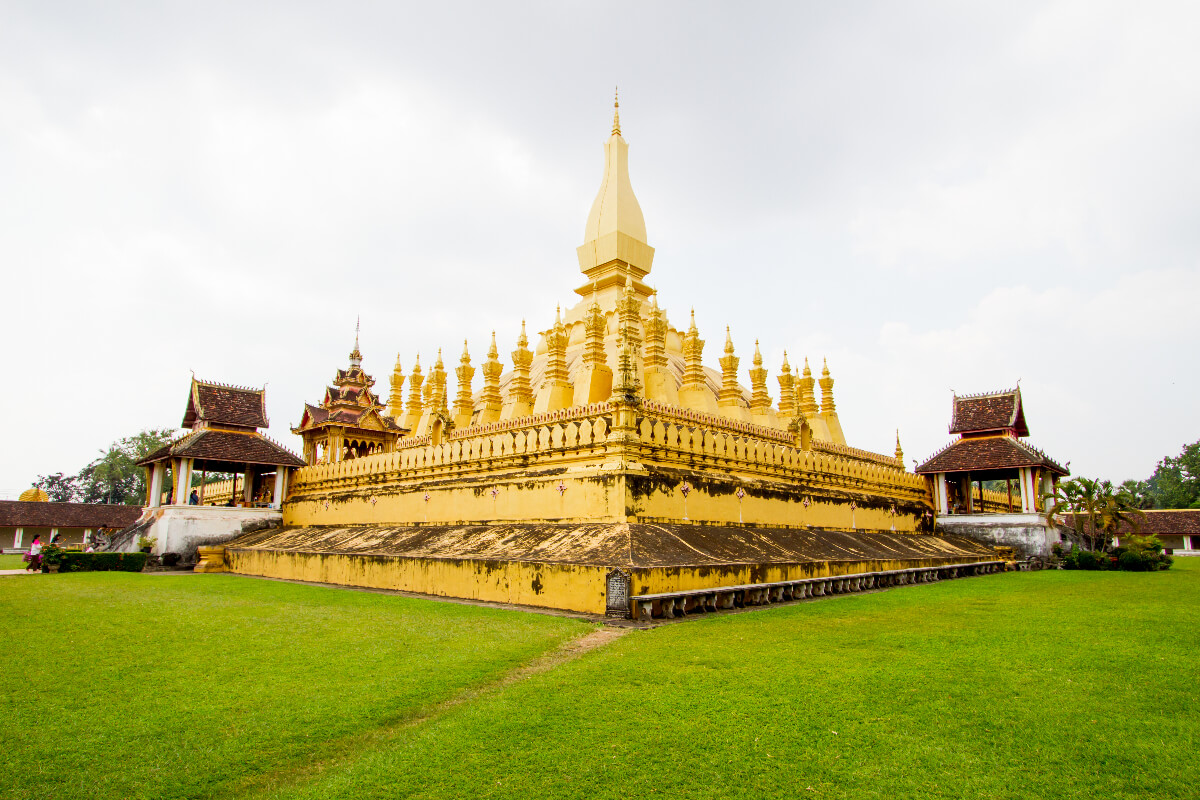
Pha That Luang This is the most important National Monument and a symbol of Buddhism. It is built with brick built gold stupas. The main stupa comprises three levels symbolizing the three realms of Buddhism around which are thirty small stupas.
COPE Visitor Center is an emotionally moving museum about the “Secret War” and the heavy bombing and loss of life.
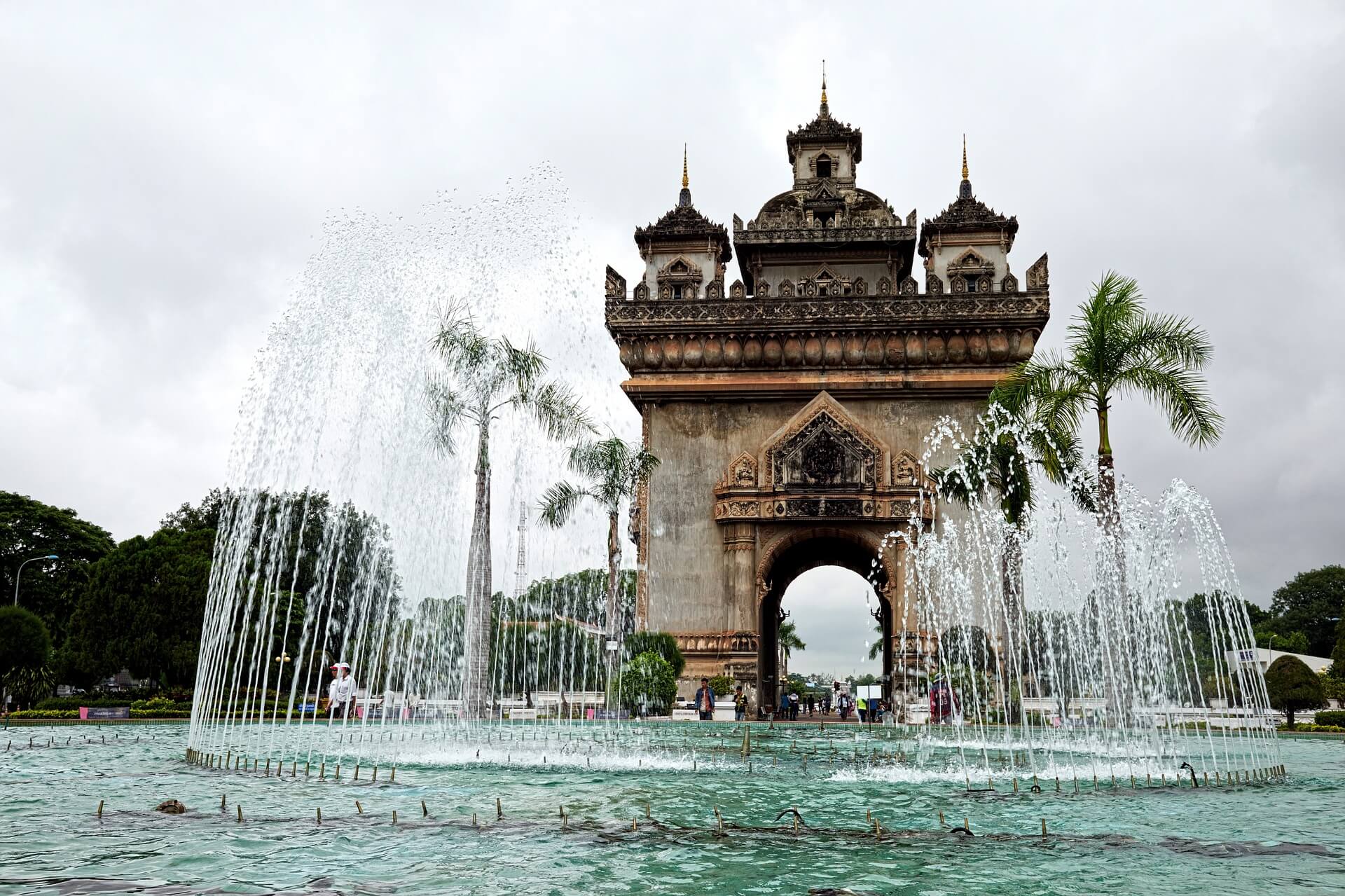
Patukai is in the center of the city and is a large war monument, 148 feet high and 79 feet wide and is similar to the Arch de Triumph in Paris except that it has Lao symbols attached.
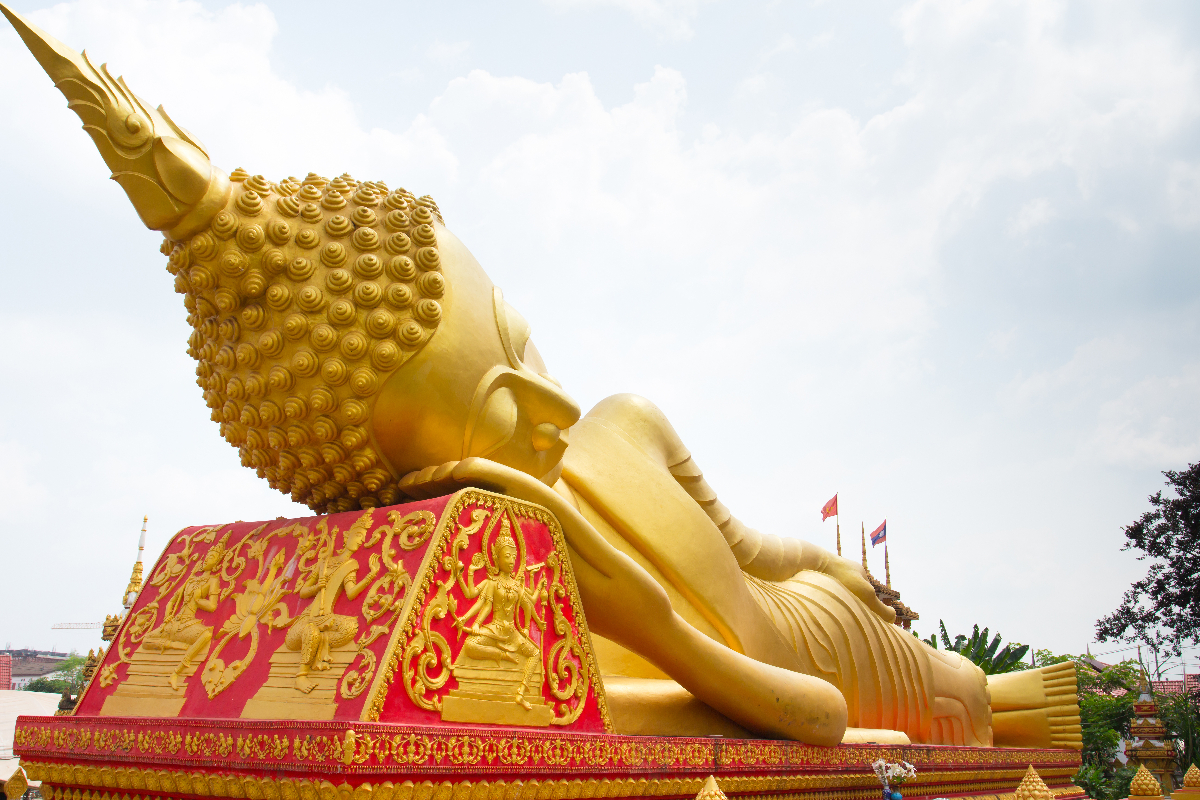
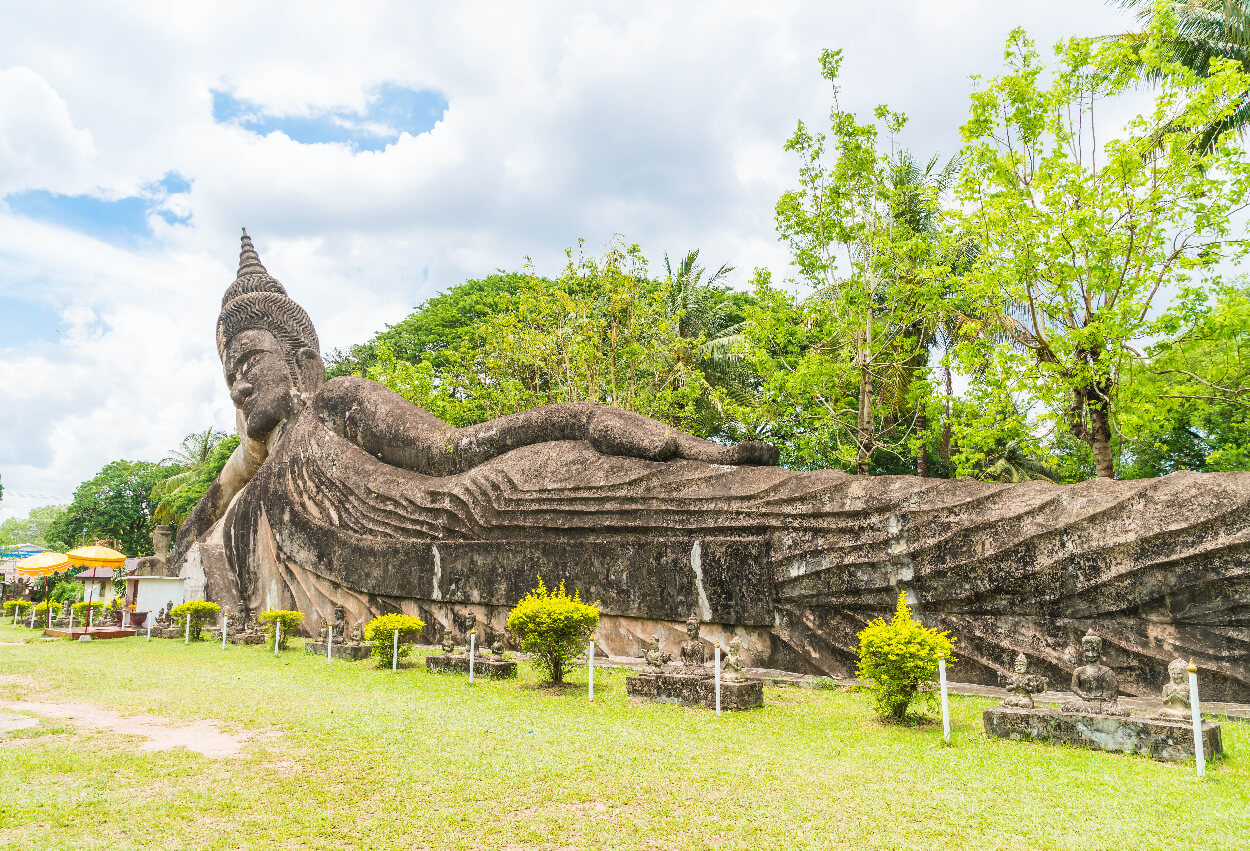
Buddha Park is a beautiful sculpture park with statues of Buddha and Hindu gods, deities, demons and animals from both religions.
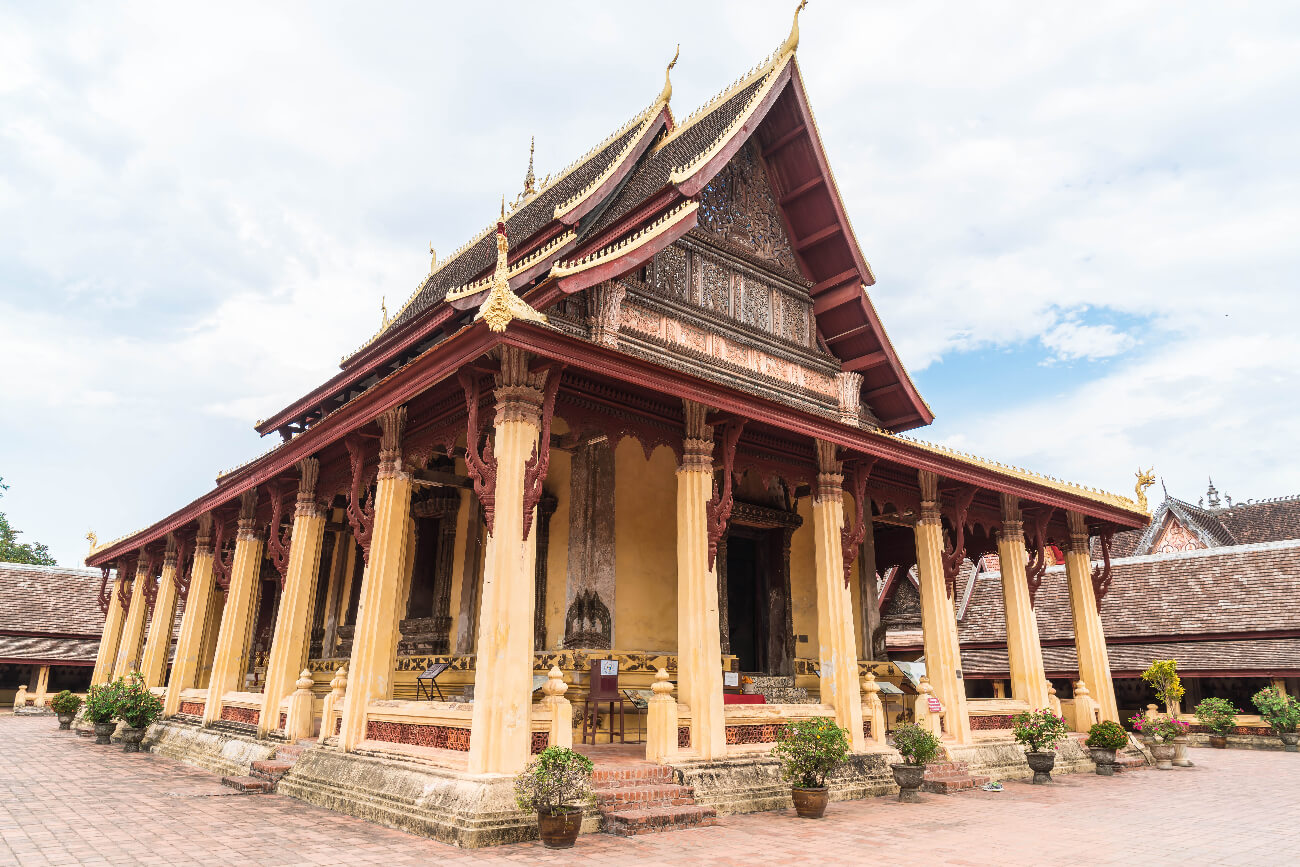
Wat Sisaket is the only temple in Laos that survived the Siamese occupation in 1828. It features over 10,000 Buddha sculptures and was built in 1818.
Wat Phu is on the west bank of the Mekong River south of Paske, a UNESCO World Heritage Site which is an archeological treasure. The Khmer temple is a miniature version of Angkor Wat in Cambodia. The remarkable and puzzling fact is that it was built in the 10th century making it older than Angkor Wat.
The City and Ancient Capital Luang Prabang
Luang Prabang is a small city and one of the most popular tourist attractions in the country. Until 1975, when the communists gained power, it was the royal capital.
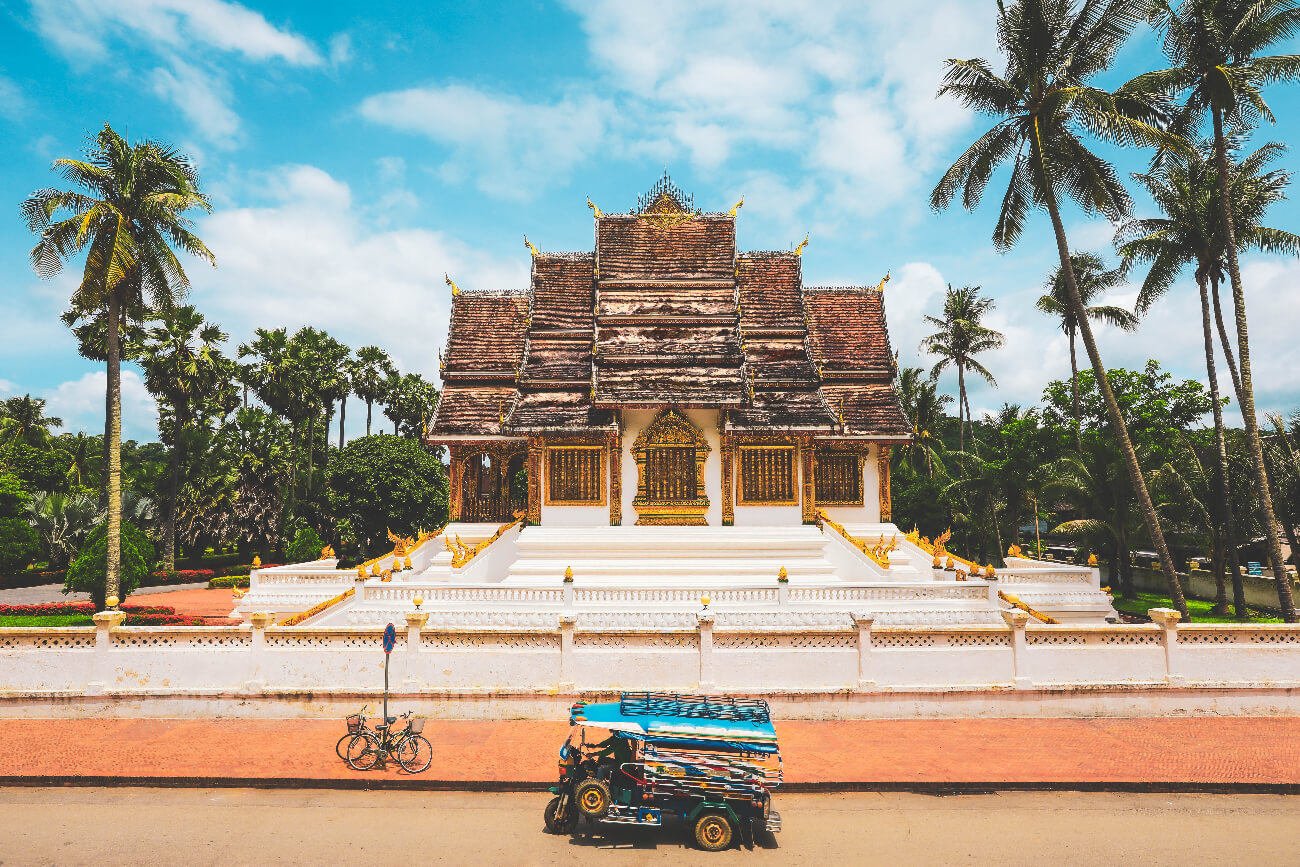
The Royal Palace was built in 1904 and lived in by the king and his court. It is now a national museum.
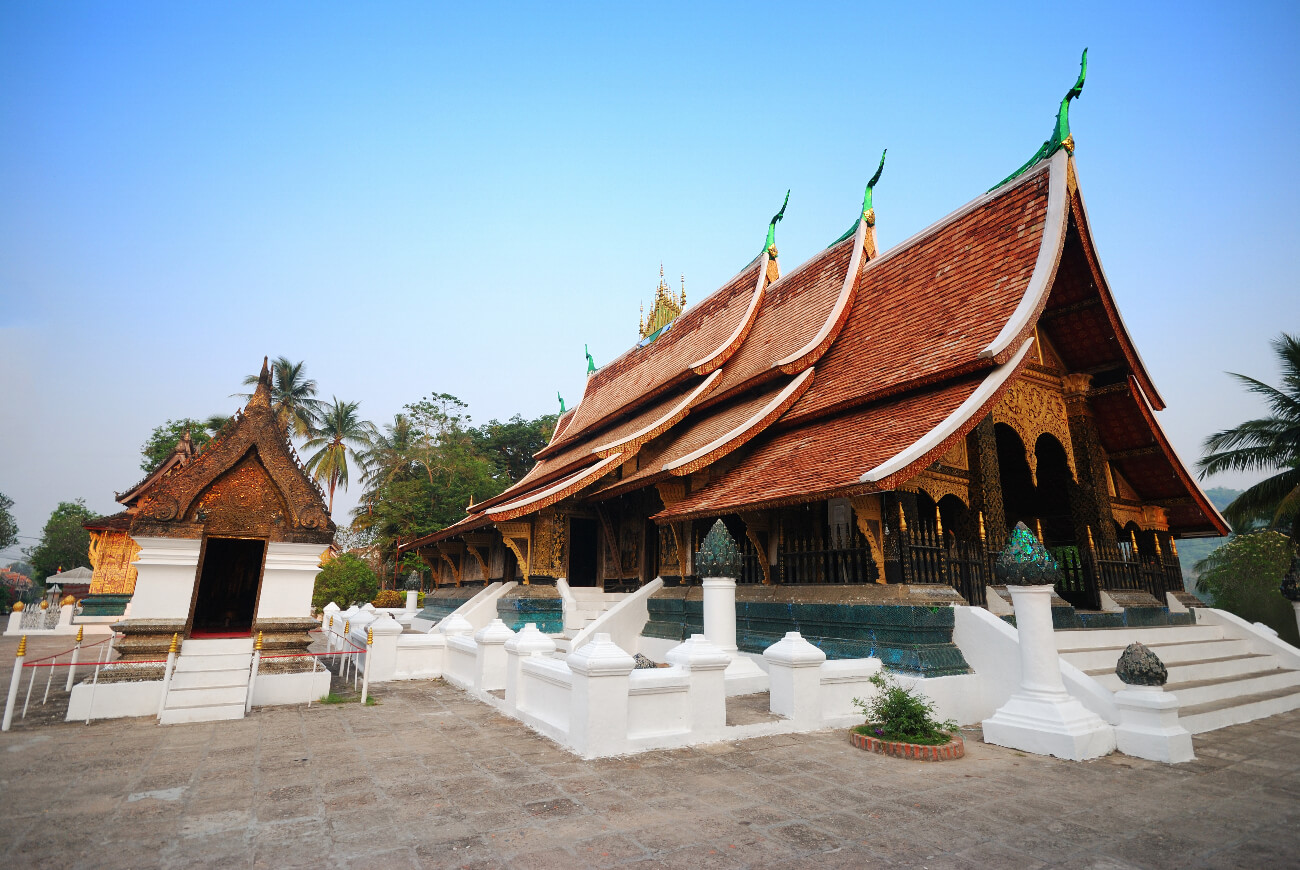
Wat Xieng Thong The Golden City Temple is known as the most beautiful temple in Luang Prabang. The most attractive mosaic at the temple is the “Tree of Life” crafted from stained glass. There is also a 39 foot high hearse in the funeral hall with a golden urn for royal remains.
Mount Phousi is a holy mountain with the “That Chomsi Stupa” on its summit. The mountain gives a beautiful panoramic view of the city below.
The Night Market has countless tents selling all things.
Other Excursions
The Bolaven Plateau Loop is in southern Laos and is a plateau with coffee and tea plantations and dramatic waterfalls at a 4000 feet elevation.
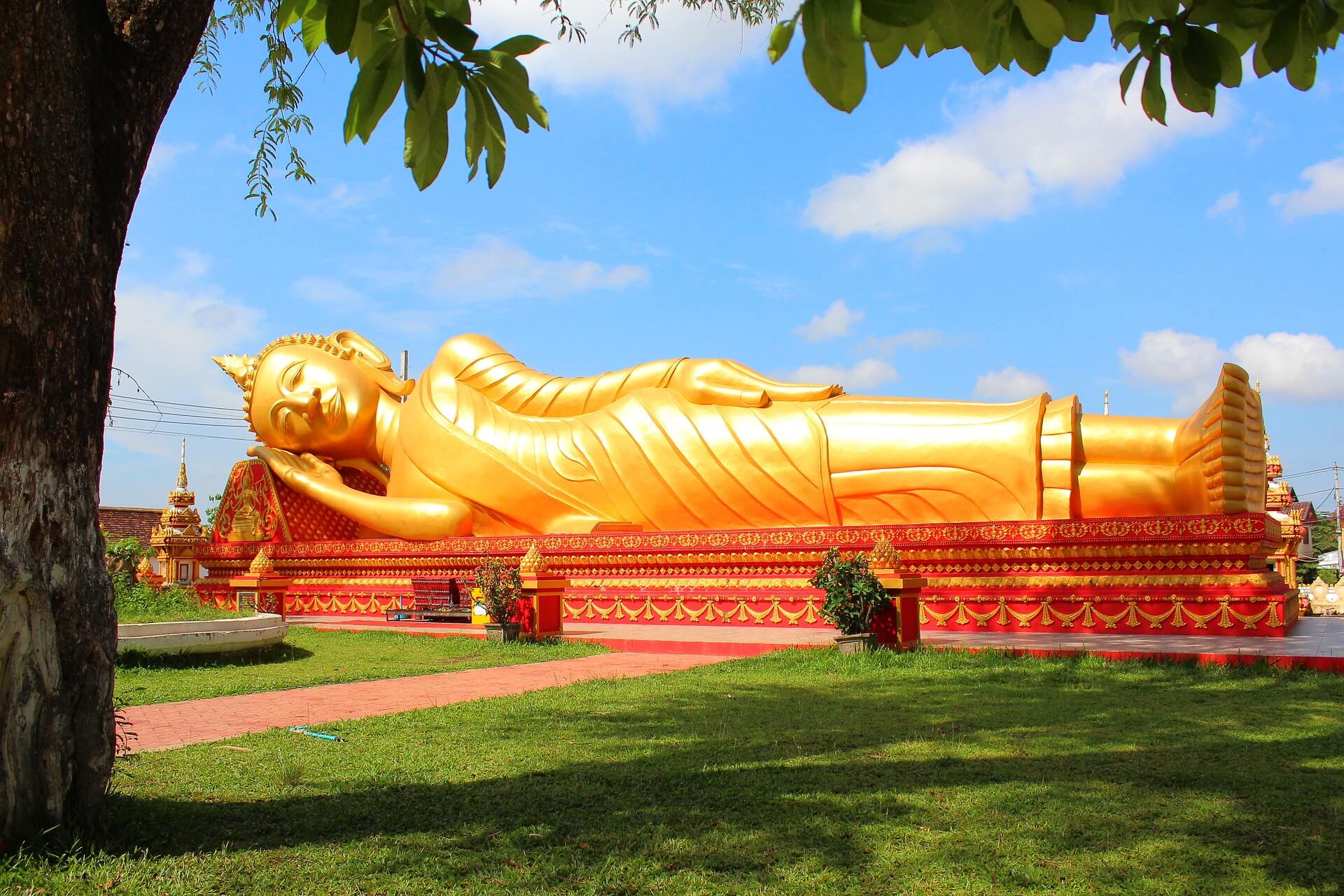
The Golden Buddha is near Paske and overlooks the Mekong River.
Mekong River Take a ride on the river from the city of Paske to the ruins at Vat Phou.
Alms Giving When you visit Luang Prabang, get up when the sun rises to see the procession of people giving alms to the Buddhist monks.
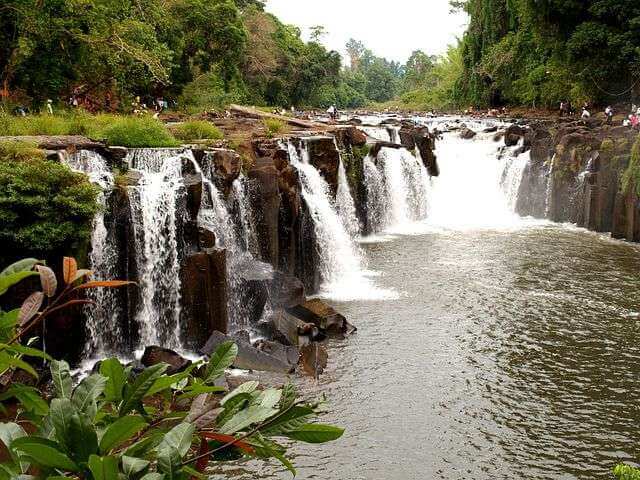
Tad Sae Swim at Tad Sae among the beautiful waterfalls on many levels.
No Tour Found