


Islas Canaria has been an autonomous community of Spain since 1982. It stands in the Atlantic Ocean 67 miles west of the coast of Morocco. The population is slightly over 2 million inhabitants. The capital is Santa Cruz de Tenerife. The archipelago is formed by eight main islands: Tenerife, Fuerteventura, Gran Canaria, Lanzarote, La Palma, La Gomera, El Hierro and Las Gracias.
Active volcanoes are part of the islands. Teide, Pico Viejo and Montana Blanca form the central complex of Tenerife. La Palma erupted recently for more than 90 days and the local population had to be evacuated.
The islands enjoy a subtropical climate with little variation from the low to high seventies between summers and winters. About 10 inches of rain is falling in November and December and up to 30 inches in the NE of the islands
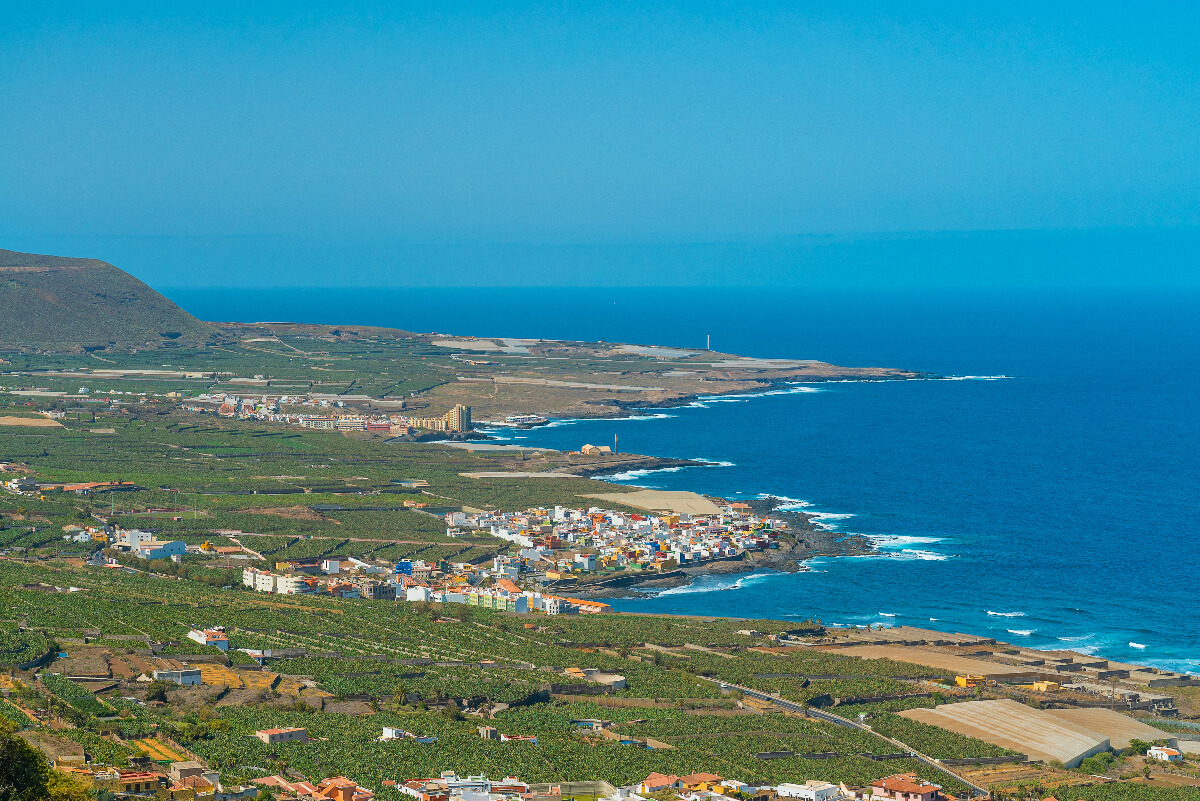
Agriculture is the main economy. Tomatoes, potatoes, vegetables, fruits and mostly bananas are the main crops. Flowers are widely produced to be exported.
Small manufacturing industry and food processing plants have grown outside of Santa Cruz De Tenerife as well as petroleum refineries
Tourism was developed after 1950 as many hotels, inns and airports were built. Las Palmas and Santa Cruz de Tenerife are the main ports of call during the peak season which extends from December to March.
When the Spaniards arrived in the islands they found aboriginies people of neolithic culture, advanced enough to produce pottery. They called them Guanche or Canarios. Berber people were conquered by the Spaniards in the 15th century. Navigators from Genoa, Majorca, France and Portugal came by but the Spaniards started their reign on the islands after the 1479 treaty of Alcacovas. It became a naval base on the route to America.
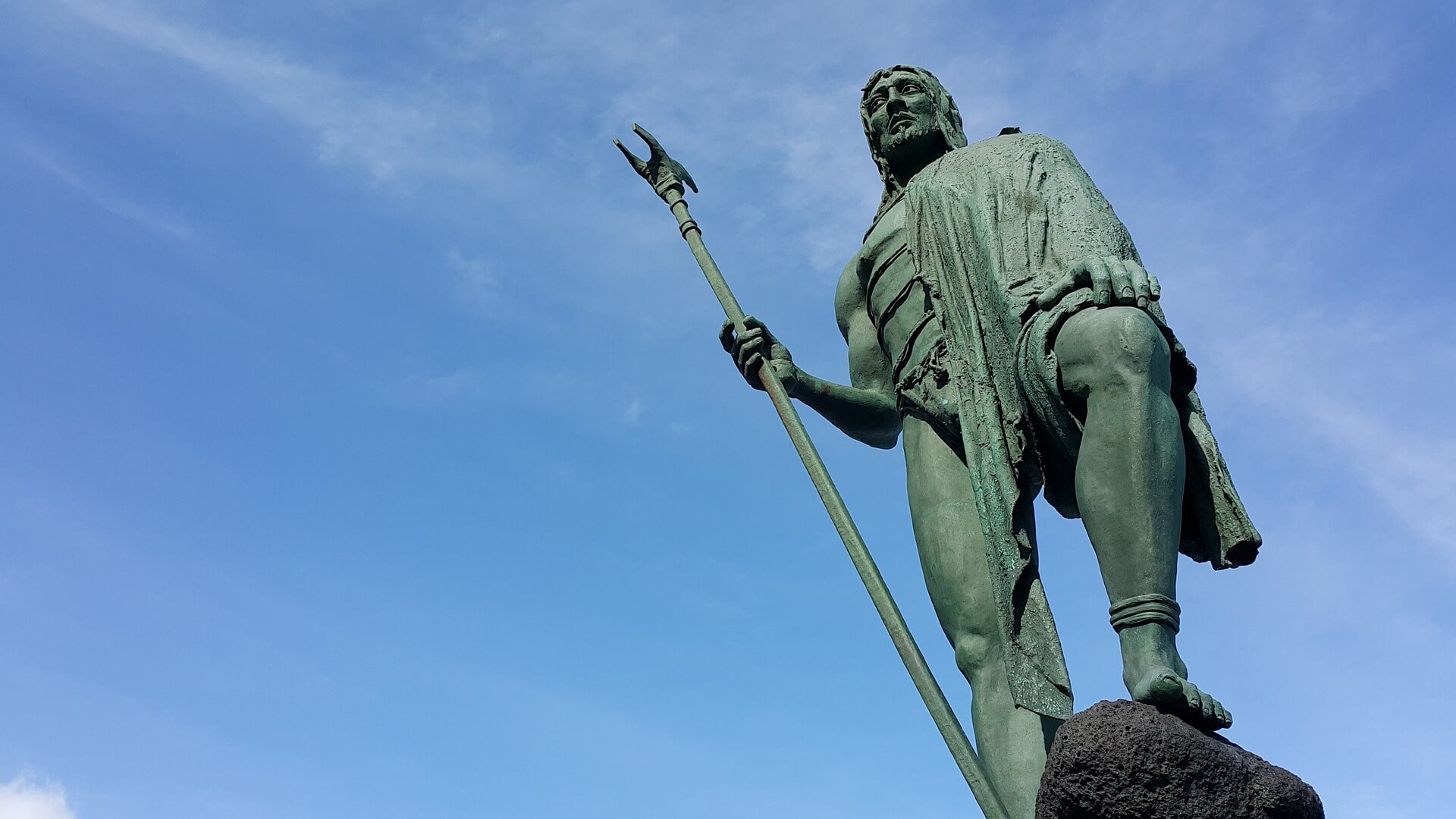
Canary Islands’ cuisine has been influenced by the traditional Spanish recipes mixed with african and latin-american origins. The endless variety of dishes use the natural products growing in the islands.
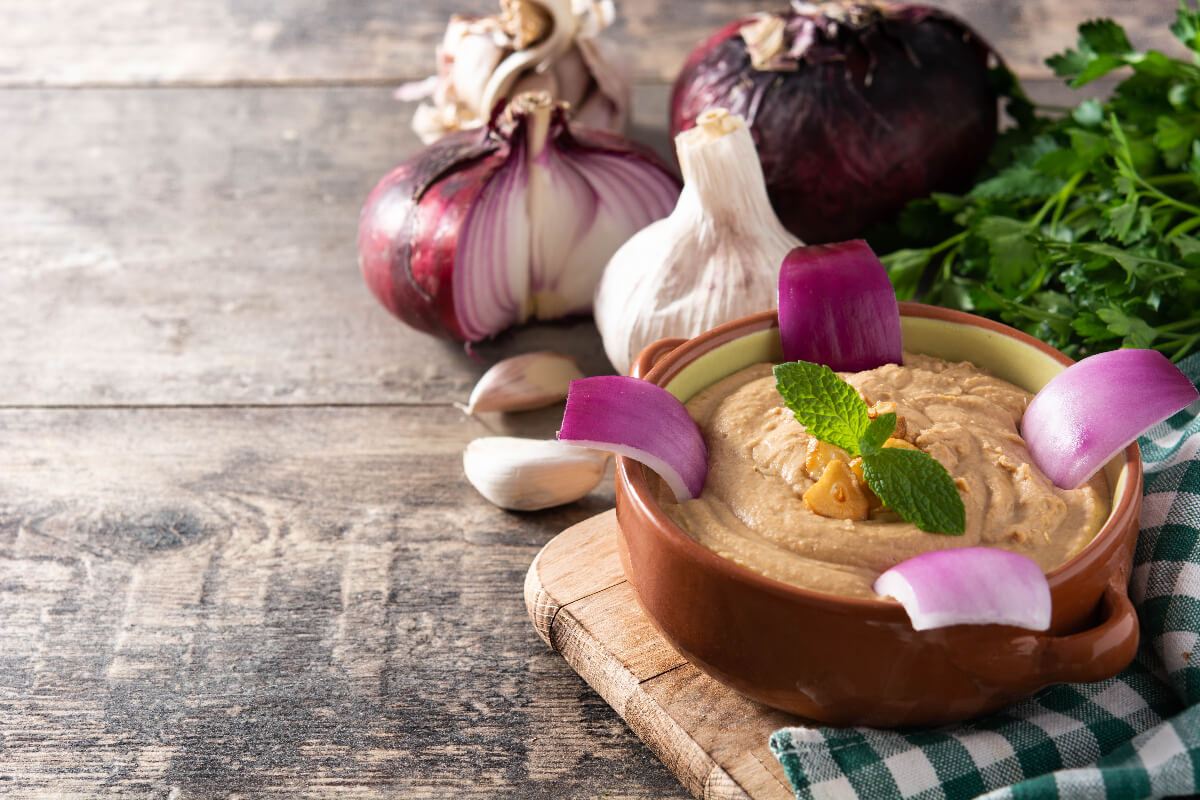
Papas Arrugadas are simple and easy to make with potatoes boiled in salt-water without peeling them and served with Mojo picon, a hot sauce of oil, garlic, chili-peppers and paprika. Each chef keeps his secret jealousy to make his own Mojo. Those sauces are indispensable components of many other typical dishes as well, for instance of the famous Mojo Cochino, a ragout of pork.
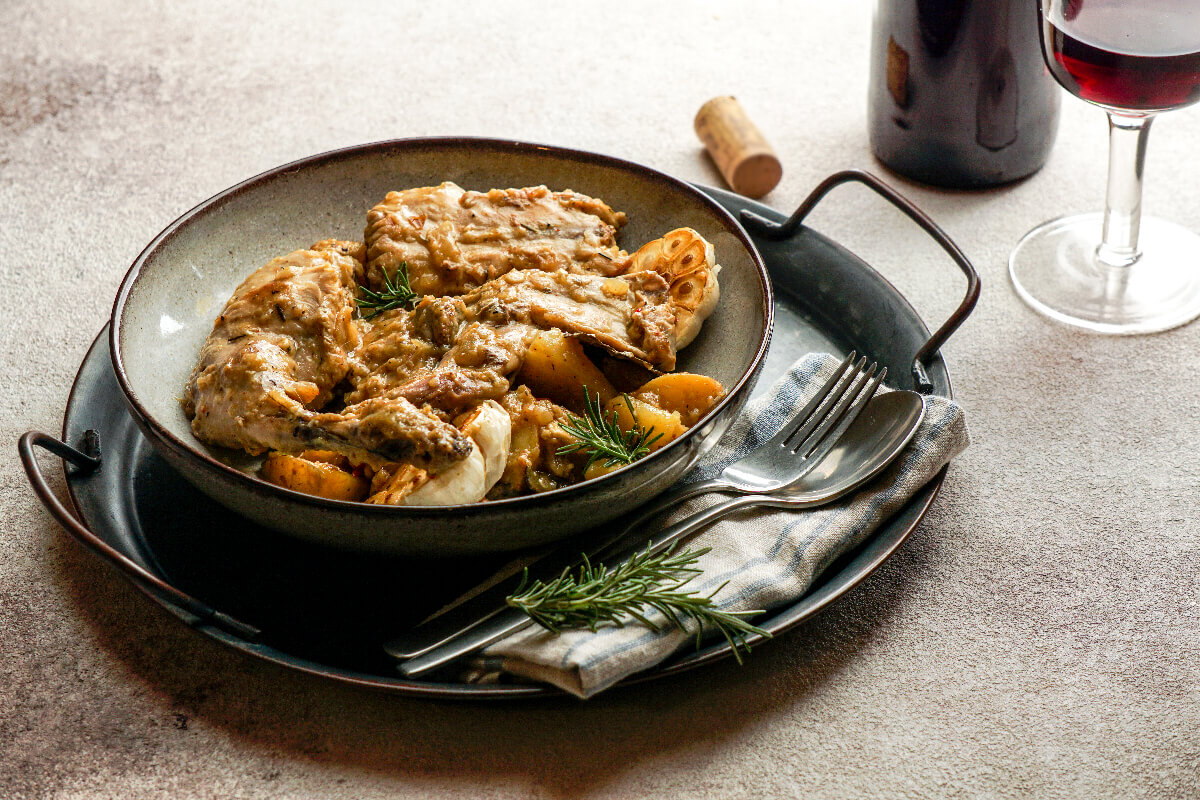
Gofio is the most traditional and one of the oldest recipes of Canarian food.It goes back to the indegenous Guanches people; It is a stoneground flour made from roasted cereals: wheat, barley, maiz. Gofio is used by Canarians in many recipes: it can be added to soups, stews, desserts, sauces, and even ice cream. It is, to give an example, typically served with Morcillas Dulces, sweet blood sausages which are made of pork blood, sugar, almonds and raisins.
For those who like fish Caldereta and Sancocho Canario are made with salted fish in a Mojo sauce. Fish and sea-food are very abundant.
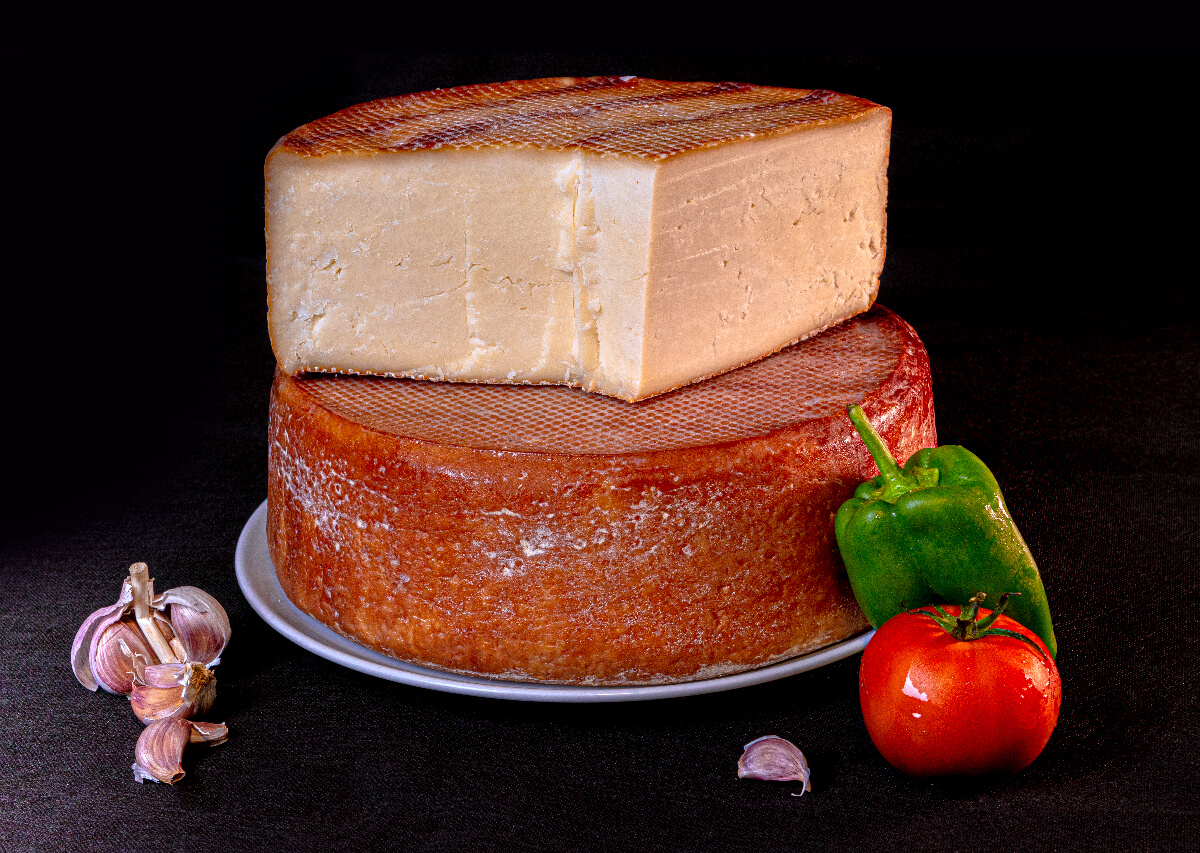
For vegetarians, Potaje de Berros is a hot-pot of chick-peas, Cheese may vary from island to island, the best known are the smoked cheese of La Palma and Flor de Guía in Gran Canaria.
Exotic fruits are the base of several excellent desserts and sweets. Platanos Fritos, fried bananas, are in great demand.
Among the islands’ wines you should try the Malvasía from Lanzarote and the red-wines of El Hierro, La Palma and Taraconte in Tenerife. Another of the islands’ alcoholic specialities is Honey-Rum.
There is plenty to do when spending a vacation in Tenerife.
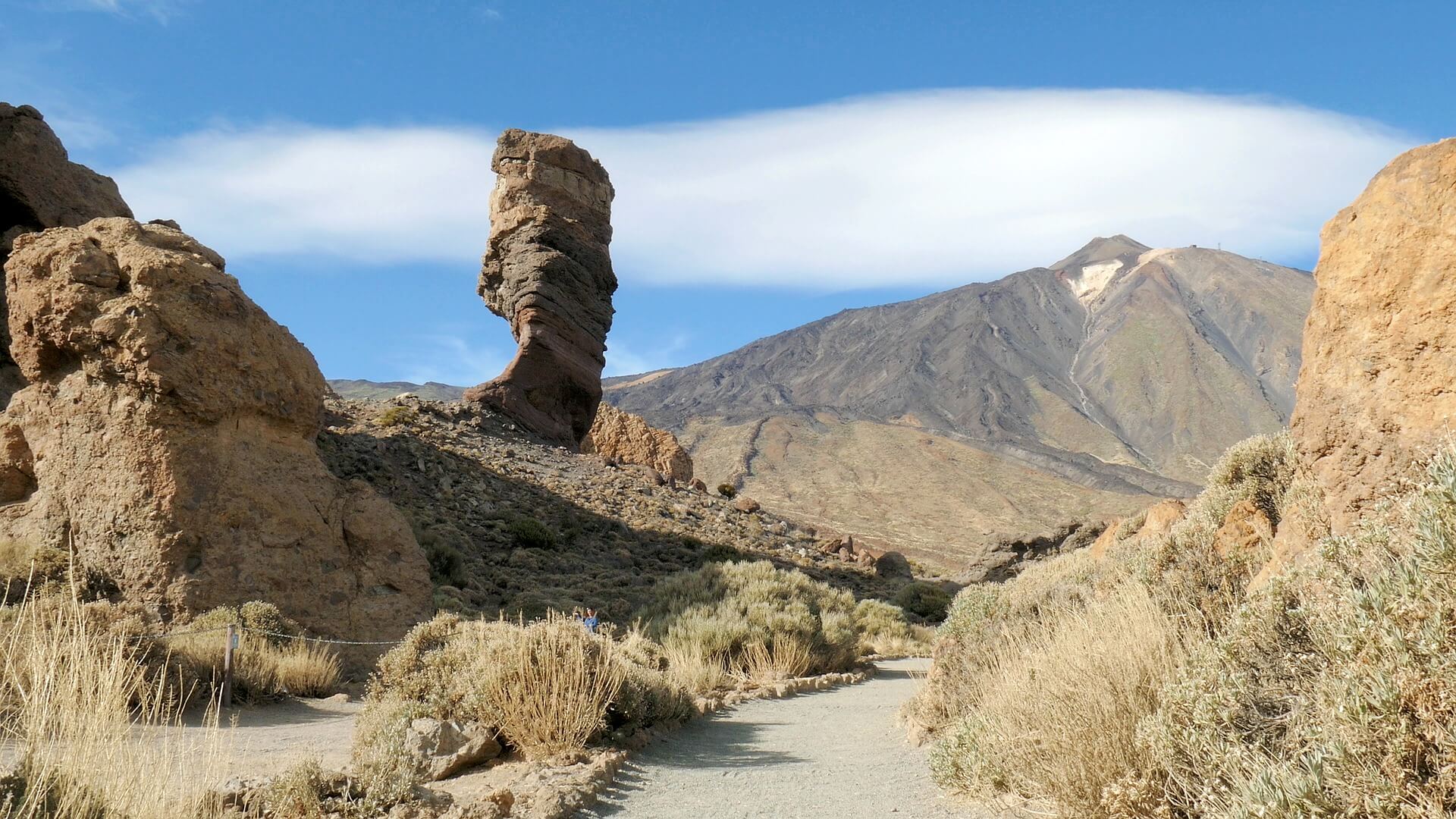
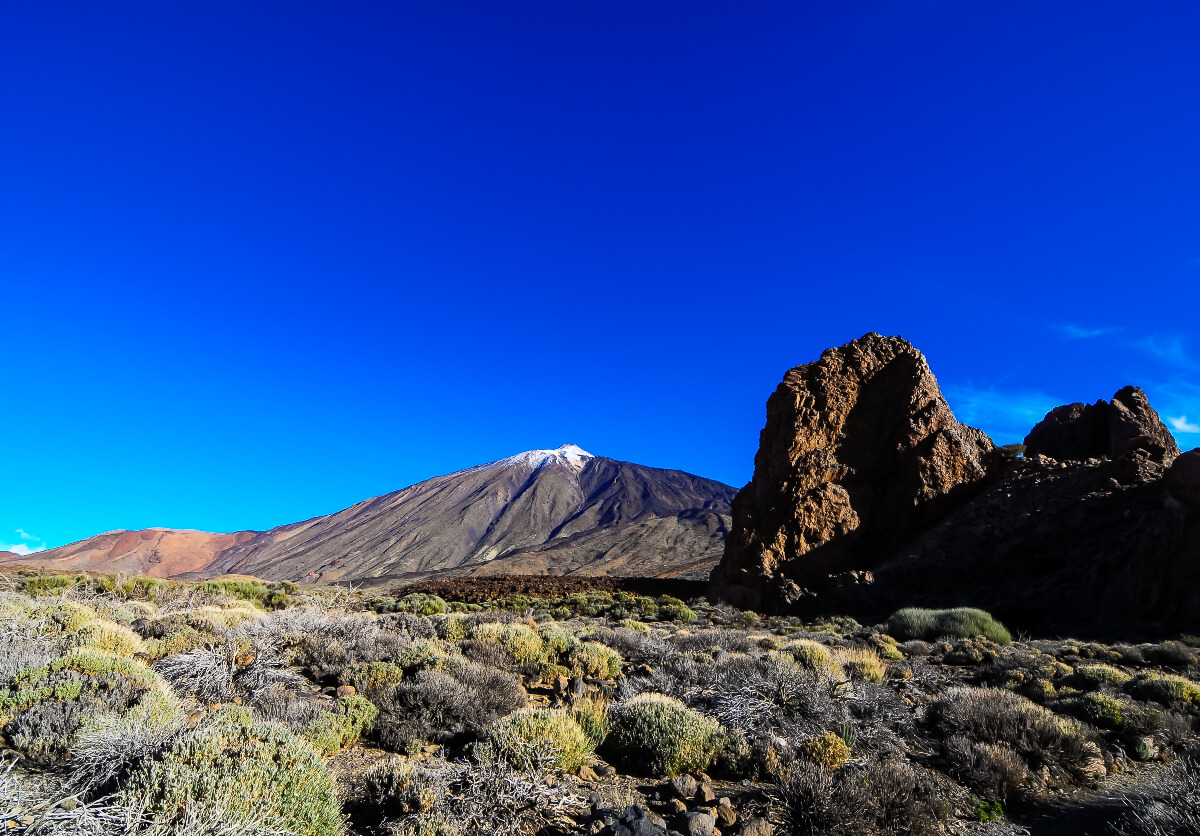
Teide National Park is very popular for its great outdoors trails, its fascinating rock structures and the caves visited by the millions of tourists who come each year. At the center of the Park stands Teide Volcano, 12,188 feet high, the highest peak in all of Spain’s territories. It is now dormant. The last eruption was in 1909.
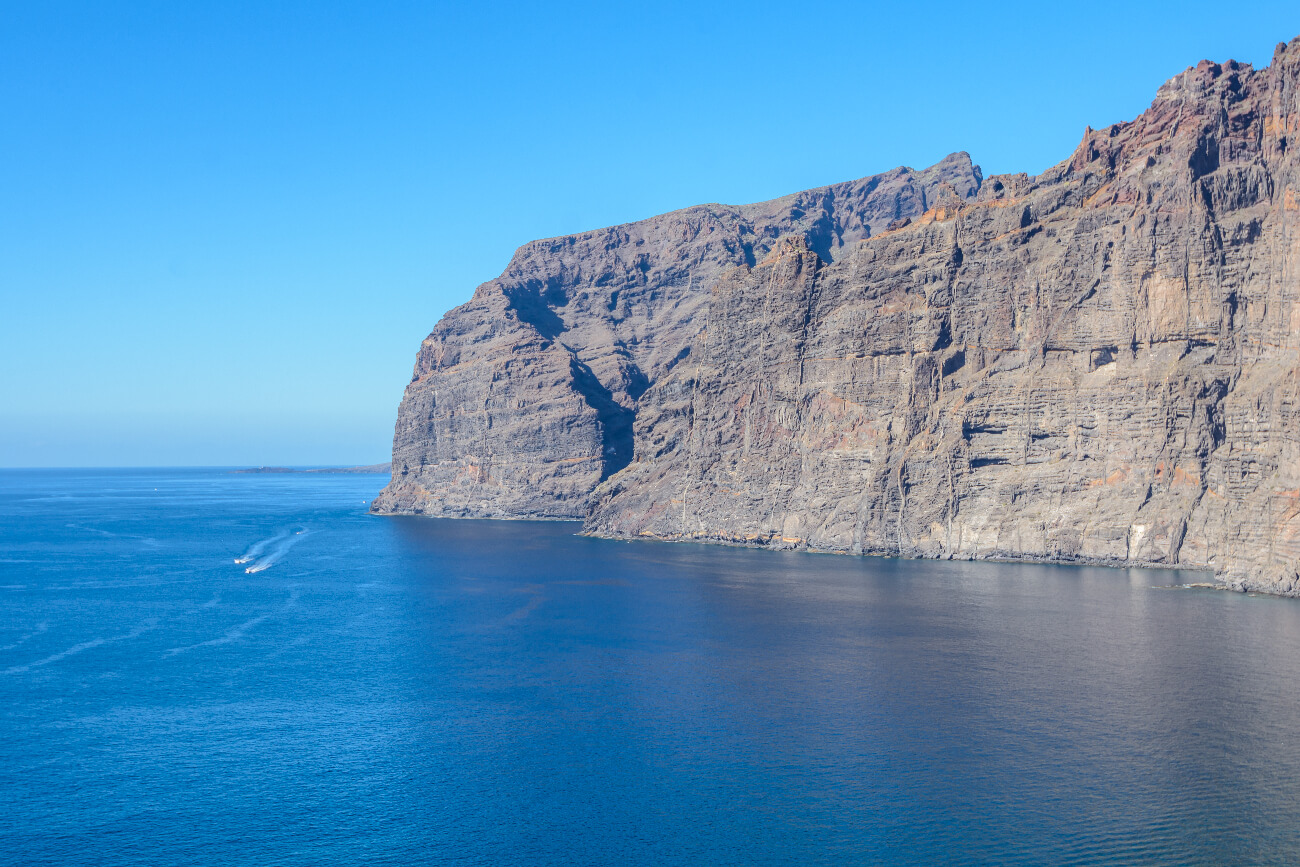
Los Gigantes ( The Giants) is a resort town on the western coast of the island, named after its remarkable 800-meter high cliffs. The town is quieter than other resorts on the island while still offering a brilliant selection of beaches, restaurants and hotels.
Playa de Las Teresitas stands out in Tenerife for its lusciously golden sand. Other beaches in Tenerife usually have black sand of volcanic origin. The sand is imported from the Sahara and makes for a stunning addition to Tenerife’s many beaches.
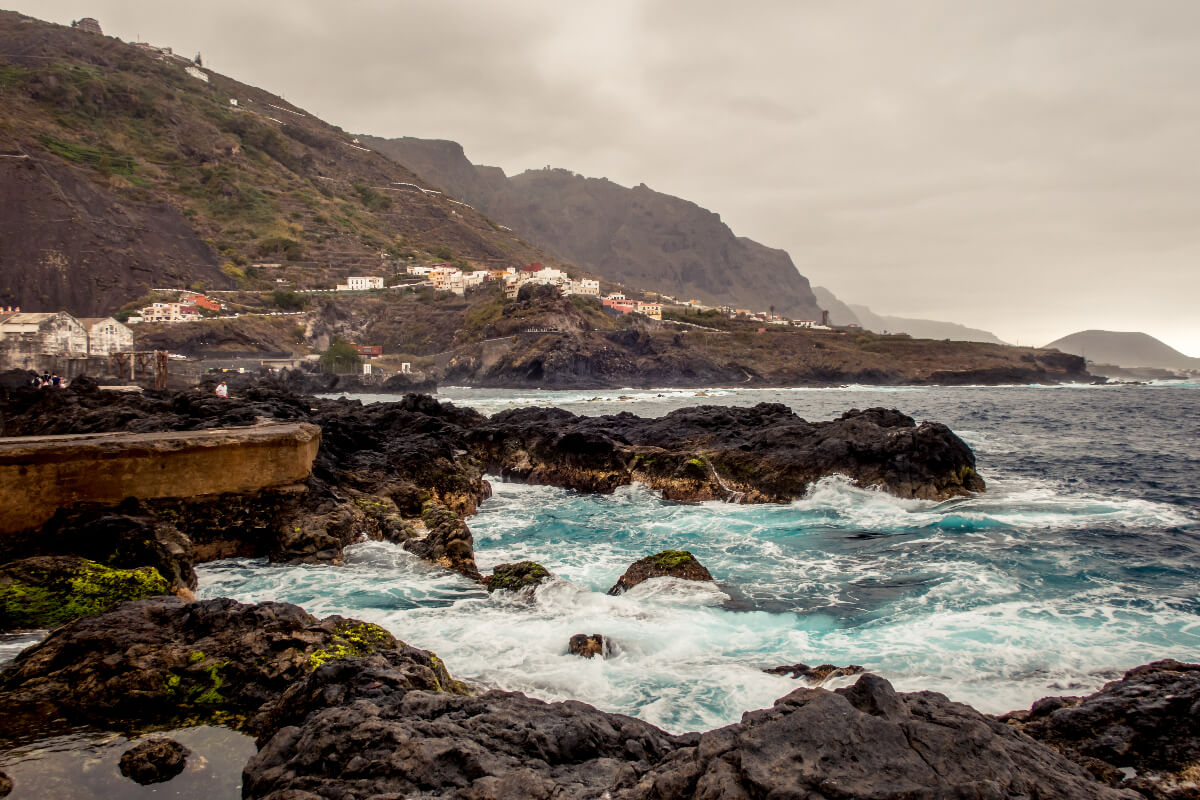
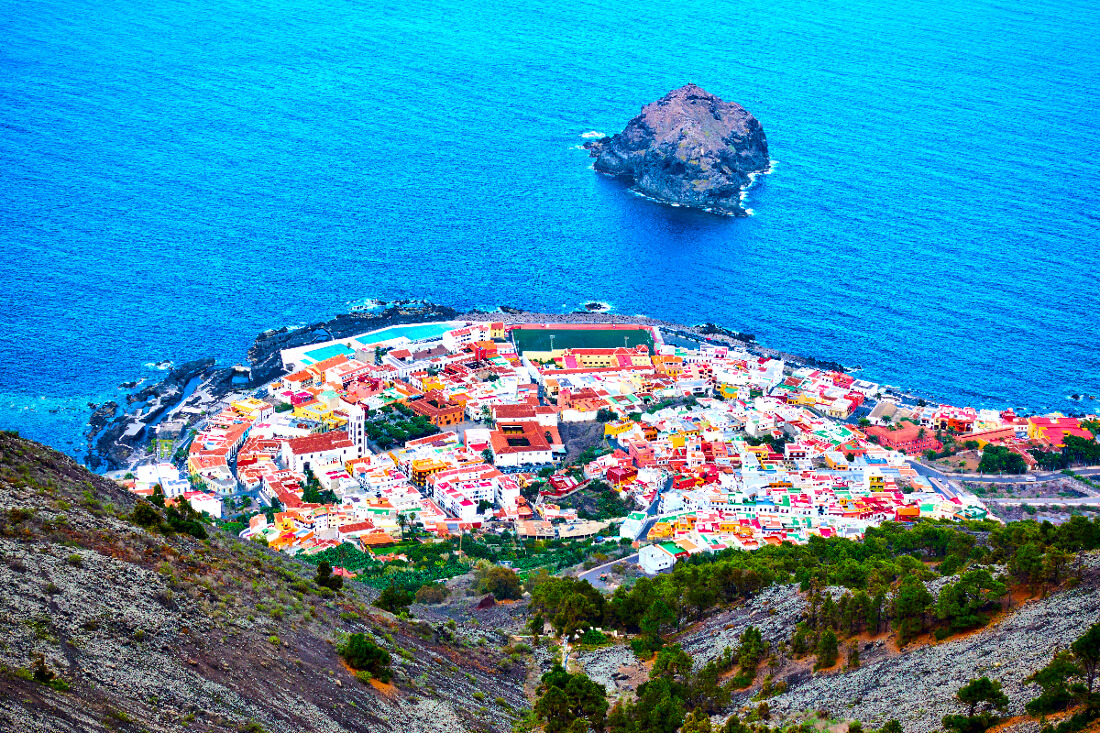
Garachico is a small town on the northern coast of Tenerife. A volcanic eruption in the early 18th century hit the town badly and almost destroyed it entirely. The town motto ‘Glorious in Adversity’ helped the locals to rebuild a new attractive community popular with tourists.
The Mercado Municipal Nuestra Señora de Africa is a large marketplace in Santa Cruz de Tenerife. On the Avenida de San Sebastián you cannot miss the salmon-pink building that draws crowds of tourists and locals. Boutiques and shops offer all kind of souvenirs, but the bustling food market is the best place to wander around. If you like seafood, go to the lower level where the fish market offers everything from prawns to octopus, tuna, calamari or langoustines. Try some with a cold glass of beer or cava.
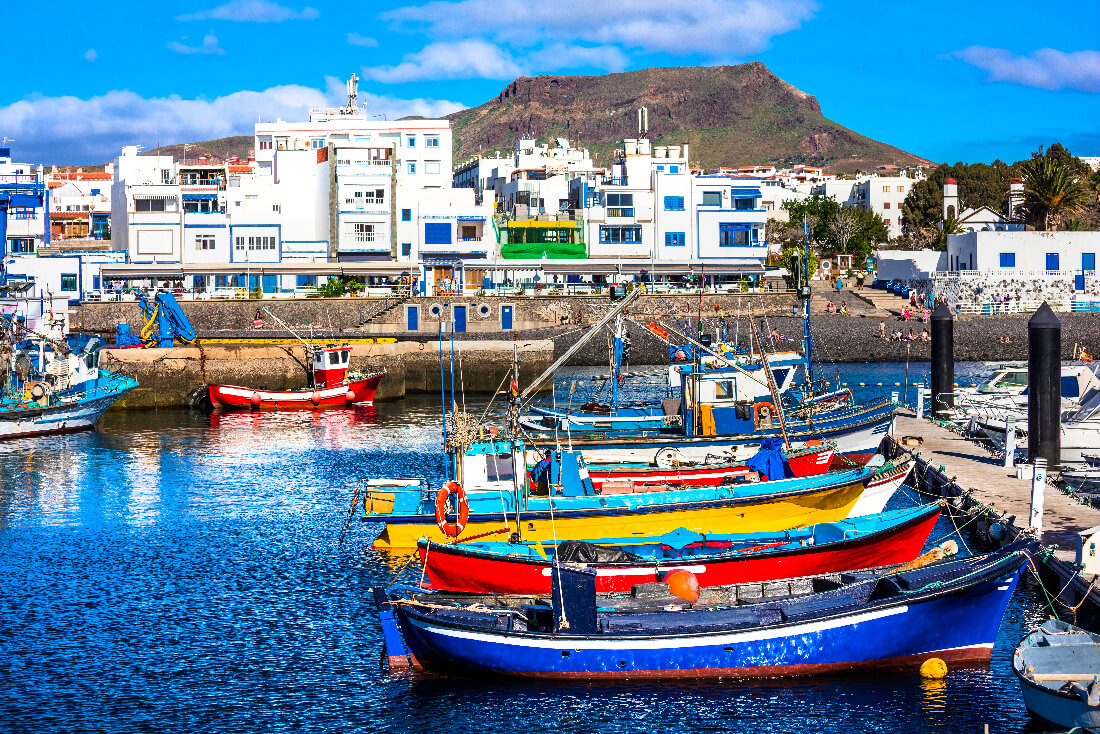
Tourism and the fishing industry are the main activities of the island. The population of the Province which includes Gran Canarias, Fuerteventura and Lanzarote is just over one million inhabitants. Las Palmas is the capital of the Province and is especially fun to visit during the Carnival season in February when floats, parties and music are making the city very alive
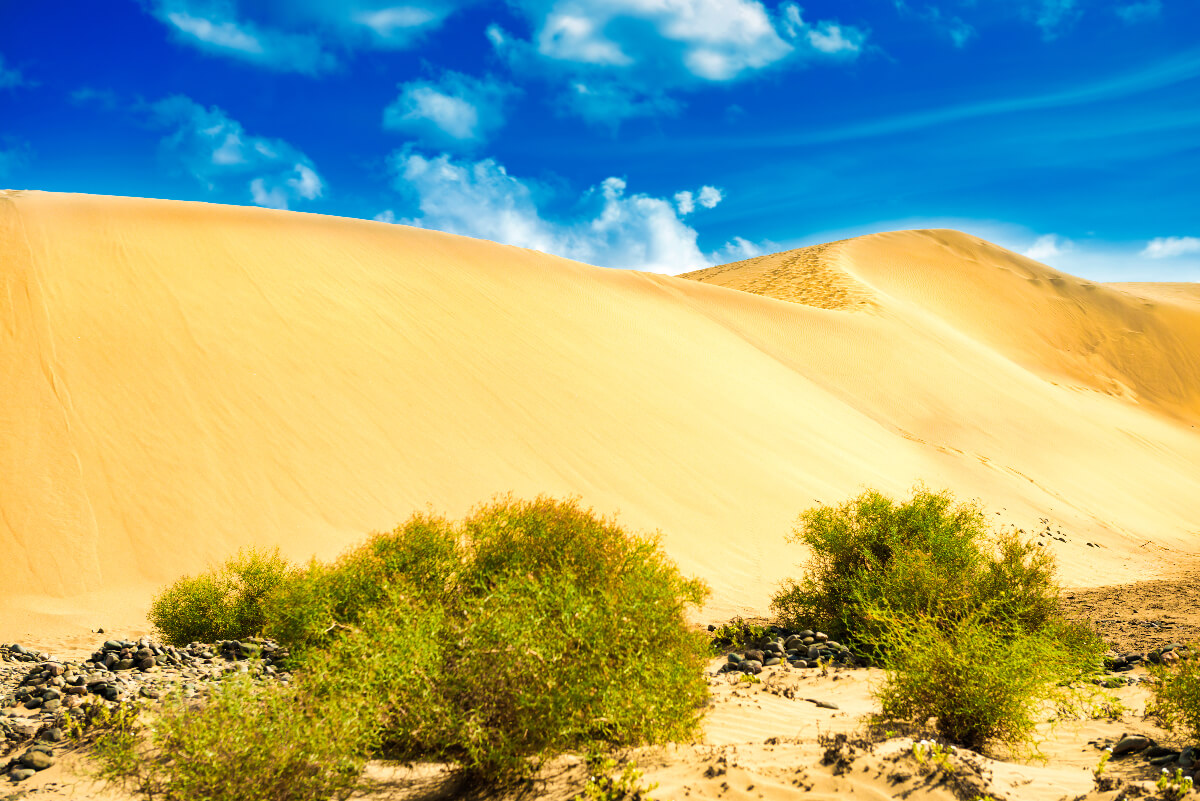
Maspalomas is the big town on Gran Canaria’s south coast, but a large part of it is a desert. The protected dynamic dune system covers about 400 hectares, from the very popular Playa de Maspalomas beach in the west to the even more popular Playa del Inglés beach to the east. Hotels are numerous, very popular; with some of the best on the island.
The dunes are home to a very fragile ecosystem, so be sure to stick to the clearly marked walking routes. You can also spice up your exploration by taking a camel ride.
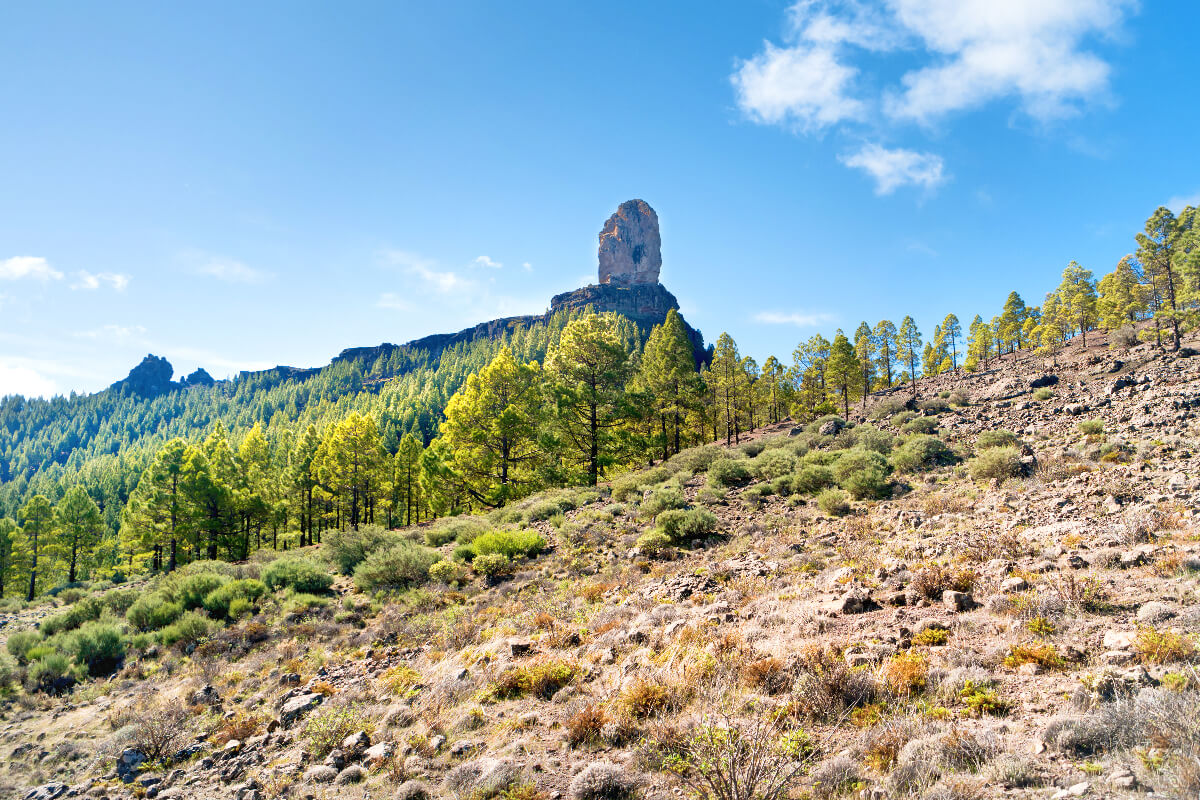
Roque Nublo is an 80 meter-tall rock; It allows great hiking in the middle of the island. 360-degree panoramic views makes it a paradise for photographers. it isn’t the highest point of the island but it’s not far off. The hike up the iconic, UNESCO-protected rock is relatively short and clearly marked. Bring plenty of water with you. For those willing to take the trek after dark, the area is an excellent place for stargazing.
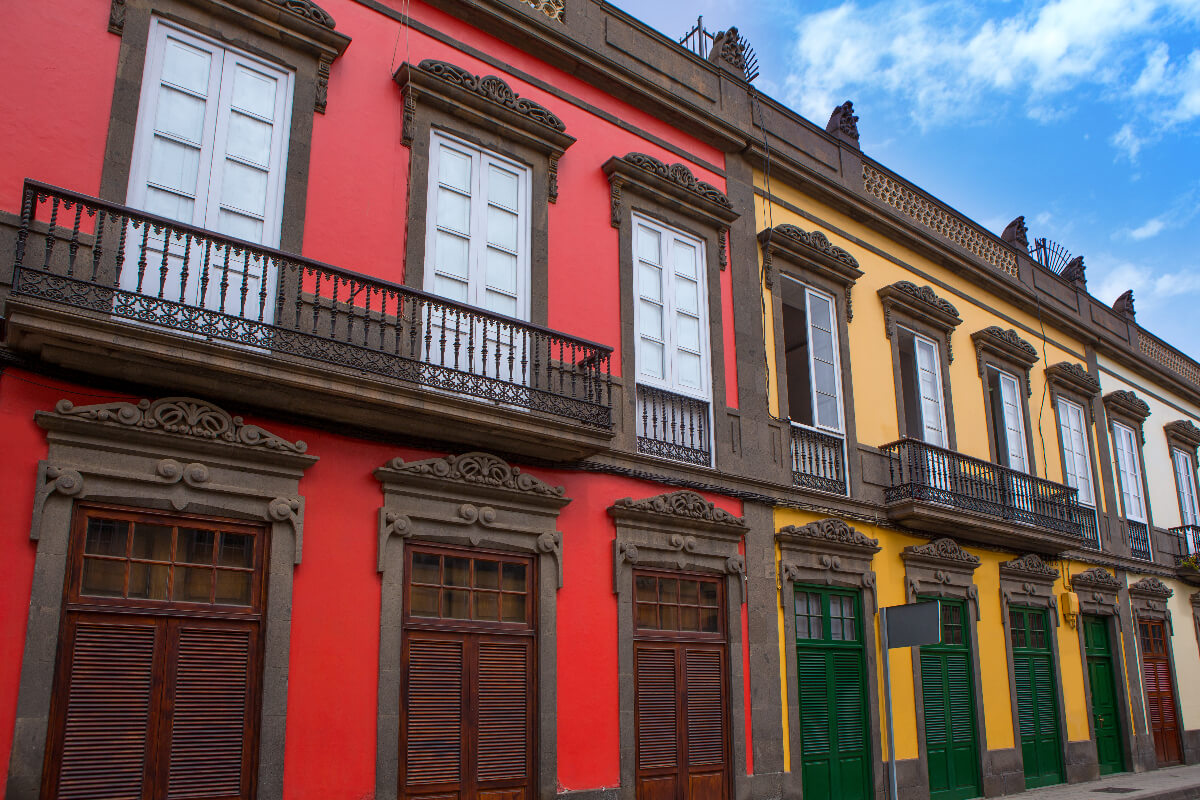
Vegueta is an ancient town at the southern end of Las Palmas. This visit will allow you to explore Gran Canaria’s past history. The cobbled streets are lined with beautiful buildings from a mix of different time periods. The Cathedral of Santa Ana has a striking neo-Gothic design. Meanwhile, the Casa de Colón – where Christopher Columbus is said to have stayed in 1492 – clearly dates from the Renaissance era. This old part of town is home to some excellent traditional tapas restaurants
The Caldera de Bandama is a great excursion to an ancient crater in the highlands of central Gran Canaria, which has become a natural treasure trove since it was formed millennia ago. With a sturdy pair of boots and a good supply of drinking water, it’ll take you about 30 minutes to hike down into the 200-meter-deep crater. You may prefer the clifftop viewpoint if you don’t fancy the climb. It’s worth the effort to walk among the cacti and orange, olive and eucalyptus trees, as well as plants and animals unique to the Canary Islands.
Pueblo Canario is like a theme park of Gran Canarian culture. At the southern end of Doramas Park in Las Palmas, you’ll find a complex of historical buildings, from which you’ll hear traditional music and smell local foods. You can buy handmade souvenirs in the main square, which is surrounded by great restaurants and one or two museums. While the little village is open every day except Mondays, the best time to go is on a Thursday at 5pm or Sunday at 11.30am, as you’ll see locals in traditional dress doing traditional dances.
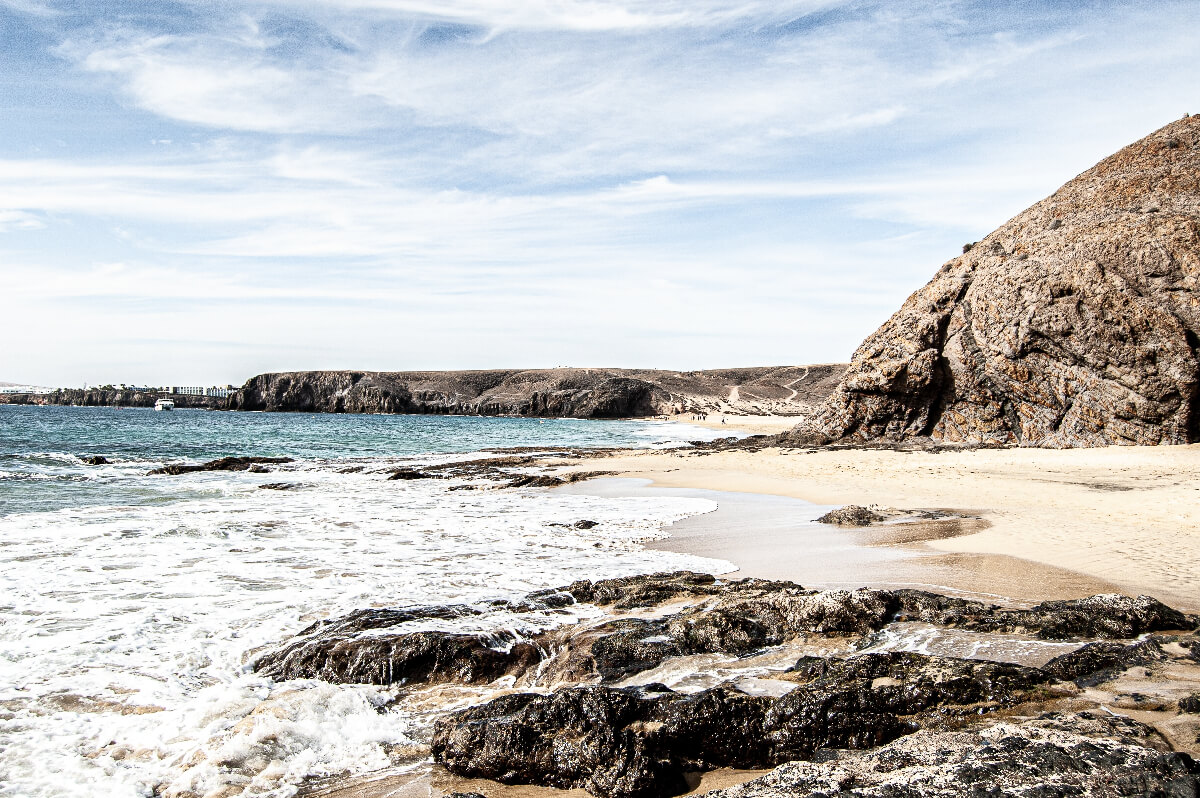
Lanzarote is the fourth-largest of the islands in the archipelago. With a population of 150,000 it is the 3rd most populous after Tenerife and Gran Canarias. Its main attraction is Timanfaya National Park. The island was declared a biosphere reserve by UNESCO in 1993. The island’s capital is Arrecife.
Lanzarote is located 7 miles NE of Fuerteventura and just over half a mile from La Graciosa. The island is 37 miles from north to south and 16 miles from west to east. It has 132 miles of coastline, of which 6 miles are sand. Its landscape includes the mountain and desert. The Tunnel of Atlantis is the largest underwater volcanic tunnel in the world. And due to its climate it is often called the “Island of Eternal Spring”.
Cesar Manrique House Museum: Appreciate the genius of Lanzarote’s finest artist as you explore the Cesar Manrique House Museum. This famous artist is Lanzarote’s most renowned native. And even if you’re not familiar with the man and his work, his eccentric mansion is a sight you can’t miss.
Located in the quaint village of Haría, Manrique constructed the dreamy abode in an ancient lava tube, painstakingly sculpting 5 underground halls from naturally occurring volcanic bubbles. Each echoing chamber interconnects via a series of crisscrossing tunnels, while odd-ball architectural techniques and off-the-wall art installations make use of the abundant volcanic rock. Outside, whitewashed patios, undulating swimming pools, and swaying palm trees add a fresh Mediterranean touch.
Timanfaya National Park marks the spot where a series of booming 18th-century eruptions created a cragged otherworldly landscape. Today, the vast basalt expanse has become the island’s top natural feature. Travelers must zip around on a bus tour because the fragile geothermal hills of the so-called Montañas del Fuego (‘Mountains of Fire’) are far too treacherous to traverse on foot. Along the 40-minute loop, you’ll encounter several of the volcanic craters that decimated the land all those centuries ago. Stop by the information center to see scientific experiments illustrate the immense temperatures that radiate below the Earth’s crust. The El Diablo restaurant can even whip you up a tasty feast cooked entirely on geothermal heat.
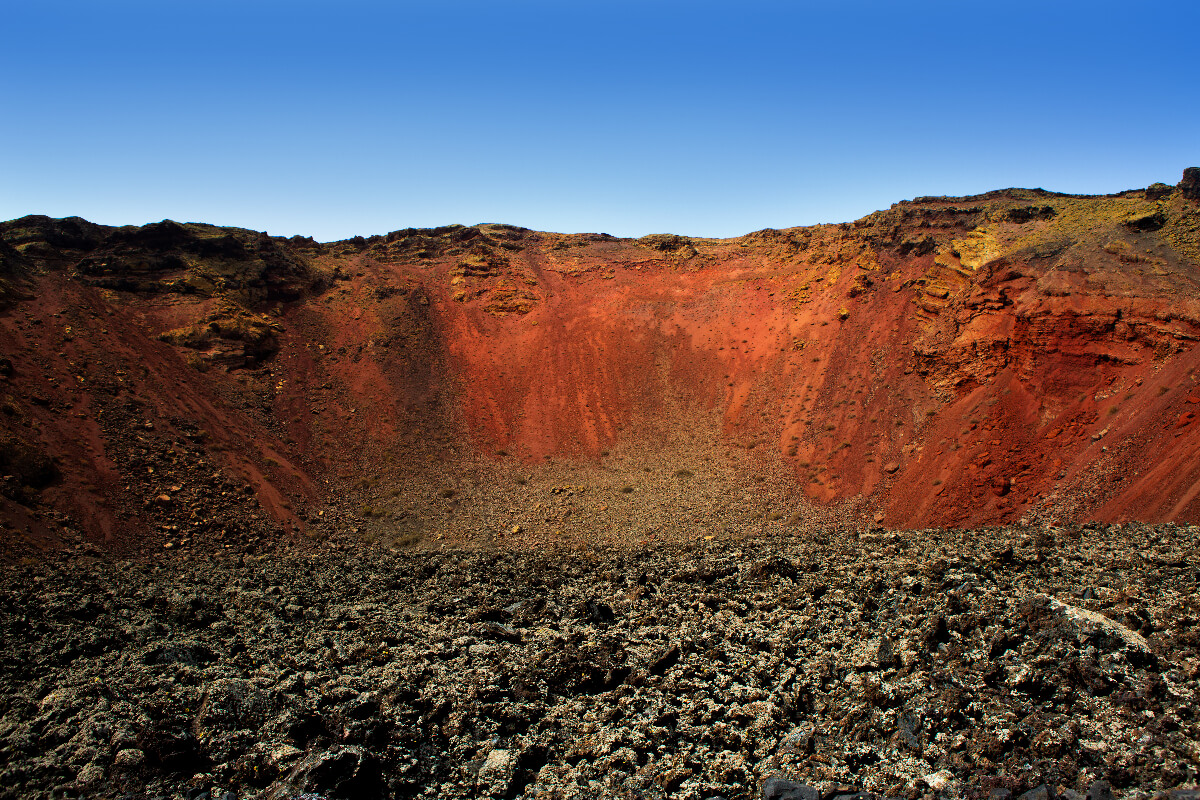
Playa de Papagayo (Papagayo Beach) is Lanzarote’s picture-postcard stretch of sand – among the top mentions in an island famed for its beautiful beaches. These tranquil turquoise waters are sheltered from the open ocean and devoid of dangerous currents, making them the ideal spot for an enjoyable swim. There are 7 pretty yellow sand beaches in the zone on the southern tip of the island, each of which is divided by a lava rock barrier.
Other outstanding options include Playa Chica for its wildlife-rich seabeds and Playa del Charco de los Clicos for its striking contrast of black, red, and green.
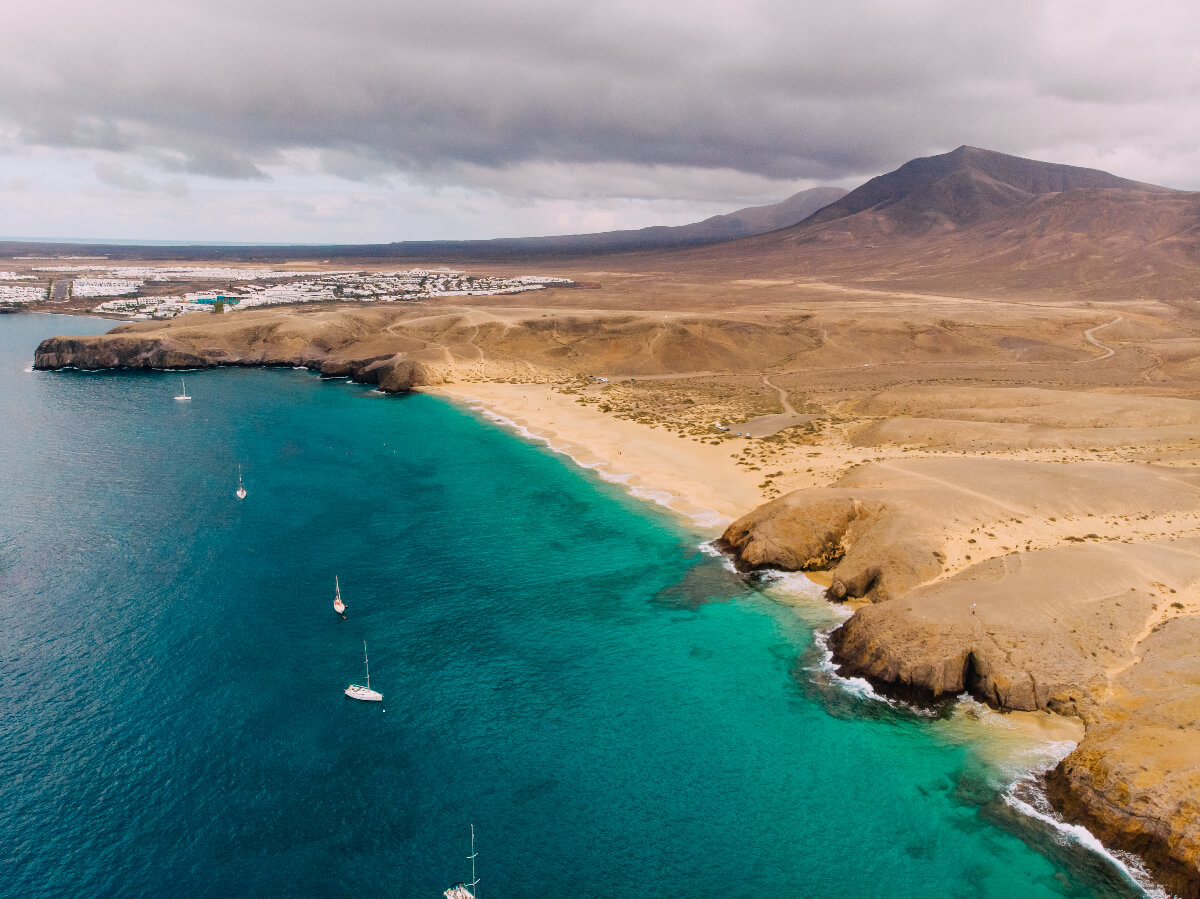
La Cueva de Los Verdes: Formed thousands of years ago, La Cueva de los Verdes is a lava tube that extends some 4 miles below the surface. About a quarter of the stretch is open to the public, allowing you to meander through this underground expressway as you marvel at its psychedelic formations and otherworldly hues. The tube formed upon the eruption of Monte Corona by lava hardening on the outside but continuing to flow within.
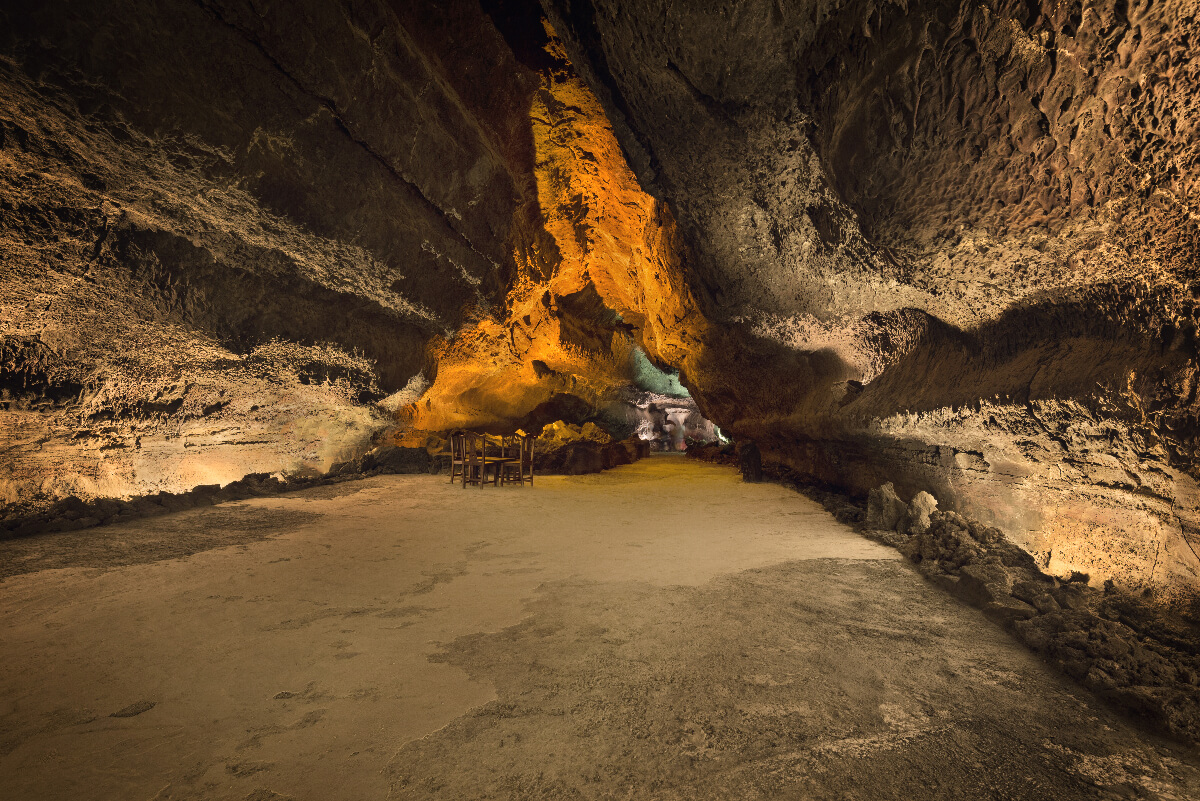
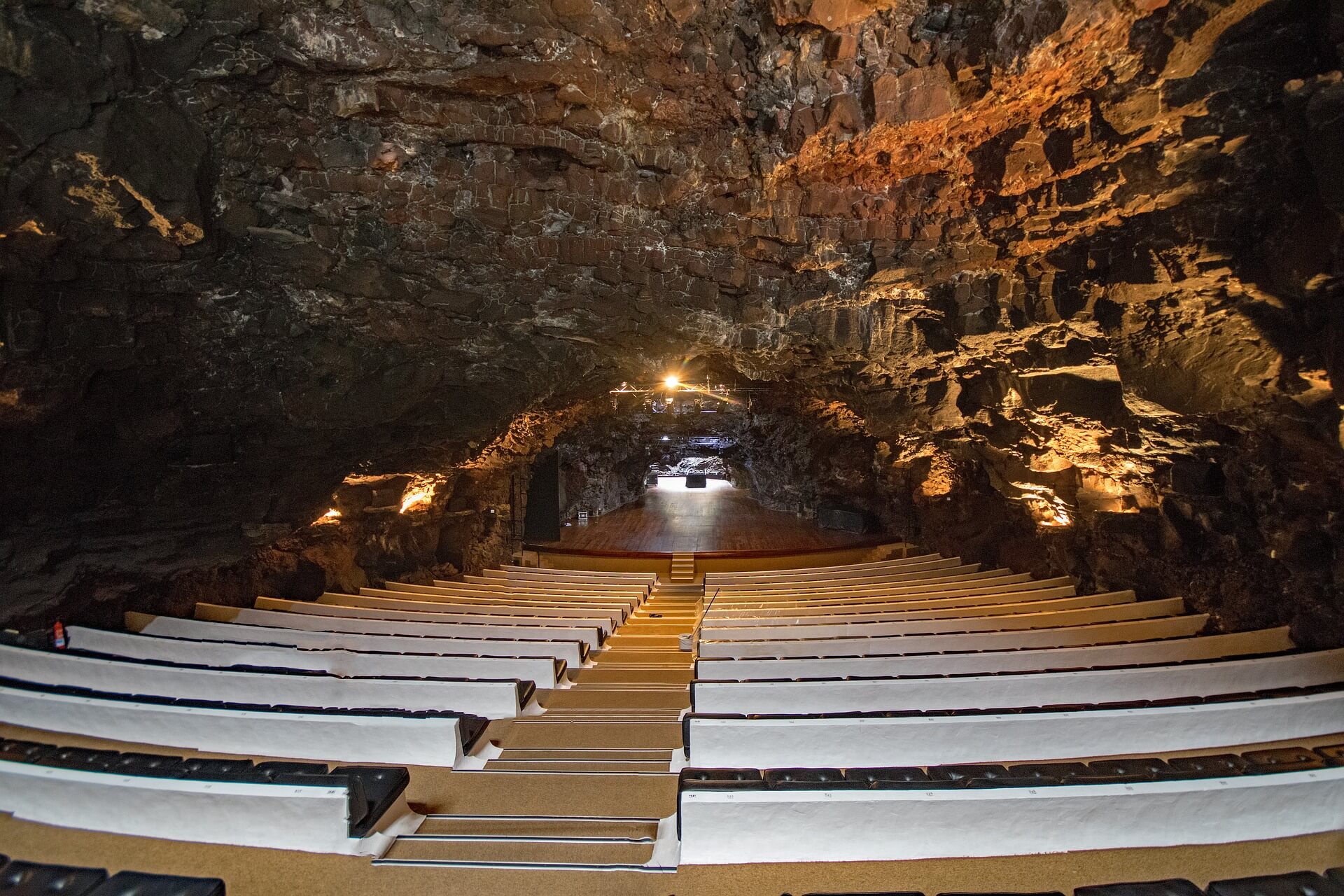
Another exciting subterranean attraction is the Jameos del Agua, a natural cave which renowned local artist César Manrique gave an avant-garde makeover. Manrique converted the space into an underground fantasy world complete with a restaurant, a bar, an auditorium, and an unusual undulating pool.
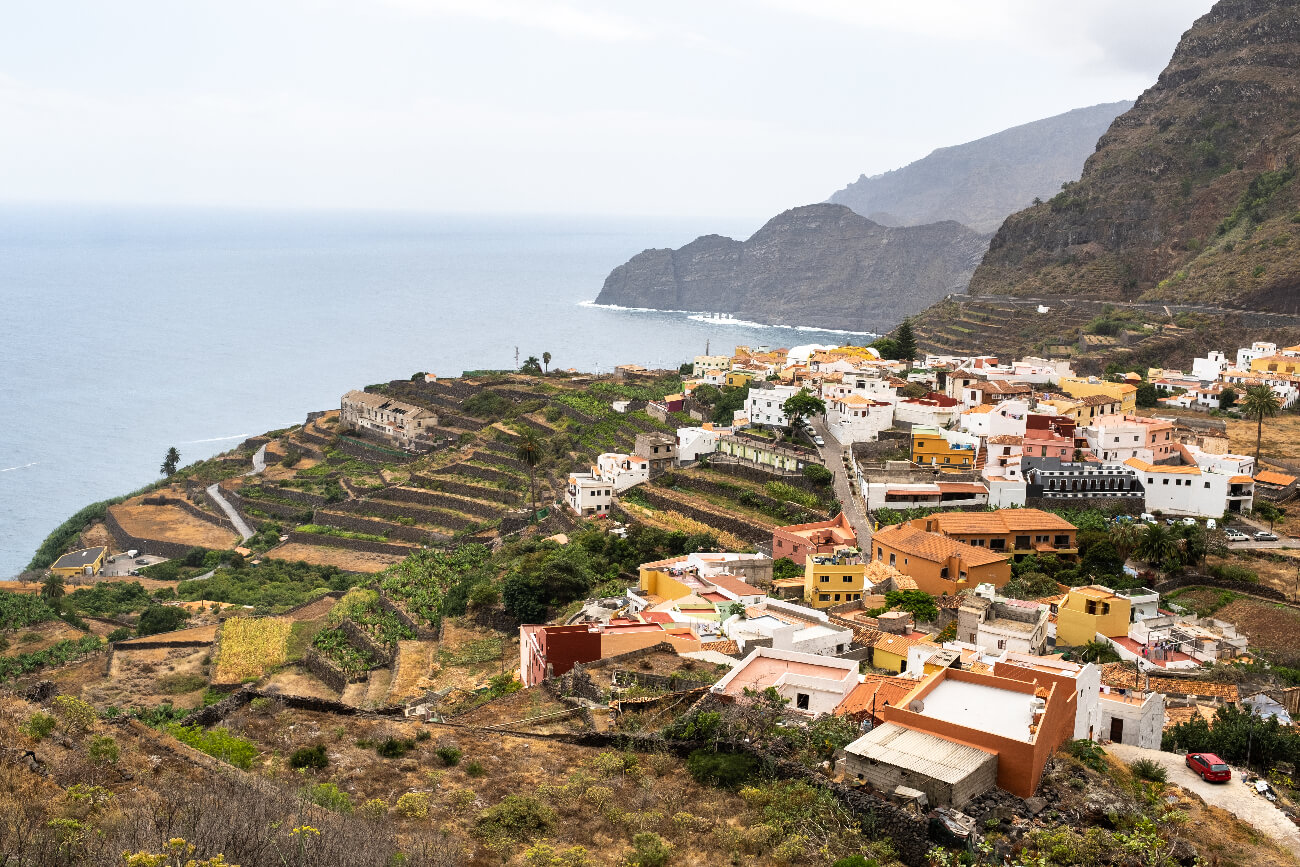
The island has a circular shape. The coast is rugged and the inland is mountainous. The highest peak in the center is Garajonay Peak, 4879 feet high. Many fresh water springs allow irrigation of the semiarid land to grow bananas and date palms. The economy depends mostly on agriculture with the culture of figs, cereals and tomatoes. Fishing and boat building are also present. A small airport opened in 1999 and started to bring tourists to the island.
San Sebastian de la Gomera is the capital and the main port. You can visit the House where Columbus stayed when he did his first transatlantic voyage in 1492. A strange whistling practice is still used in Gomera to communicate from hilltop to hilltop, it goes back to the extinct Ganches native people.
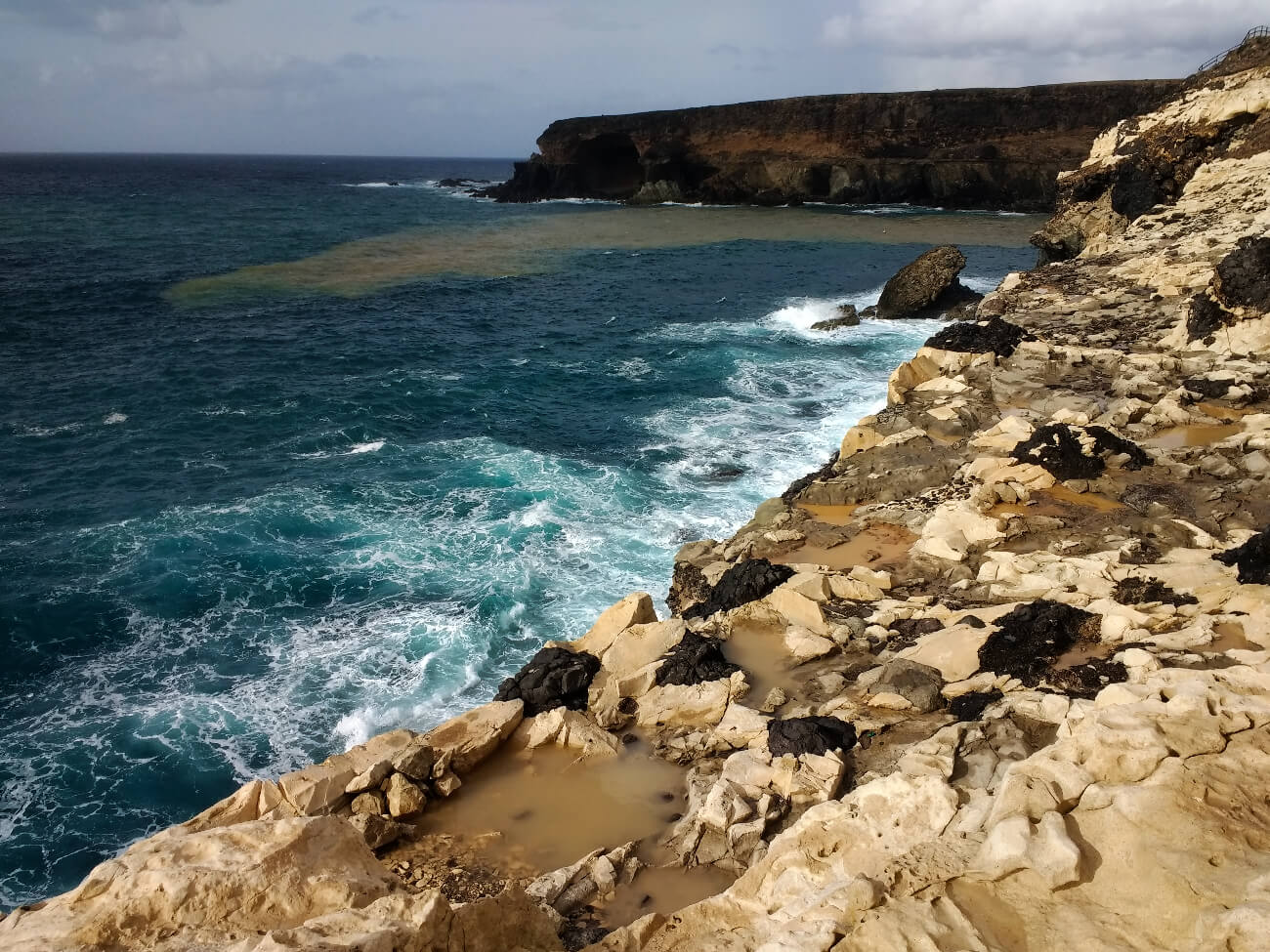
Fuerteventura is a volcanic island, 65 miles off the coast of Morocco. It is the second largest island of the Canaries and extends over 60 miles in length. Across the Bocaina Strait is Lanzarote. Few rainfalls and a warm and dry climate has left the island rather barren. On the East shore are the two main towns: Puerto del Rosario and Gran Tarajal. Airline service goes daily to Gran Canaria and Teneerife.
No Tour Found
No Tour Found