


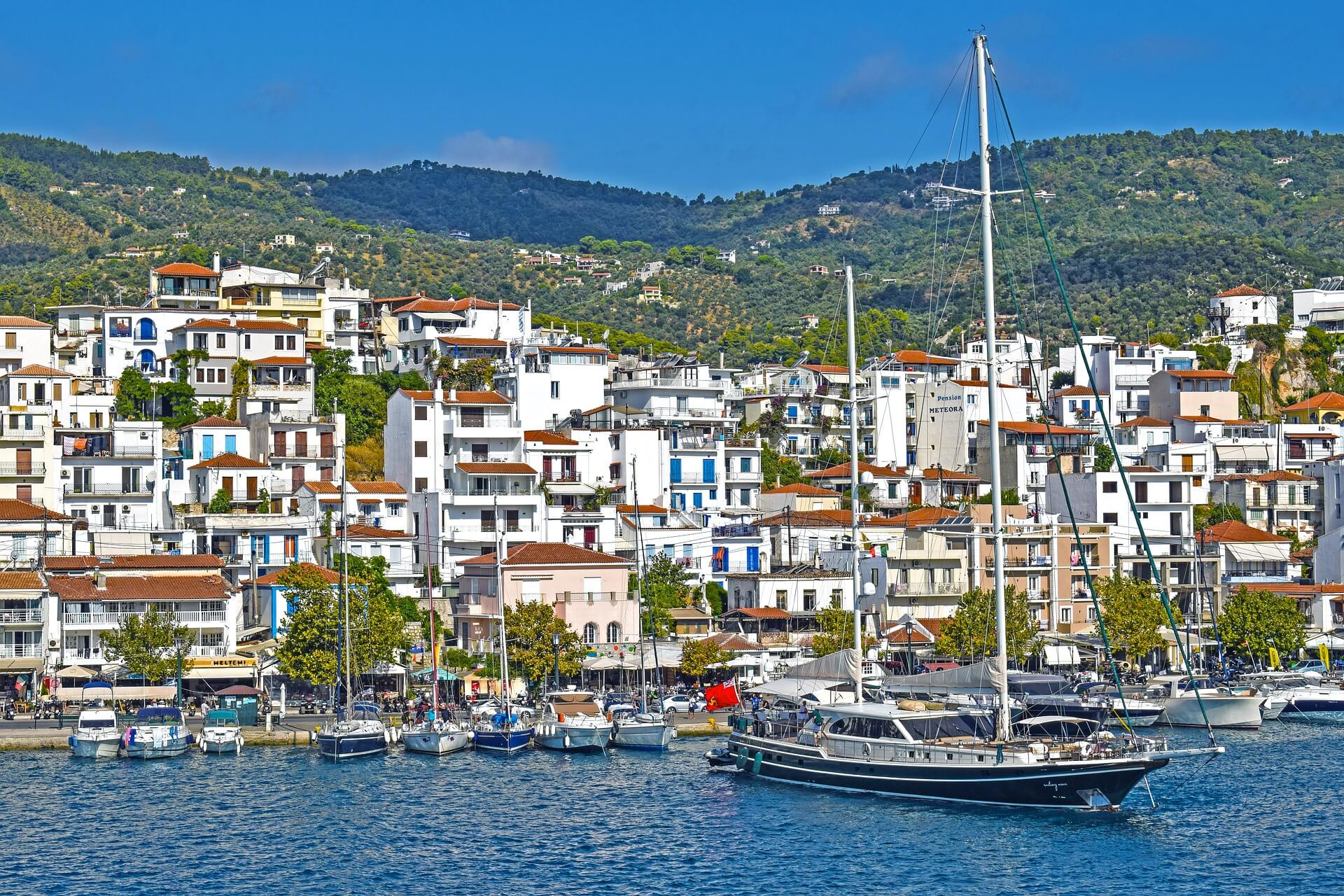
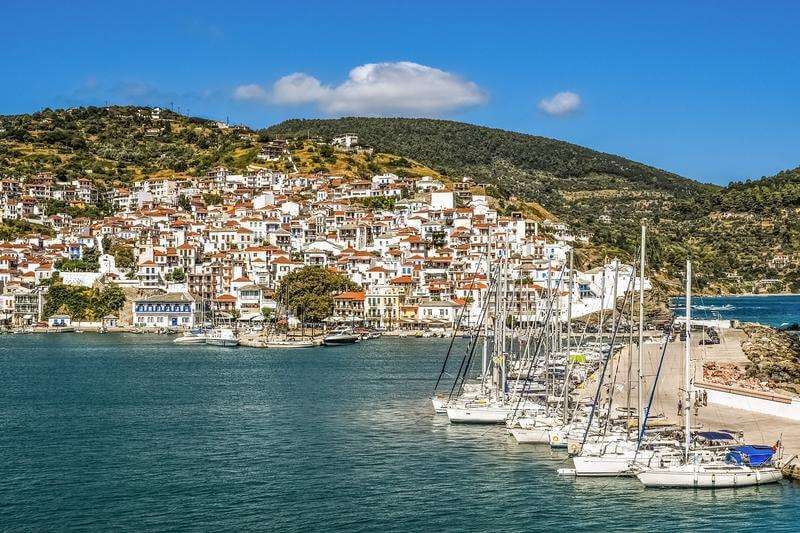
Greece, officially the Hellenic Republic, is a country located in Southeastern Europe. Its population is approximately 10.7 million. Athens is its largest and capital city, followed by Thessaloniki. Situated on the southern tip of the Balkans, Greece is located at the crossroads of Europe, Asia and Africa. It shares land borders with Albania to the northwest, North Macedonia and Bulgaria to the north, and Turkey to the northeast. The Aegean Sea lies to the east of the mainland, the Ionian Sea to the west, the Cretan Sea and the Mediterranean Sea to the south. Greece has the longest coastline in the Mediterranean Basin and the 11th longest coastline in the world at 8,498 miles in length, featuring many islands of which about 300 are inhabited. 80% of Greece is mountainous, with Mount Olympus being the highest peak at 9,573 feet above sea level. The country consists of nine traditional regions: Macedonia, Central Greece, the Peloponnese, Thessaly, Epirus, the Aegean Islands, Thrace, Crete, and the Ionian Islands. Greece is considered the cradle of Western civilization, being the birthplace of democracy, Western philosophy, Western literature, historiography, political science, major scientific and mathematical principles, theatre and the Olympic Games. From the 8th century BCE, the Greeks were organized into various independent city-states, known as poleis, which spanned the Mediterranean and the Black Sea. Phillip II of Macedon united most of present day Greece in the 4th century BCE, with his son Alexander the Great rapidly conquering much of the ancient world from the eastern Mediterranean to India. The subsequent Hellenistic period saw the height of Greek culture and influence in Antiquity. Greece was annexed to Rome in the second century BCE, becoming an integral part of the Roman Empire and its continuation, the Byzantine Empire, which was culturally and linguistically predominantly Greek. The Greek Orthodox Church, which emerged in the 1st century AD, helped shape modern Greek identity and transmitted Greek traditions to the wider Orthodox world. After falling under Ottoman dominion in the mid-15th century, Greece emerged as a modern nation state in 1830 following a war of independence. The country’s rich historical legacy is reflected in part by its 18 UNESCO World Heritage Sites. Greece is a unitary parliamentary republic, and a developed country, with an advanced high-income economy and a high quality of life. Its economy is the largest in the Balkans. A founding member of the United Nations Greece is also a member of the European Union and NATO.
Pre-History to the Greek Dark Ages The earliest evidence of the presence of human ancestors in the southern Balkans is dated 270,000 years ago and found in the Petralona cave in the Greek province of Macedonia. Neolithic settlements in Greece dating from 7000 BCE are the oldest in Europe by several centuries as Greece lies on the route via which farming spread from the Near East to Europe. Following the end of the Greek Neolithic period in 3200 BCE, there was a slow transition period between stone economy and bronze economy. During the end of the 4th millennium BCE, Eutresis culture and Korakou culture were present until the middle of the third millennium BCE and built the first large buildings (House of the Tiles). Greece is home to the first advanced civilizations in Europe and is considered the birthplace of Western civilization beginning with the Cycladic civilization on the islands of the Aegean Sea. Around 3200 BCE, the Minoan civilization in Crete (2700-1500 BCE) and the Mycenaean civilization on the mainland (1600-1100 BCE) had great influence on mainland Greece. These civilizations possessed writing. Around 1200 BCE there was an economic collapse of Greek settlements known as the Late Bronze Age collapse which ushered in a period known as the Dark Ages.
Archaic and Classical Period The end of the Dark Ages is traditionally dated to 776 BCE, the year of the first Olympic Games. The Iliad and the Odyssey were supposedly written by Homer in the 7th or 8th century BCE. With the end of the Dark Ages there emerged various kingdoms and city-states across the Greek peninsula, which spread to the shores of the Black Sea, Southern Italy, (Magna Graecia) and Asia Minor. These states and their colonies reached great economic prosperity that resulted in an unprecedented cultural boom in Classical Greece, expressed in architecture, drama, science, mathematics and philosophy. In 508 BCE Cleisthenes instituted the first democratic system of government in Athens. By 500 BCE the Persian Empire controlled the Greek city-states in Asia Minor and Macedonia. Persia invaded the Greek mainland in 492 BCE, but was forced to withdraw after the defeat at the Battle of Marathon in 490 BCE. In response, the Greek city-states formed the Hellenic League in 481 BCE , led by Sparta, which was the first recorded union of Greek states since the union of the Trojan War. In 479 BCE the Persians suffered military defeats and were forced to withdraw from all of their European territories. Led by Athens and Sparta these victories in the Greco-Persian Wars are considered a pivotal moment in world history as the 50 years of peace that followed are known as the Golden Age of Athens, the seminal period of ancient Greek development that laid many of the foundations of Western civilization. Lack of political unity caused many wars among the Greek nations and they would remain largely fragmented until the Roman dominance; even with the great worldly conquests of Alexander the Great.
Hellenistic and Roman Periods 323 BCE to 4th century AD After the death of Alexander the Great his generals assumed control for a period of time until 200 BCE when the Romans defeated Greece and assimilated it into the Roman Empire. Although the Romans were the conquerors, Greek influences in all areas of life were very strong.
Medieval Period 4th-15th Century AD The Roman Empire in the east (The Byzantine Empire) stretched from the 5th century AD with the fall of the western Roman Empire and lasted until 1453. Its language and culture were Greek and its religion was predominantly Eastern Orthodox Christian. There were 80 Greek cities and a high level of prosperity under the Empire until the 15th century when most of the Holy Roman Empire was lost first to the Serbs and then the Ottomans.
Venetian Possessions and Ottoman Rule 15th Century to 1821 the Ottomans ruled with a heavy hand and there were many wars with Greeks against the Ottoman Empire. Cyprus and Crete remained Venetian territory but everything else was under Ottoman rule.
Greek War of Independence 1821-1832 The Greeks were in open revolt and there were both land and sea battles. When word got out that the Ottoman and Egyptian Navies were sailing to Greece, three western powers (France, the Russian Empire and the United Kingdom) sent fleets and defeated the Ottomans in the sea battle of Navarino in 1827. The independent Greek state was recognized in the 1830 London Protocol.
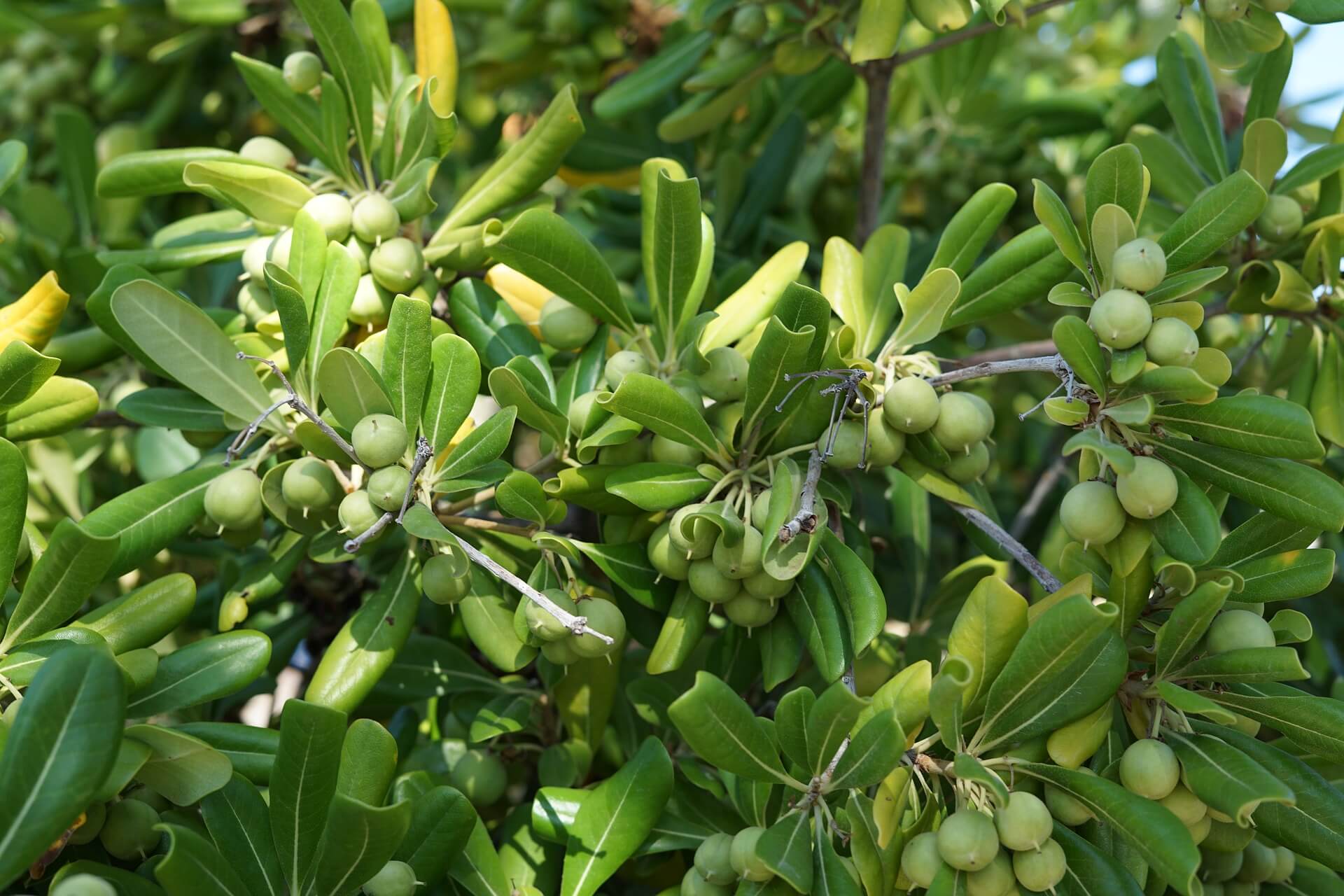
Flora There are 5752 vascular plants and 1893 subspecies of native and introduced plants. Much of Greece lies within the Aegean and Western Turkey mixed forest ecoregion. Characterized by maquis shrubland, evergreen oak, Greek strawberry tree, Kermes oak. Green olive, bay laurel, cedar, and the Spanish broom. Deciduous species are ash, elm, maple, Judas tree, smoke tree and others.
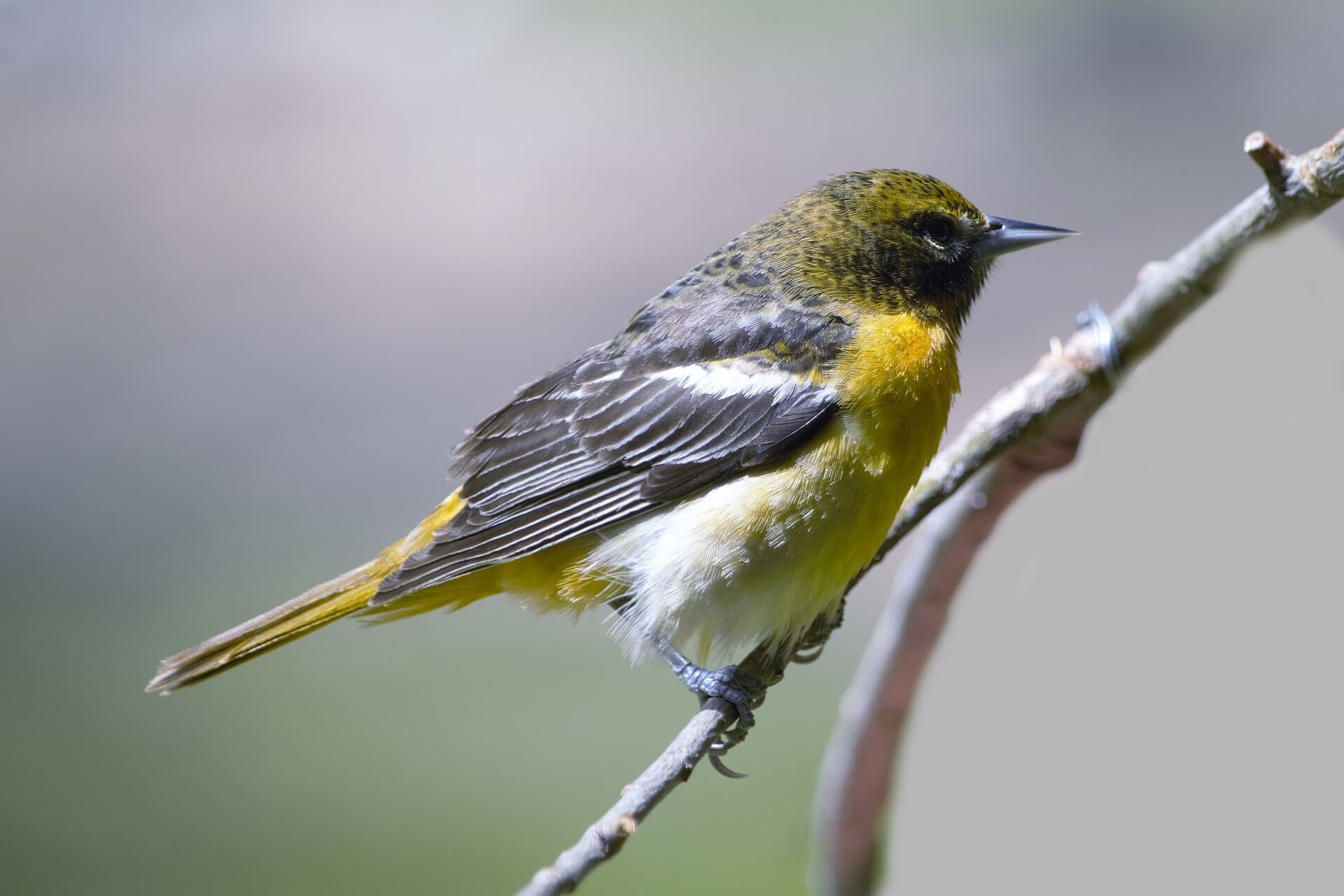
Fauna: European Wild Cat, Balkan Lynx, red fox, golden jackal, Eurasian Brown Bear, American mink, weasel, polecat, badger, otter, wild Boar, Cretan Ibex and 20 species of bat. Water animals: Monk seal, whales, dolphins and porpoises, lamprey, shad, barbel. Birds include: the cirl, black headed buntings, partridges, and warblers.
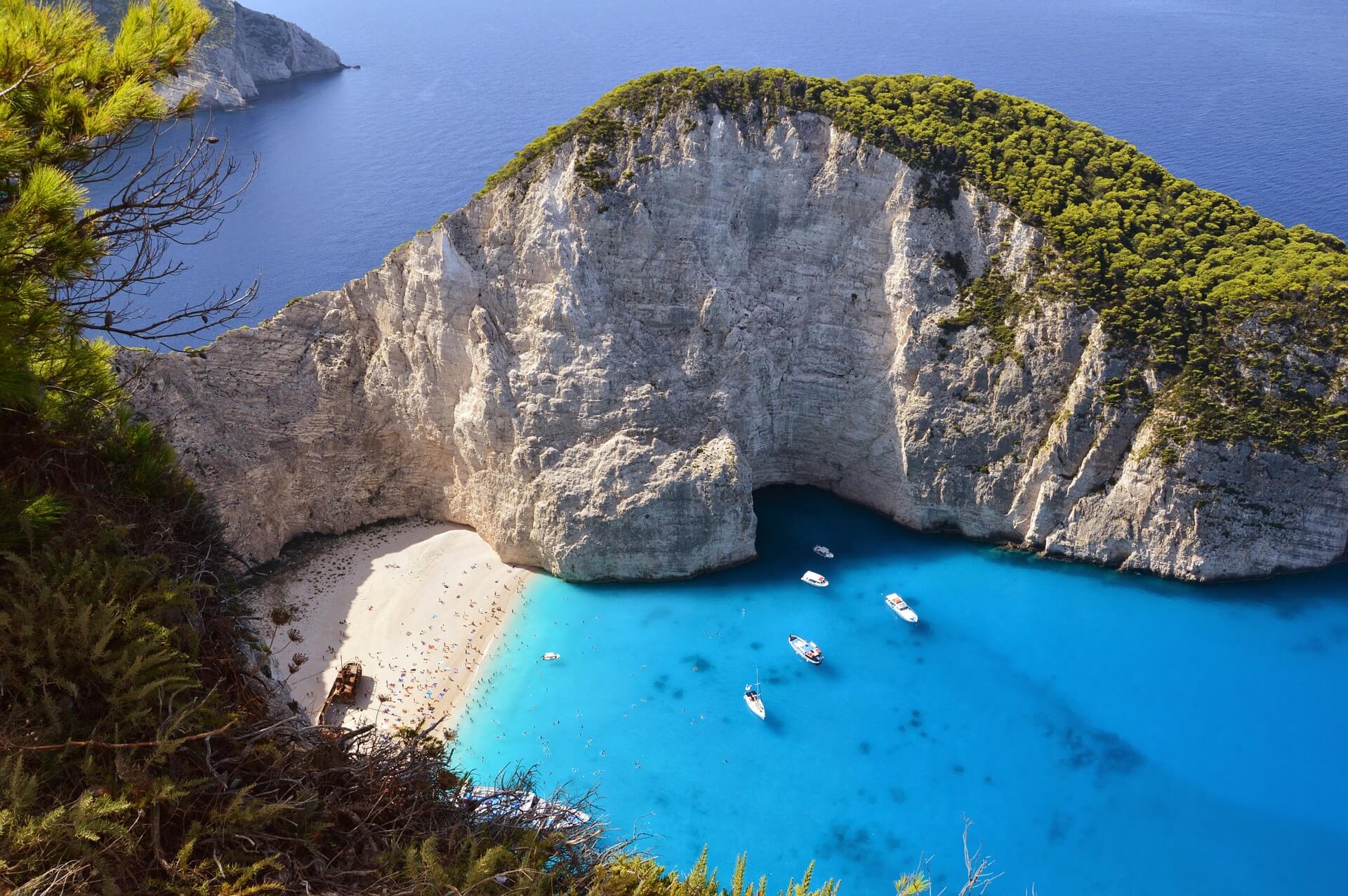
The climate of Greece is primarily Mediterranean featuring mild wet winters and warm dry summers. The Pindus Mountain Range strongly affects the climate as areas to the west are considerably wetter on average. The mountainous areas of Northwestern Greece feature an Alpine climate with heavy snow. The inland parts of Northern Greece feature a temperate climate with cold, deep winters and hot dry summers with frequent thunderstorms. Greece is a peninsular and mountainous country with about 2000 islands and only 300 inhabited. Its landmass is 49,769 square miles. It is washed by the Aegean Sea to the east, the Ionian Sea to the west, and the Mediterranean to the south. Two thirds of the country is mountainous. The country is rich in natural resources such as petroleum, magnate, lignite, hydropower and marble. Limestone deposits and volcanoes have composited the Greek territory and formed many caves and canyons. Athens is in the center of Greek territory, The mainland consists of several regions and the largest islands are Crete, Evia, Lesvos and Rhodes.
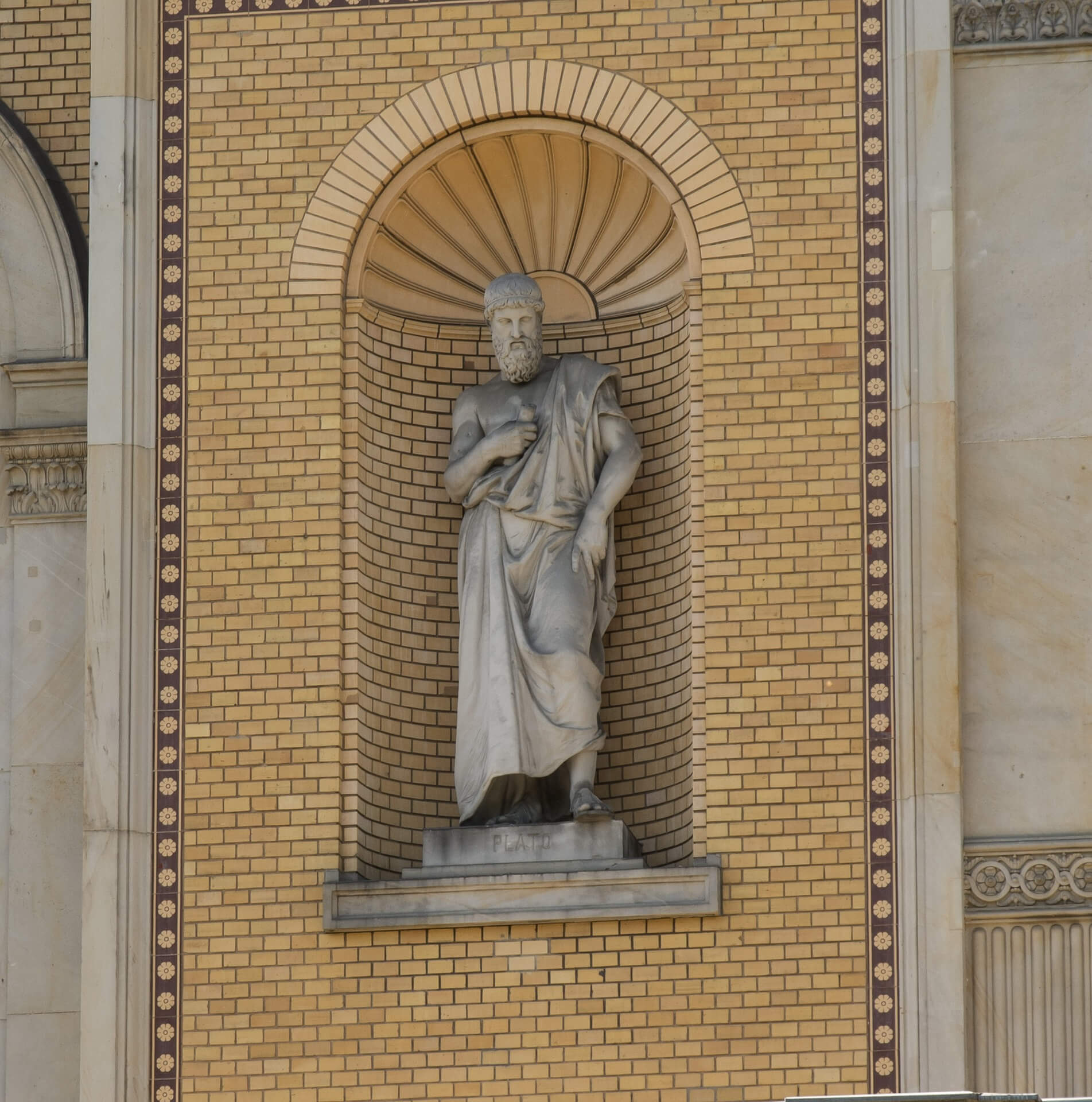
Philosophy most western philosophical traditions began in Ancient Greece in the 6th century BCE. The first philosophers are called “Presocratics” which designates that they came before Socrates whose contributions mark a turning point in western thought. The presocratics were from the western or eastern colonies of Greece and only fragments of their original writings survive. A new period of philosophy started with Socrates. Like the Sophists, he rejected entirely the physical speculations in which his predecessors had indulged and made the thoughts and opinions of other people his starting point. Aspects of Socrates were united with Plato, who also combined with them many of the principles established by earlier philosophers, and developed the whole of this material into the unity of a comprehensive system. Aristotle, the most important disciple of Plato, shared with his mentor the title of the greatest philosopher of antiquity. But while Plato had sought to elucidate and explain things from the supra-sensual standpoint of the forms, his pupil preferred to start from the facts given to us by experience. Other schools of philosophy at around that time were Stoicism, Epicureanism, Skepticism, Neoplatonism and Hedonism.
Music and Dances Greek vocal music extends back to ancient times where mixed-gender choruses performed for entertainment, celebration and spiritual reasons. Instruments at that time included the double-reed, aulos, and the plucked string instrument the lyre, especially the kind called a kithara. Music played an important role in the education system during ancient times. Boys were taught music from the age of six. The Eastern Orthodox Church resisted any change in their music and it remained monophonic with no accompanying instrument. Greeks also cultivated the Greek folk song. There is a unity between the Greek people’s struggles for freedom, their joys and sorrows and attitudes toward life and death.
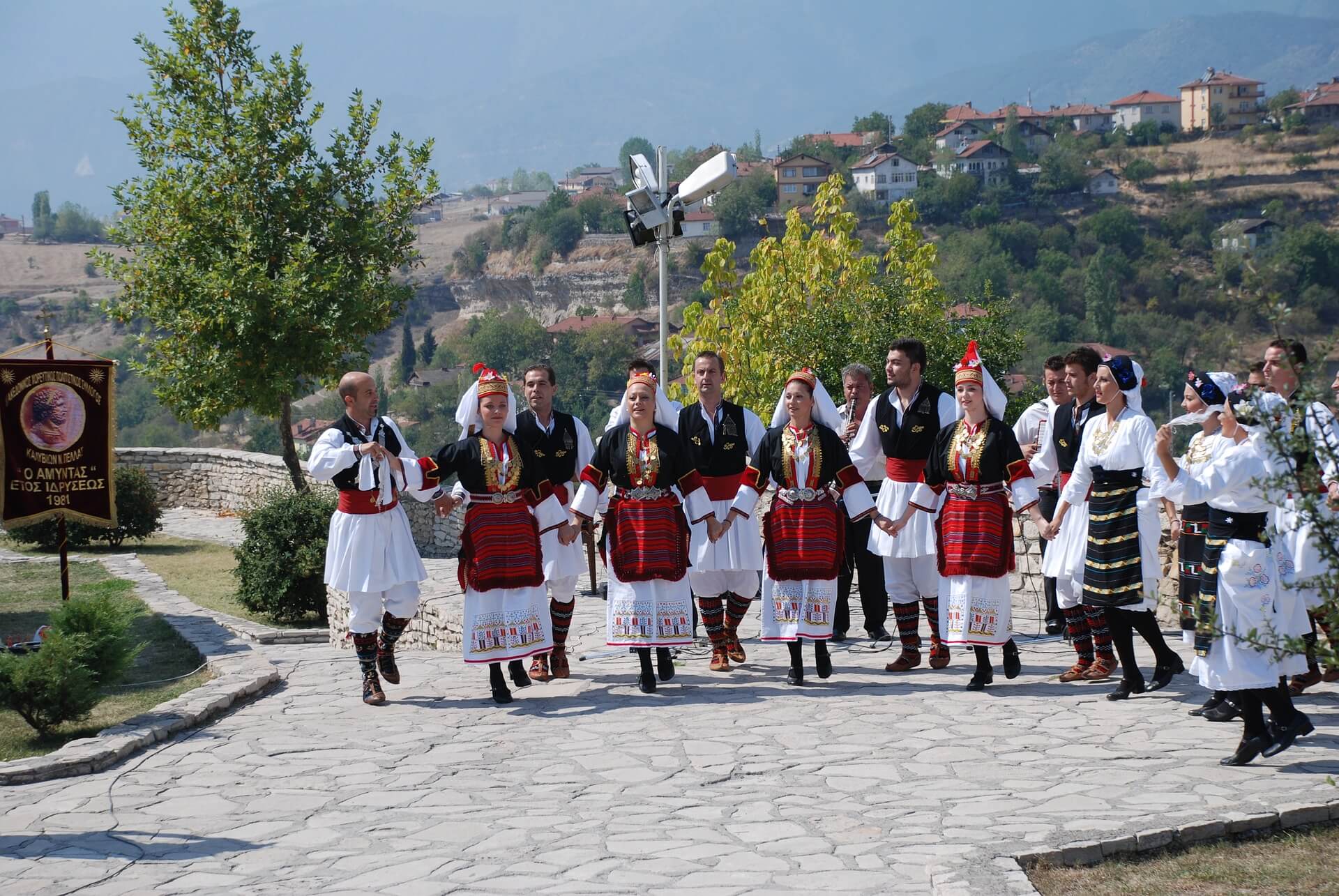
Greek literature can be divided into three parts, Ancient, Byzantine, and Modern.
Greek architecture can be divided into three schools, Doric, ionic and Corinthean. The temples and palaces of ancient Greece were copied by the Romans and us even today.
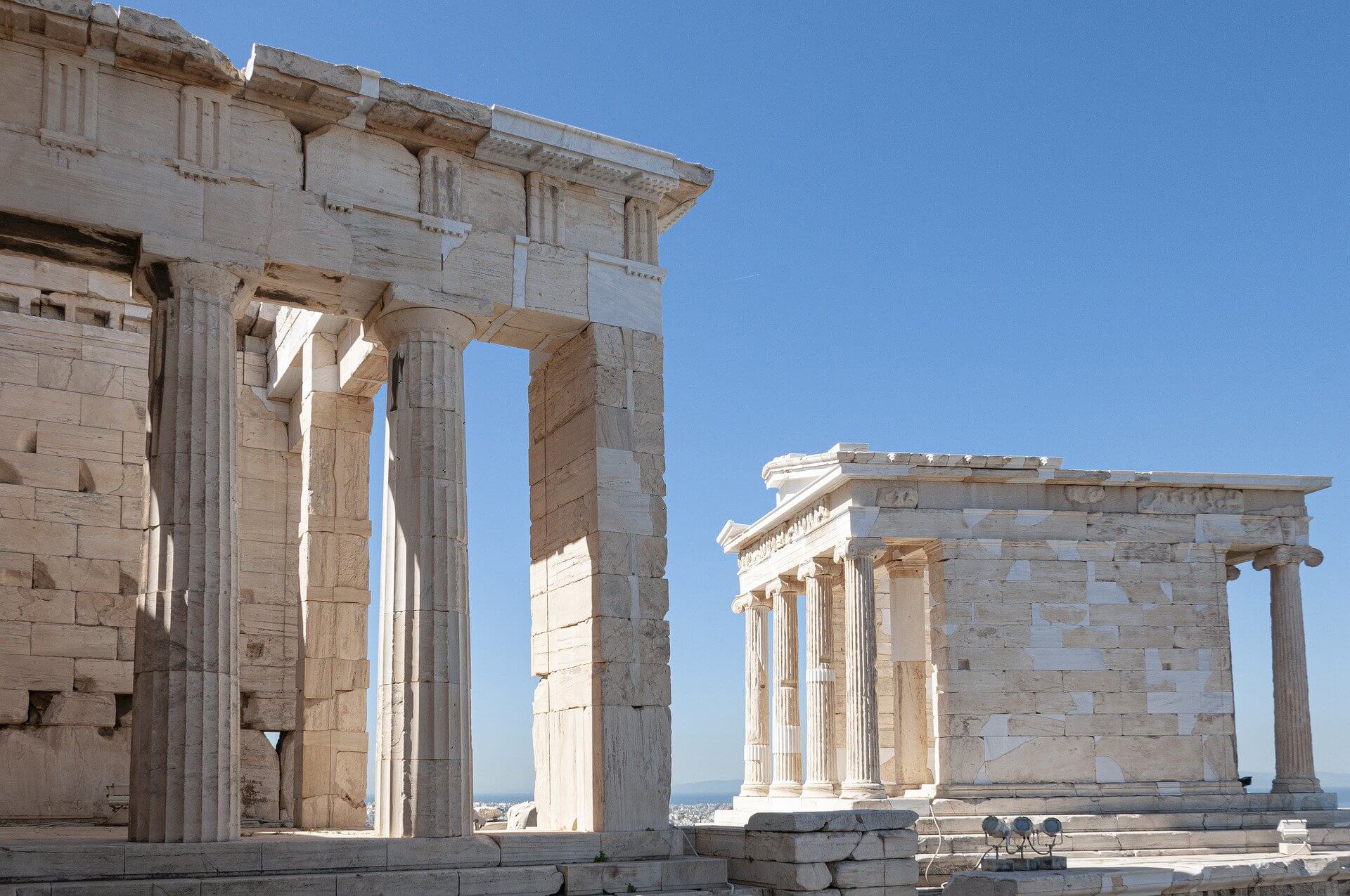
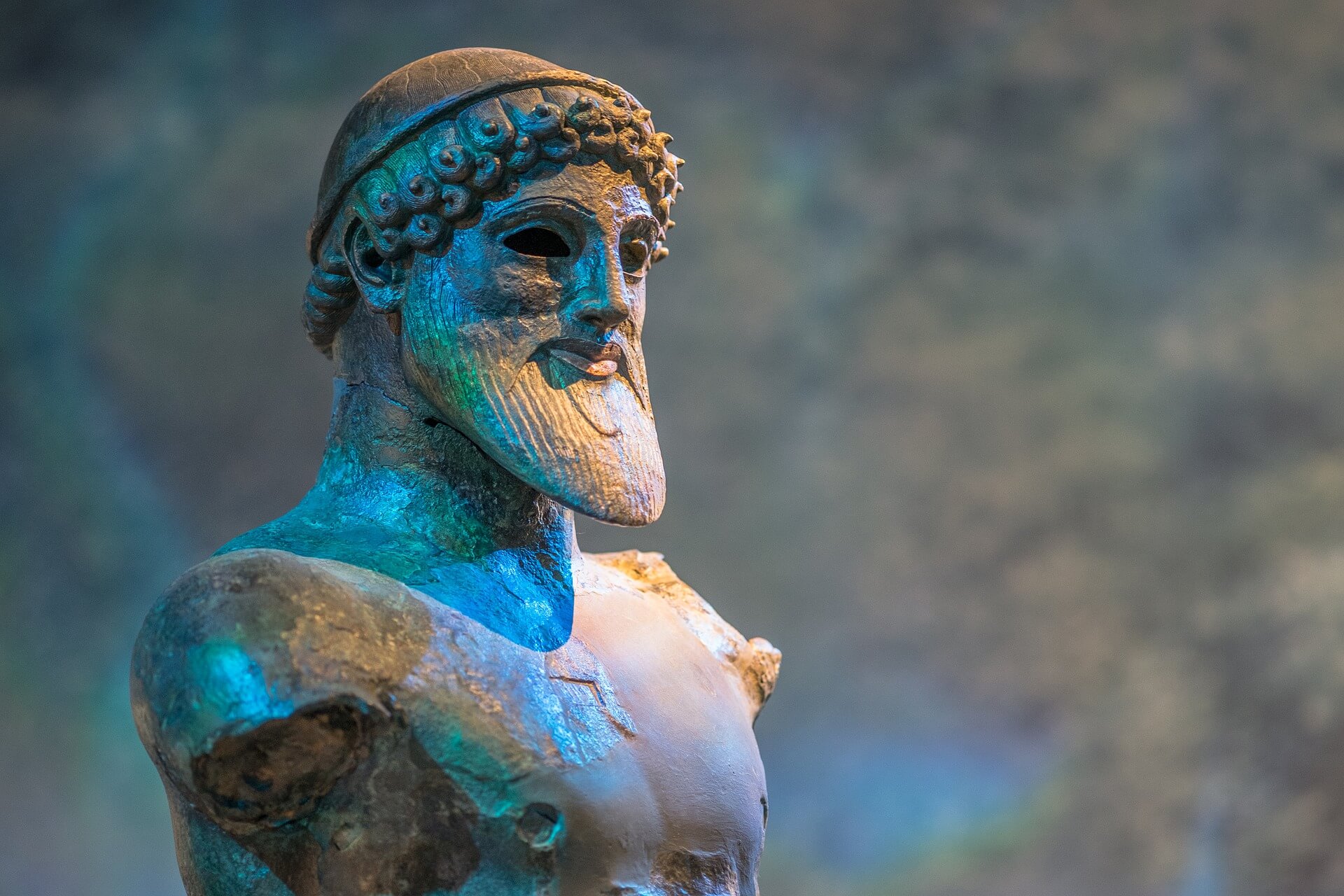
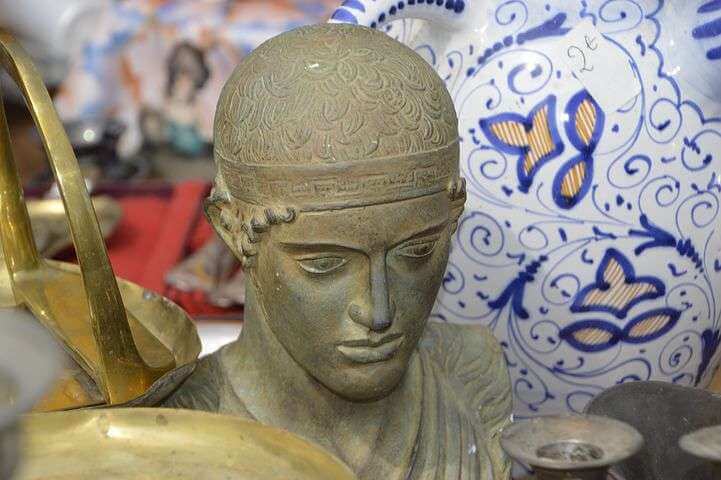
Visual Arts: The ancient Greeks did both paintings, mostly wall or board paintings and also classic sculptures of heroic figures.
Taramasalata fish roe dip
Olives and Olive oil
Dolmades tomatoes or peppers stuffed and baked
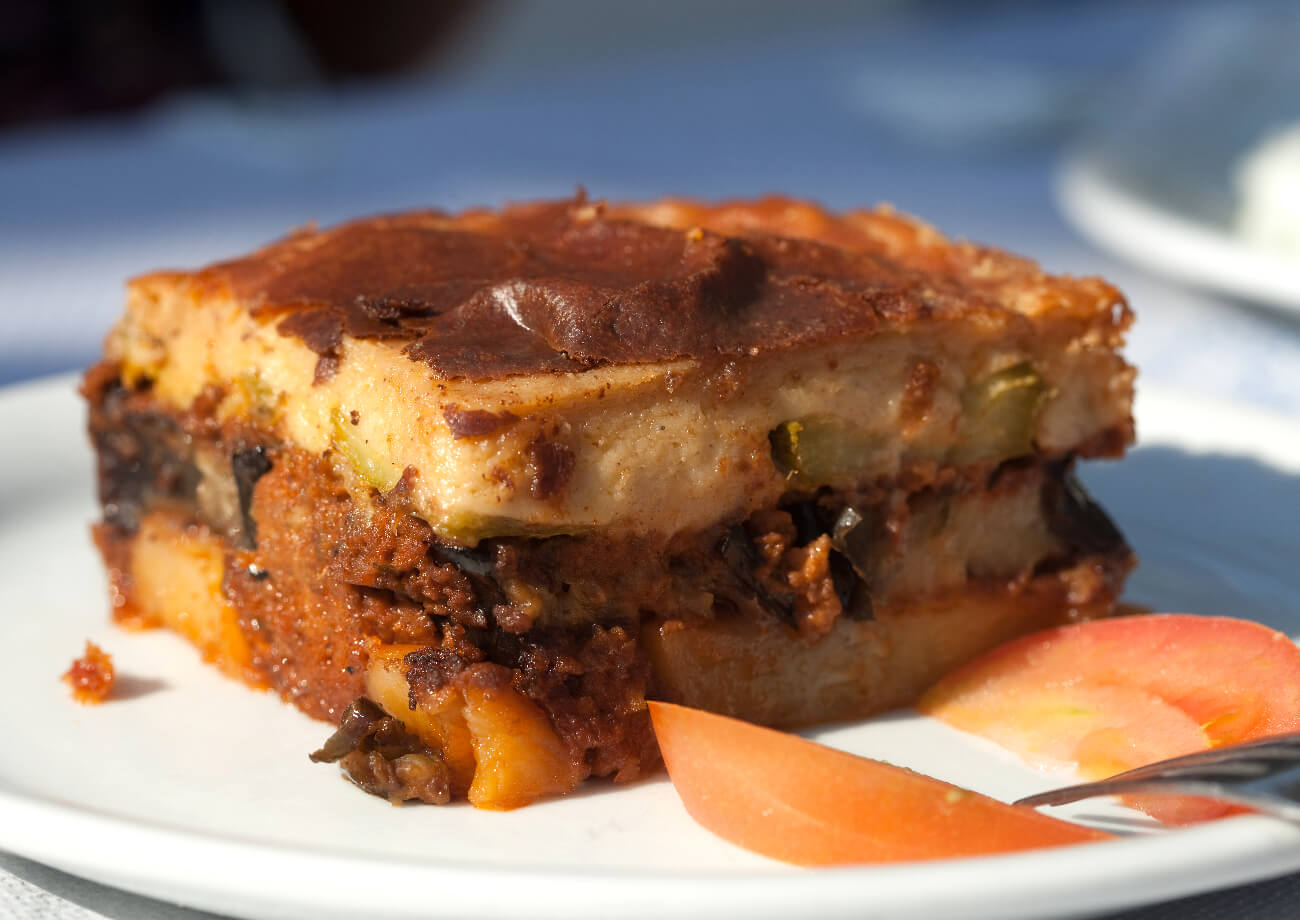
Moussaka Mixed lamb, tomatoes, onions and spices
Grilled Meat
Fresh Fish
Courgette Balls Lightly fried balls and spices
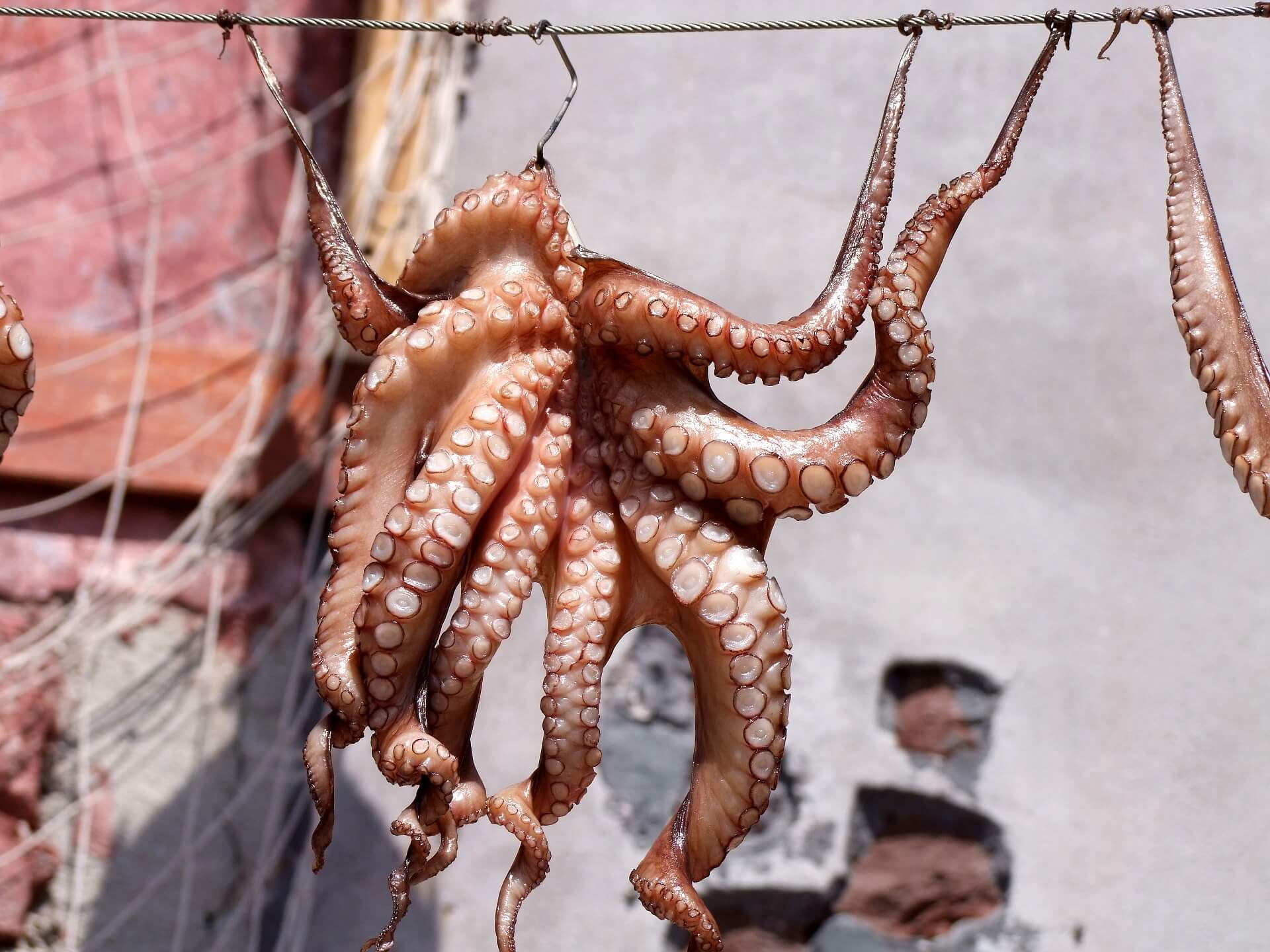
Octopus
Feta and Cheese
Honey and Baklava
Amygdalota Almond cookie
Bougatsa Sweet pie
Ellinikis Greek coffee
Frappe Iced Coffee
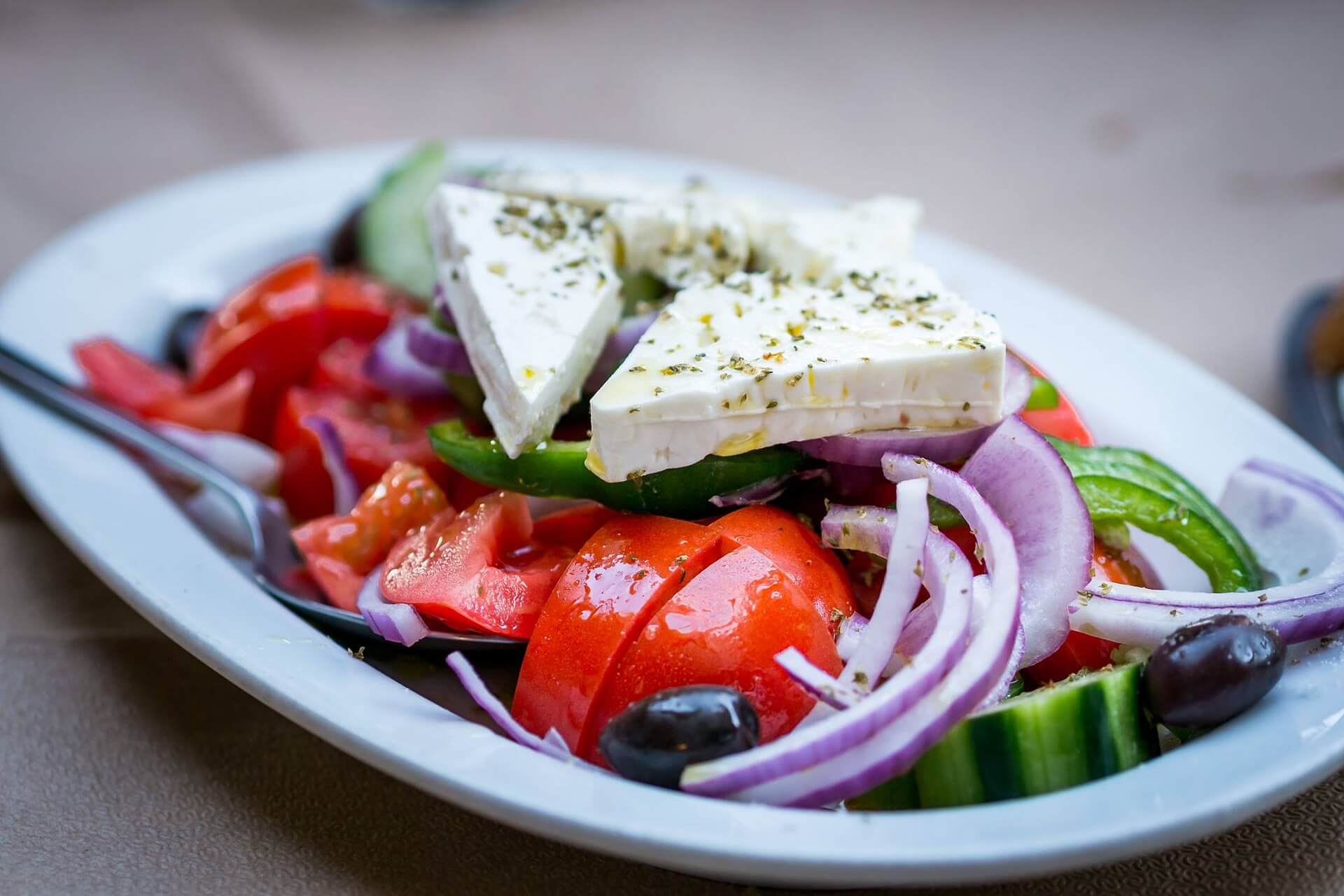
Greek Salad
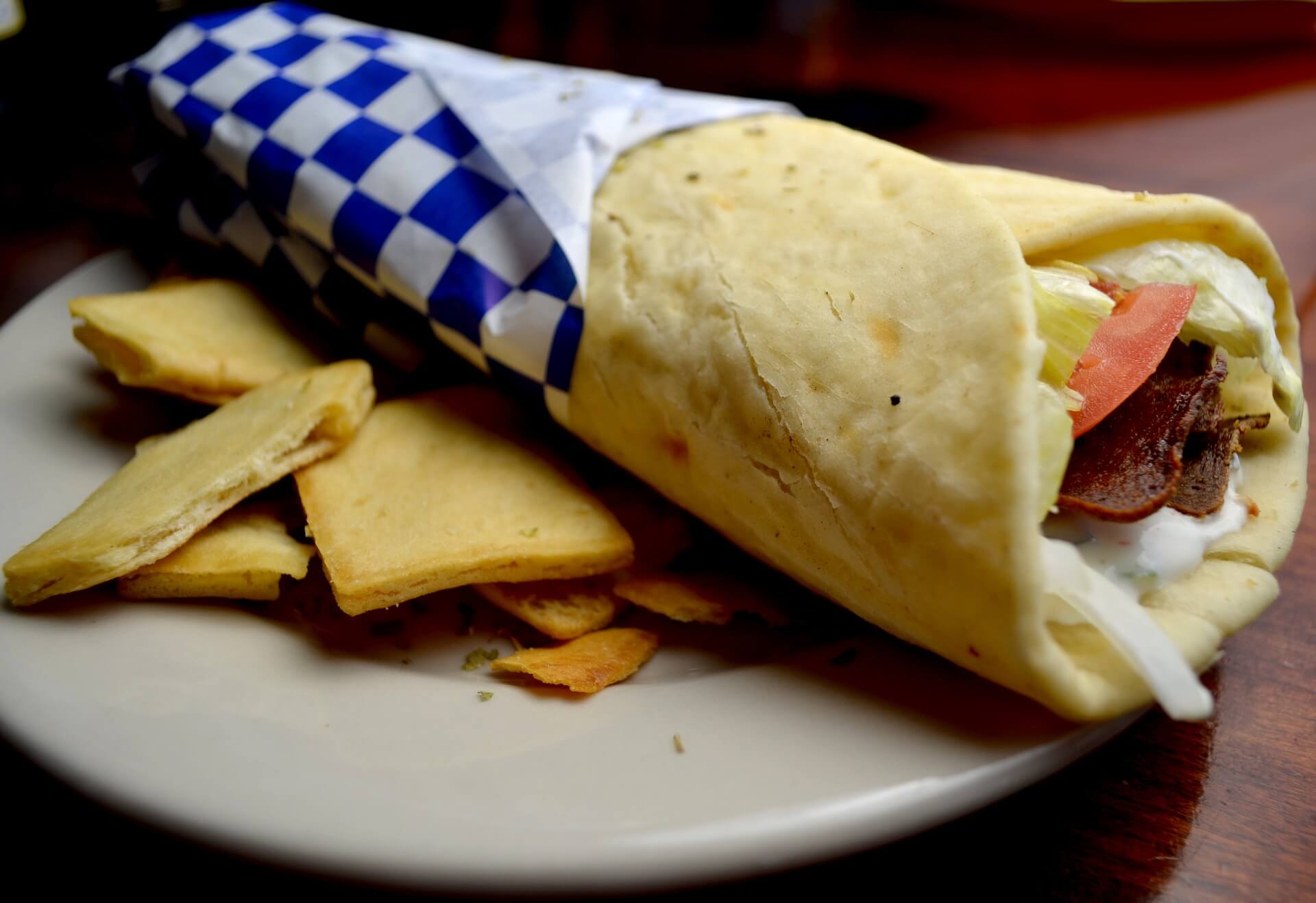
Gyros
Athens
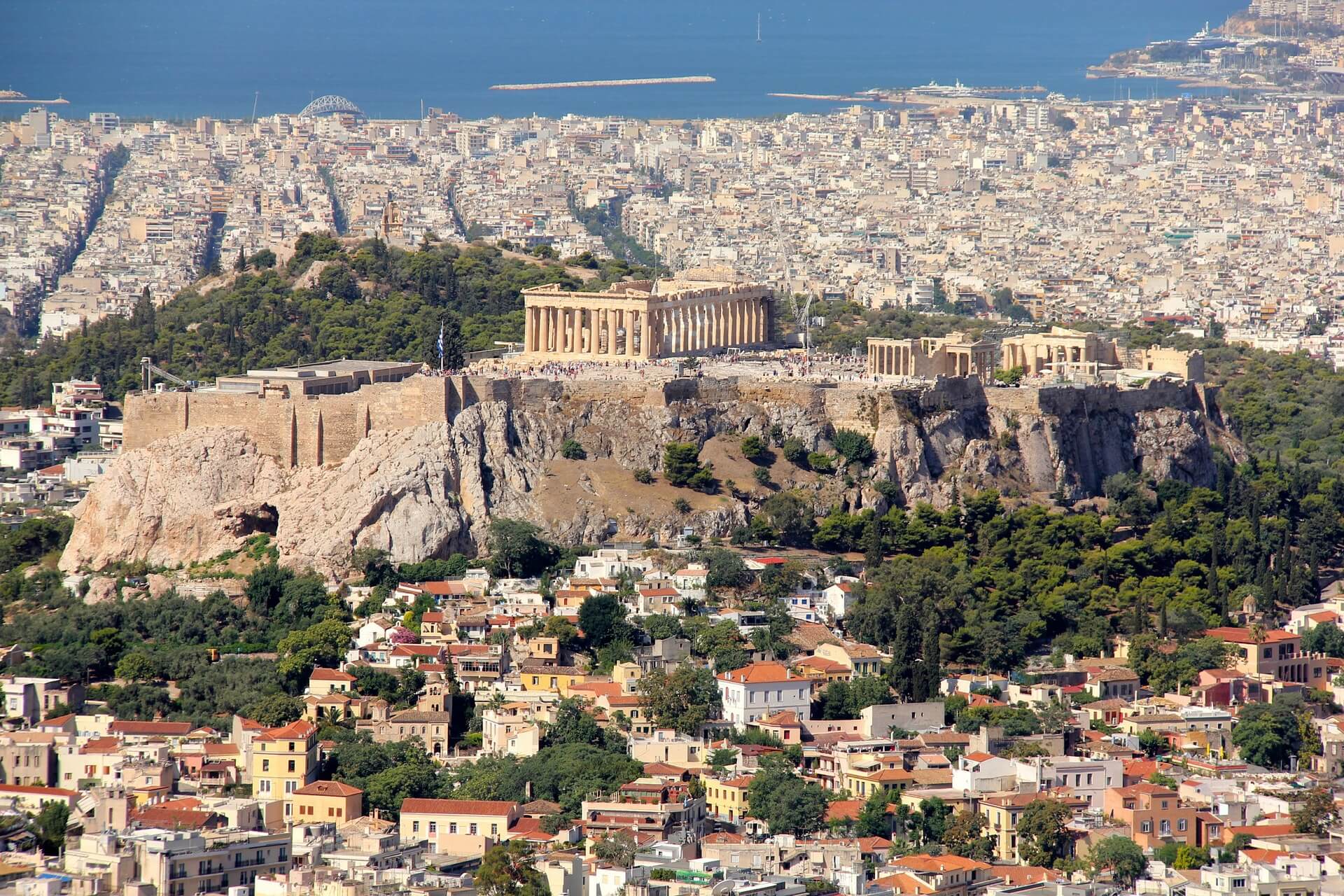
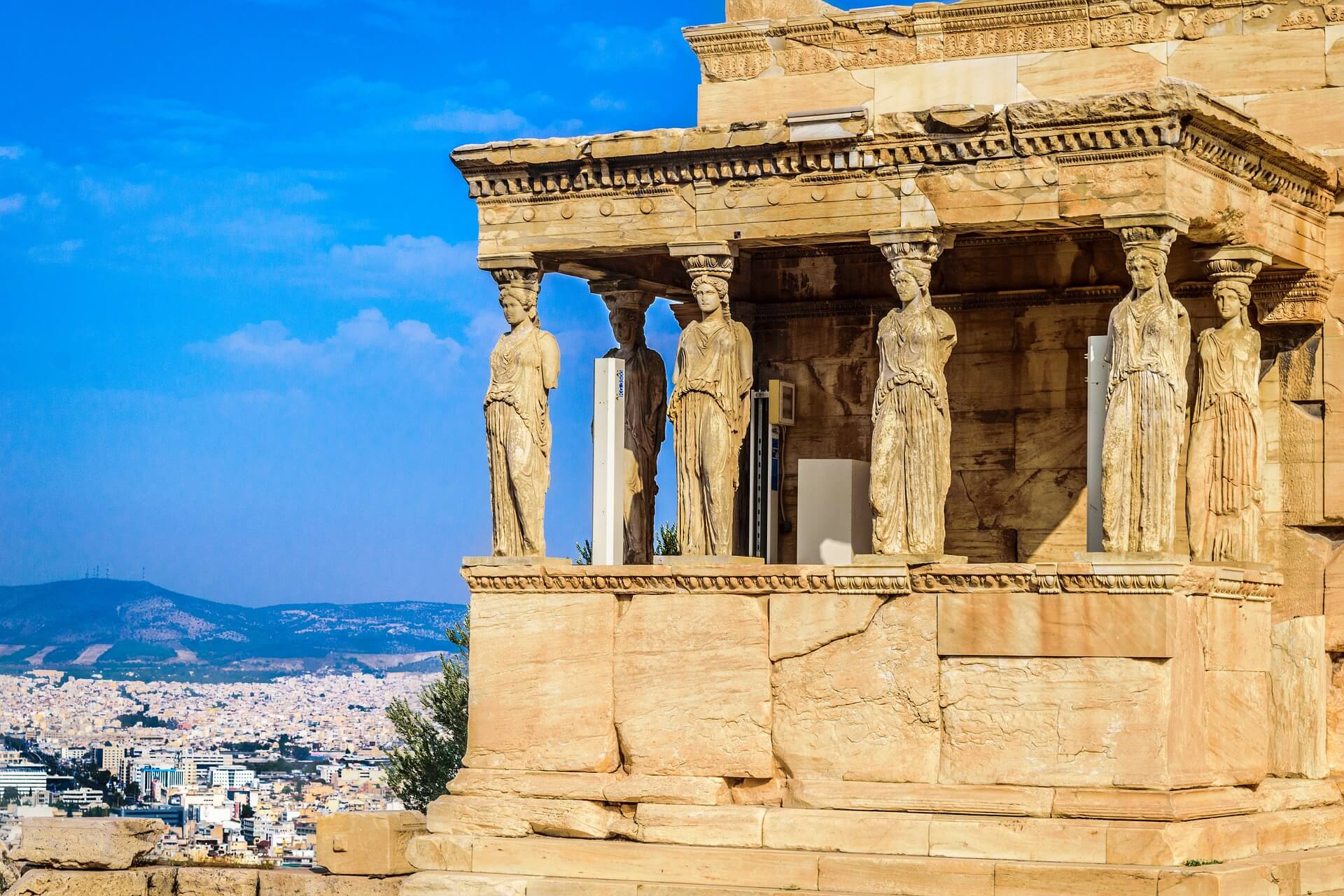
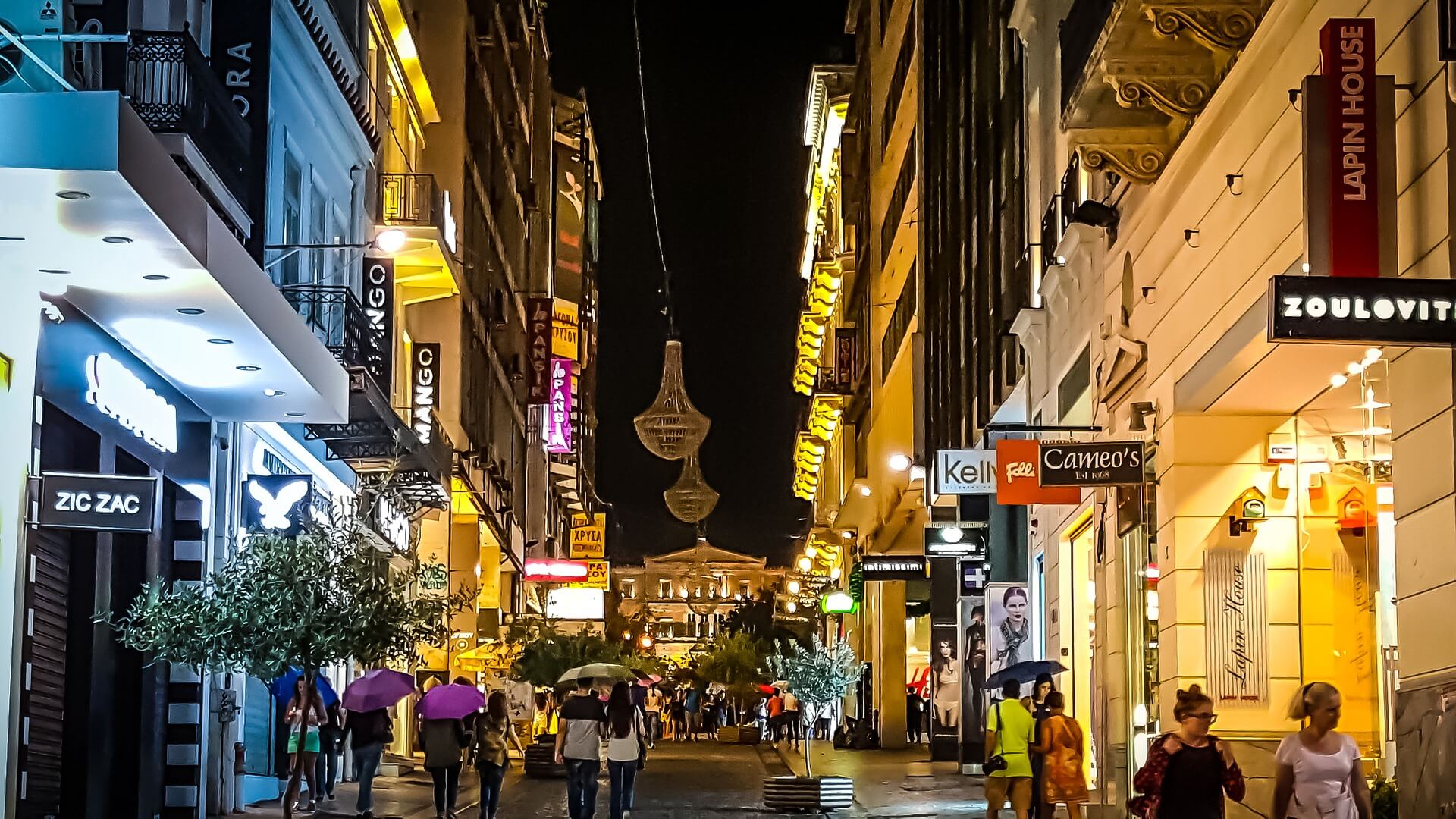
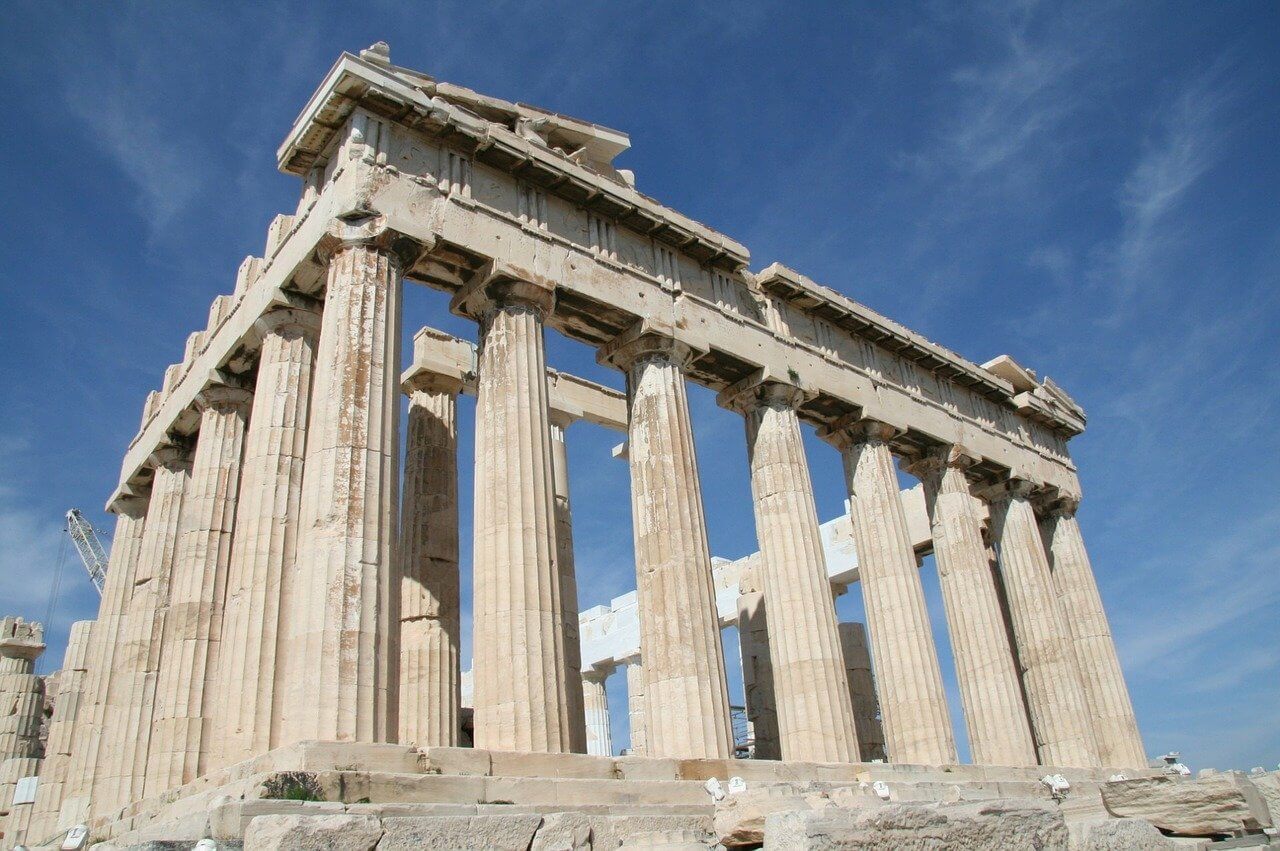
Athens is the capital and largest city of Greece. Athens dominates the Attica region and is one of the oldest cities in the world with a recorded history of almost 3500 years and its earliest human presence between the 11th and 7th millennium. Classical Athens was a powerful city-state. It was a center for the arts, learning and philosophy and the home of Plato’s Academy and Aristotle’s Lyceum. It is widely referred to as the cradle of Western civilization and the birthplace of democracy largely because of its impact on the European continent and on ancient Rome. In modern times, Athens is a large cosmopolitan city and the key to economic, financial, cultural, industrial, maritime, and government. It is located in Central Greece with a city population of 675,000, an urban population of 3.1million and a metropolitan count of 3.7 million. Athens is a Beta global city and is one of the biggest economic centers in southeastern Europe. Its port, Piraeus, is the largest passenger port in Europe and the second largest port in the world. The heritage of the classical period is still much in evidence in the city represented by ancient monuments and works of art. The most famous is the Parthenon, considered a key landmark of early Western civilization. The city also retains Roman and Byzantine monuments as well as a smaller number of Ottoman monuments while its historic urban core features elements of continuity through the millennia. Athens is home to two UNESCO World Heritage Sites, the Acropolis of Athens and the Medieval Daphni Monastery. Landmarks of the modern era dating back to when Athens was made capital of Greece in 1834 include the Hellenic Parliament and the “Architectural Trilogy of Athens” which are the National Library of Greece, the National and Kapodistrian University of Athens and the academy of Athens. Athens was the host city to the modern Olympics in 1896.
History Athens has been continuously occupied for over 5000 years. By 1400 BCE it was an important outpost of the Mycenaean civilization. Iron Age burials are richly provided for and demonstrate that from 900 BCE forward Athens was one of the leading centers for trade and prosperity. By the 6th century BCE widespread unrest led to the reforms of Solon. These would pave the way for the eventual introduction of the concept of democracy by Cleisthenes in 508 BCE. By this time, Athens had a powerful navy and helped the rebellion of the Ionian cities against Persian rule. In the ensuing Greco-Persian Wars, Athens with Sparta led the Greek states in the ending of Persian rule in 480 BCE. The decades that followed are known a s the Golden Age of Athenian democracy. During this period the playwright’s Aeschylus, Sophicles and Euripedes flourished as did the historians Herodotus and Thucydides, the physician Hippocrates, and the philosopher Socrates. Pericles promoted the arts and fostered democracy. By the mid 4th century BCE, with the conquests of the Macedonians, Athens, although a free city no longer controlled its own affairs and eventually was ruled by the Roman Empire.
Tourist Attractions
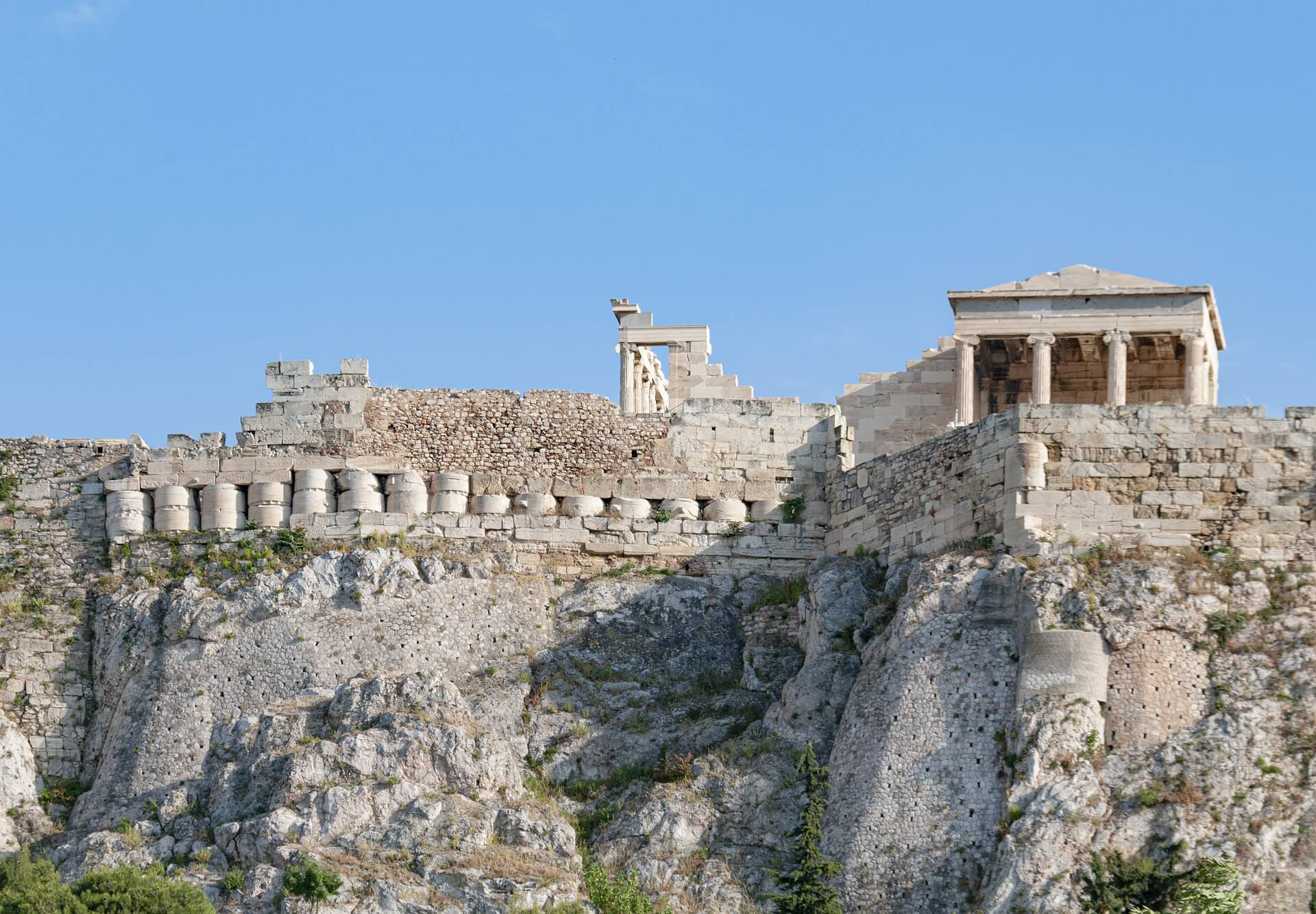
The Acropolis
The National Archaeological Museum
Plaka A historic neighborhood just below the Acropolis
Mount Lycabettus The best view of Athens
Panathenaic Stadium
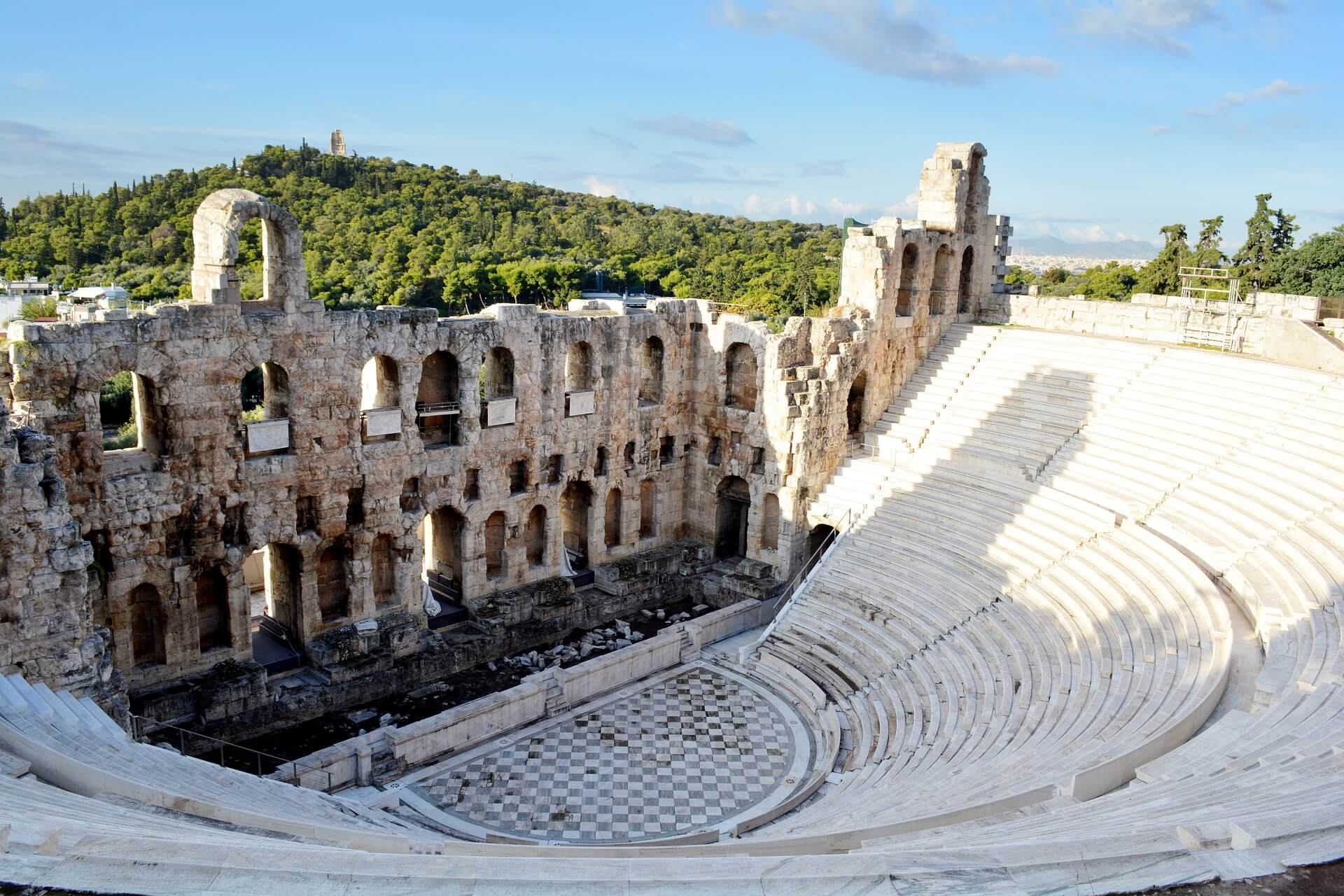
Odeon of Herodes Atticus 161 CE built Roman theater
Philopappos Monument An ancient Greek Mausoleum
Ancient Agora A part of Classical Greece
Monastiraki A historical neighborhood
Kolonaki A high end modern shopping neighborhood
Museum of Cycladic Art
Olympieion Temple of Olympian Zeus
Byzantine Museum
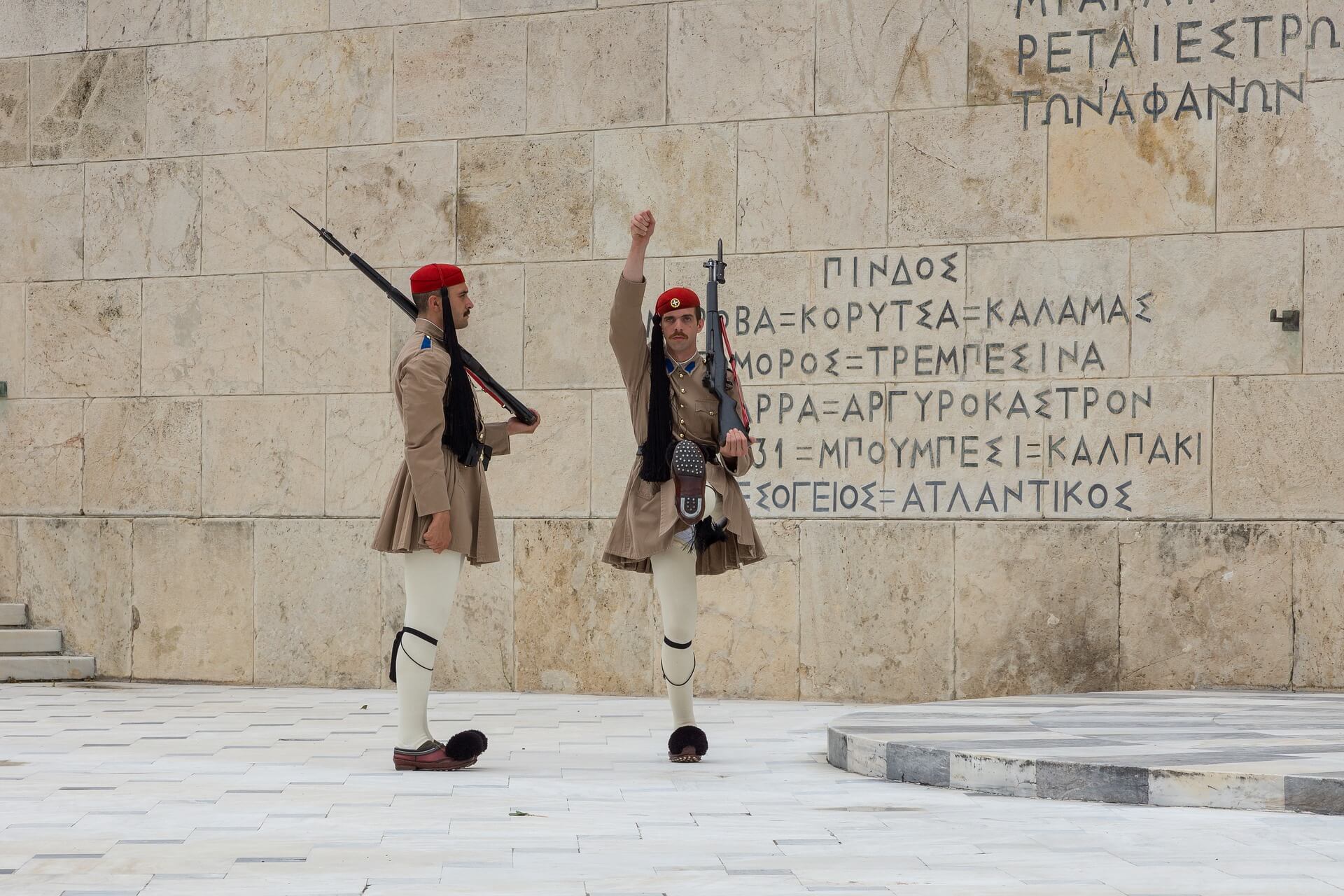
Changing of the Guard at Syntagma Square
The City of Thessaloniki
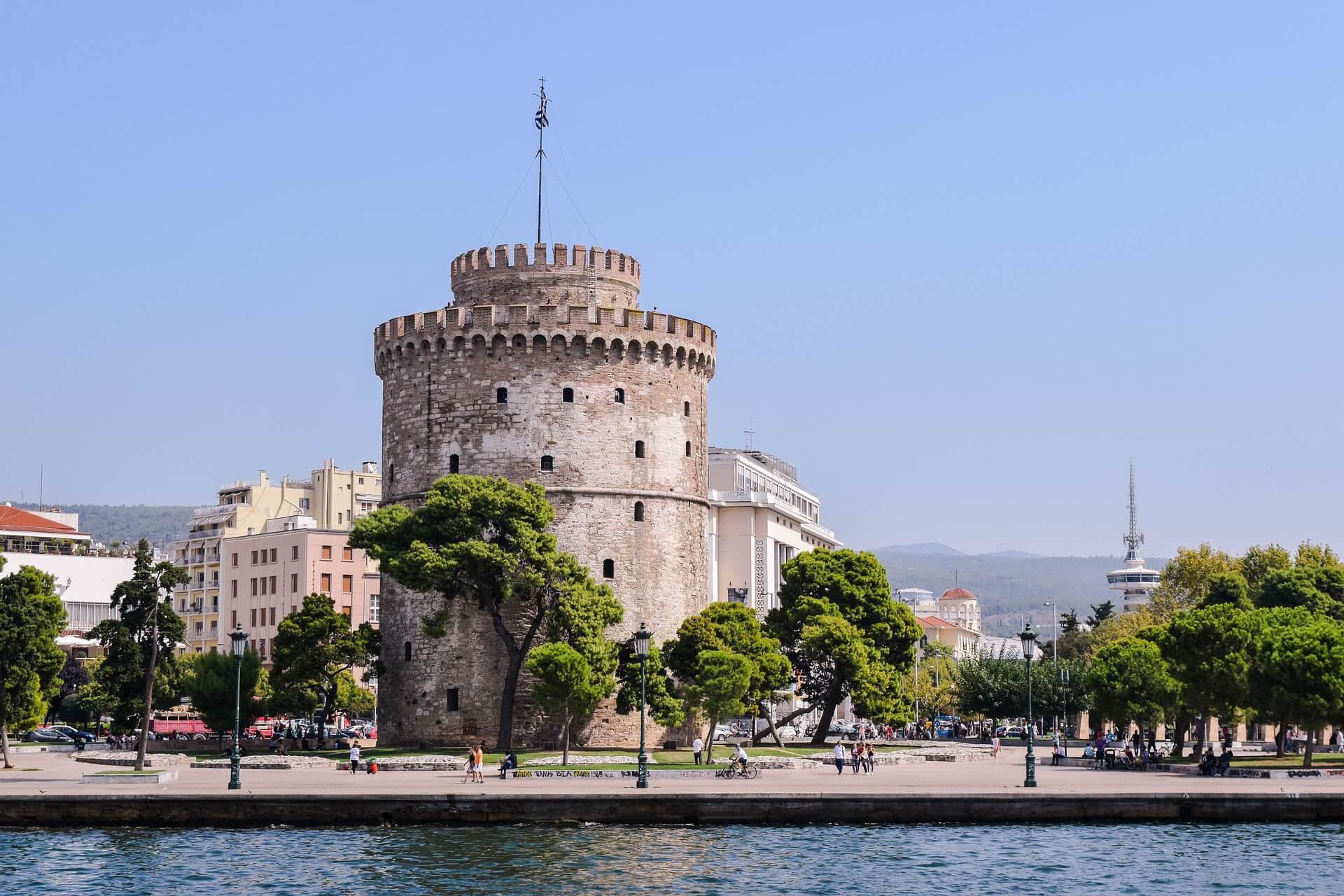
Thessaloniki is the second largest city in Greece with a population of over1 million in its metropolitan area. It is the capital of the Macedonian region of Greece. Thessaloniki is located on the Thermaic Gulf at the northwest corner of the Aegean Sea. The historic center of the city has a population of 325,000. It is Greece’s second major industrial, commercial and political center. It is a major transportation hub for Greece and Southeastern Europe mainly through its port. The city is renowned for its festivals and is the cultural center of Greece. The city was founded in1315 BCE by Cassender of Macedonia. It was an important metropolis by Roman times and was the second largest and wealthiest city in the Byzantine Empire. It was conquered by the Ottomans in 1430 AD and was an important seaport and metropolitan center under Ottoman rule for five centuries ending in1830.
Tourist Attractions
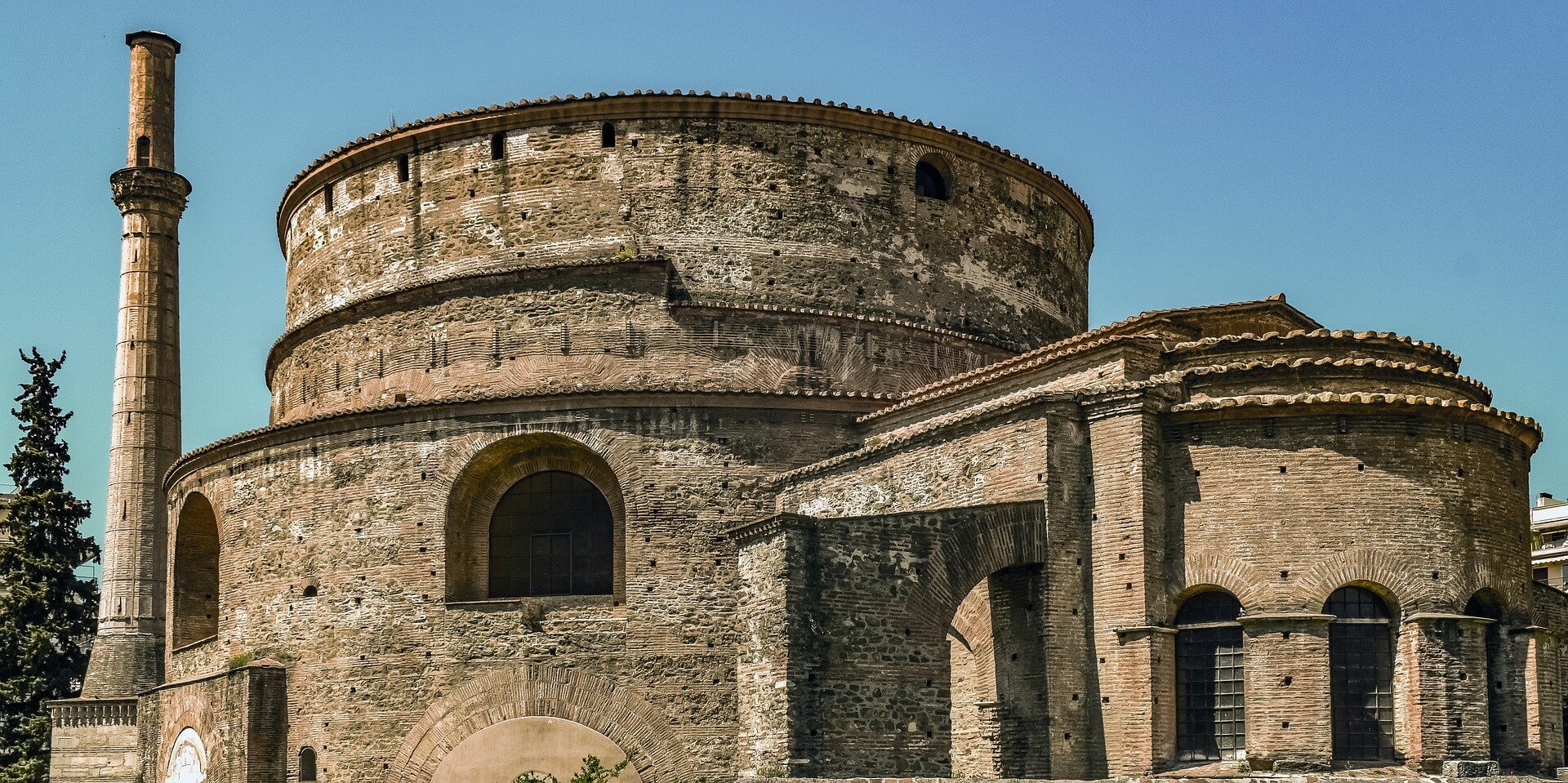
Rotunda of Galerius Saint George’s Church
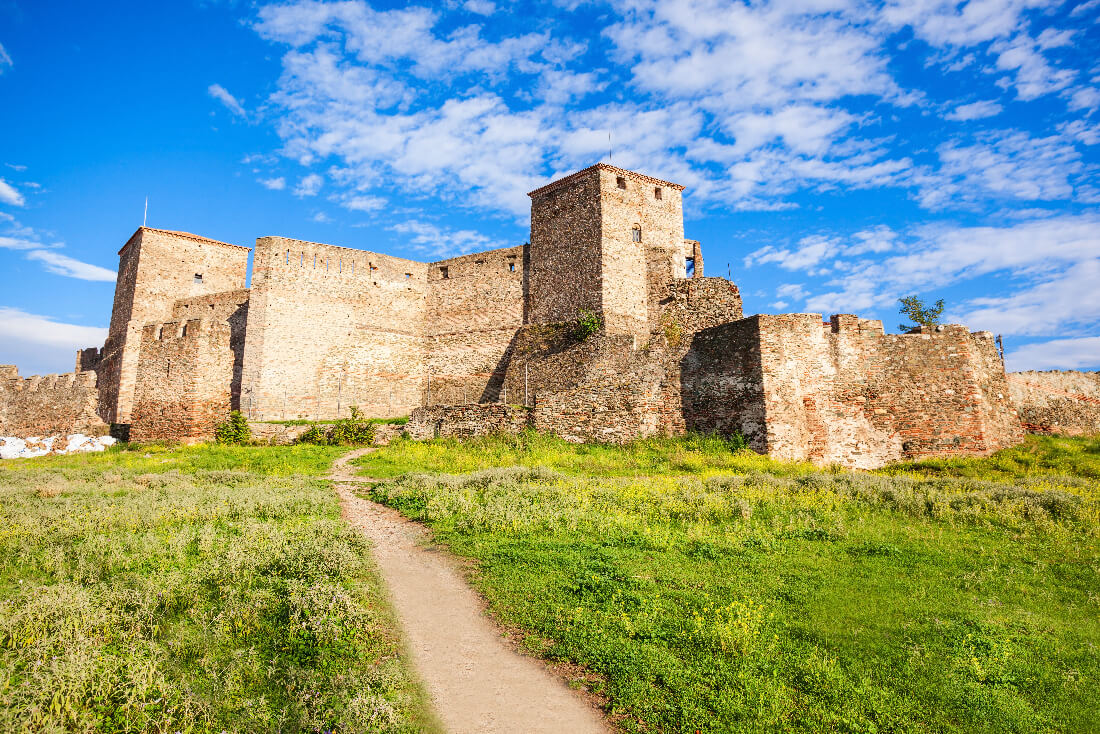
The White Towers Relic of Ottoman era ramparts
Church of Agios Dimitrios
Arch of Galerius
Archaeology Museum of Thessaloniki
Ano Poli Upper town-the historic old town
Byzantine Walls Ancient ramparts
Church of the Holy Apostles A UNESCO World Heritage Site
Church of Saint Sophia A UNESCO World Heritage Site
Villa Allatini
Other Interesting Cities
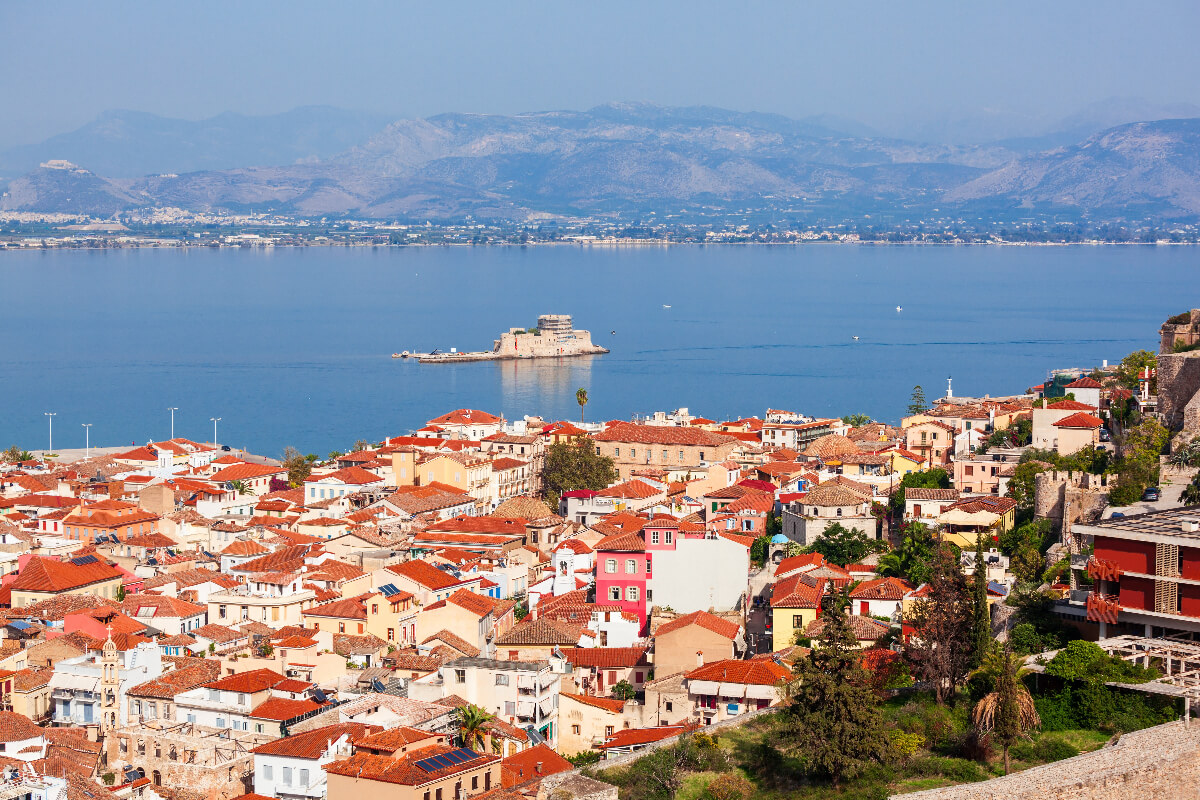
Nafplio Formerly the capital of modern Greece, its lovely setting and Venetian and Ottoman architecture are pleasant to the eye. It is strategically located and has three historic fortresses to visit.
Patras is one of the busiest ports in Greece and from here you can take a ferry to any one of the Greek islands.
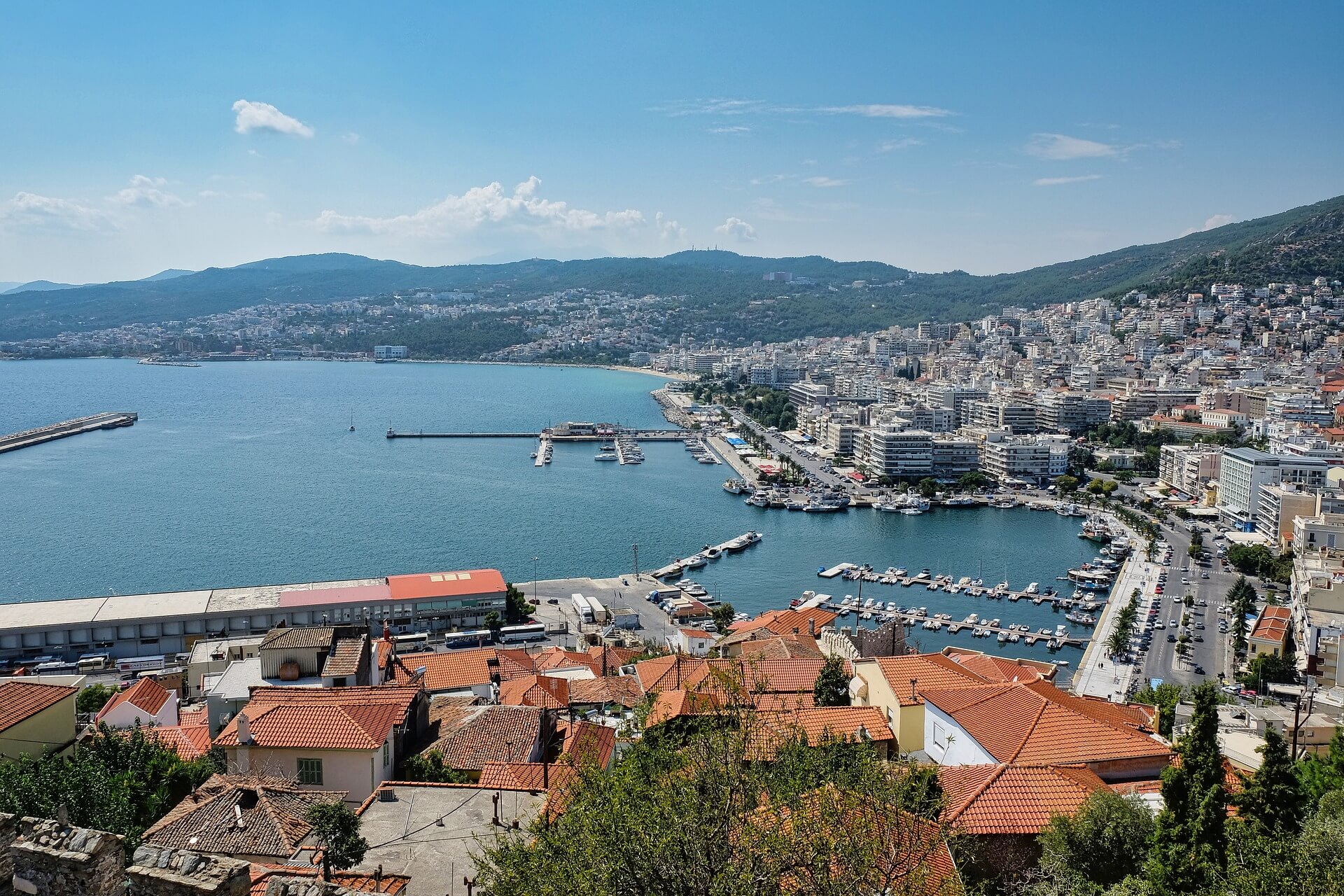
Kavala is located in the north of Greece and has a lovely historic center and fantastic beaches.
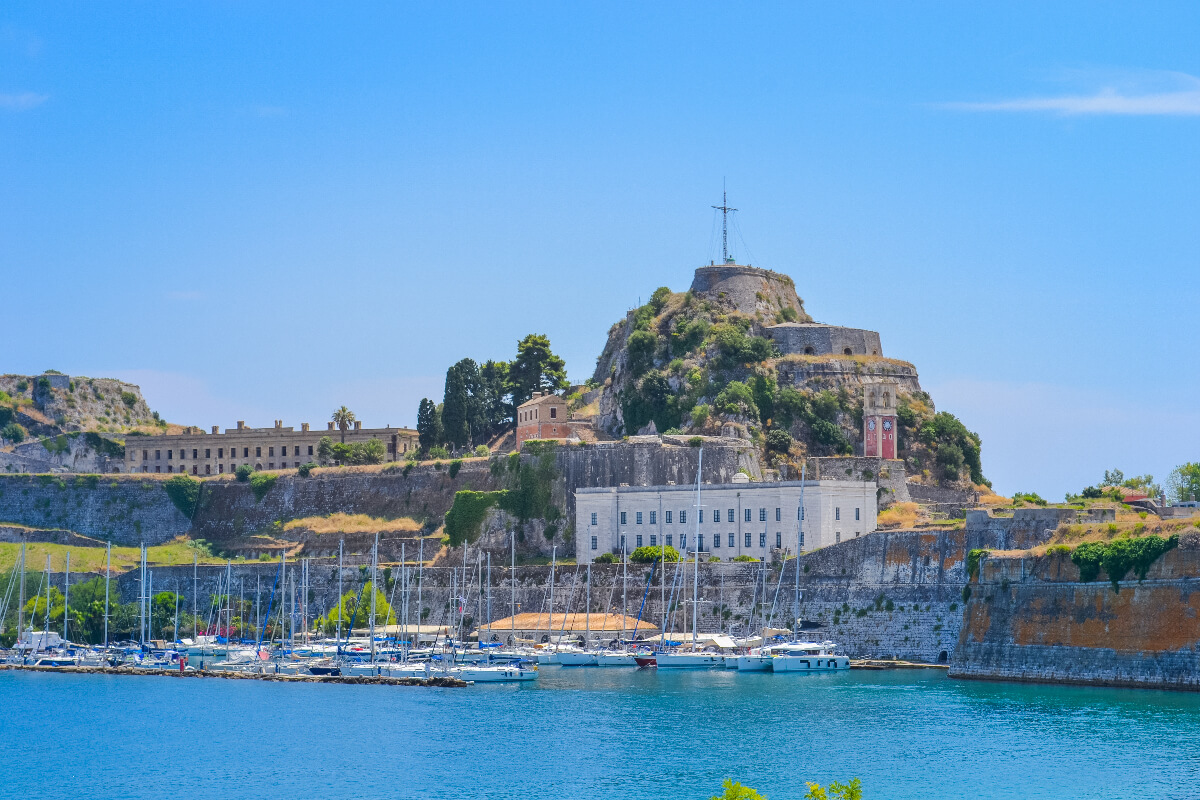
Corfu Town is one of the most elegant cities in Greece with a beautiful town center. It has Venetian architecture and many ancient churches to visit.
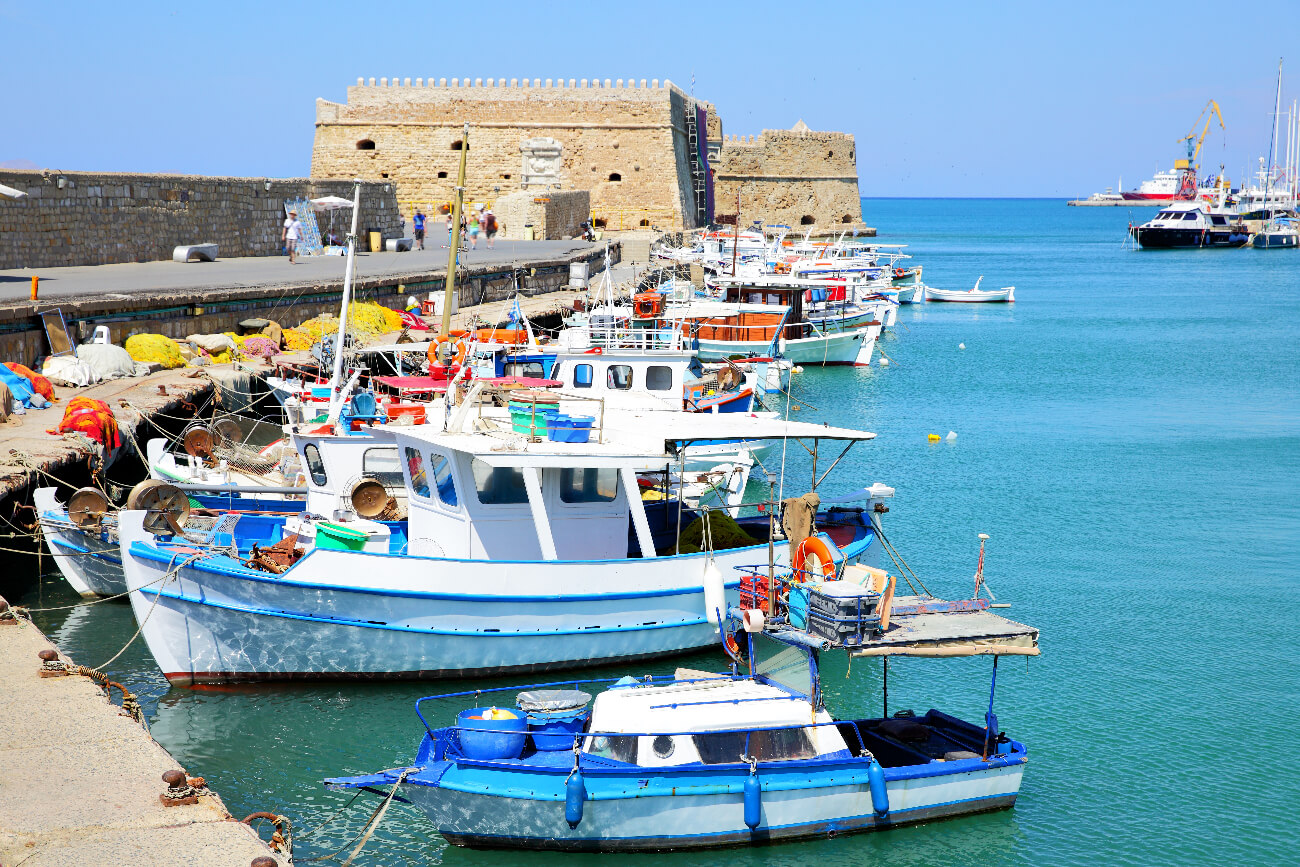
Heraklion Is the capital city of Crete. The main attractions are the walled city and the old town. There are museums and the pace is a bit frantic.
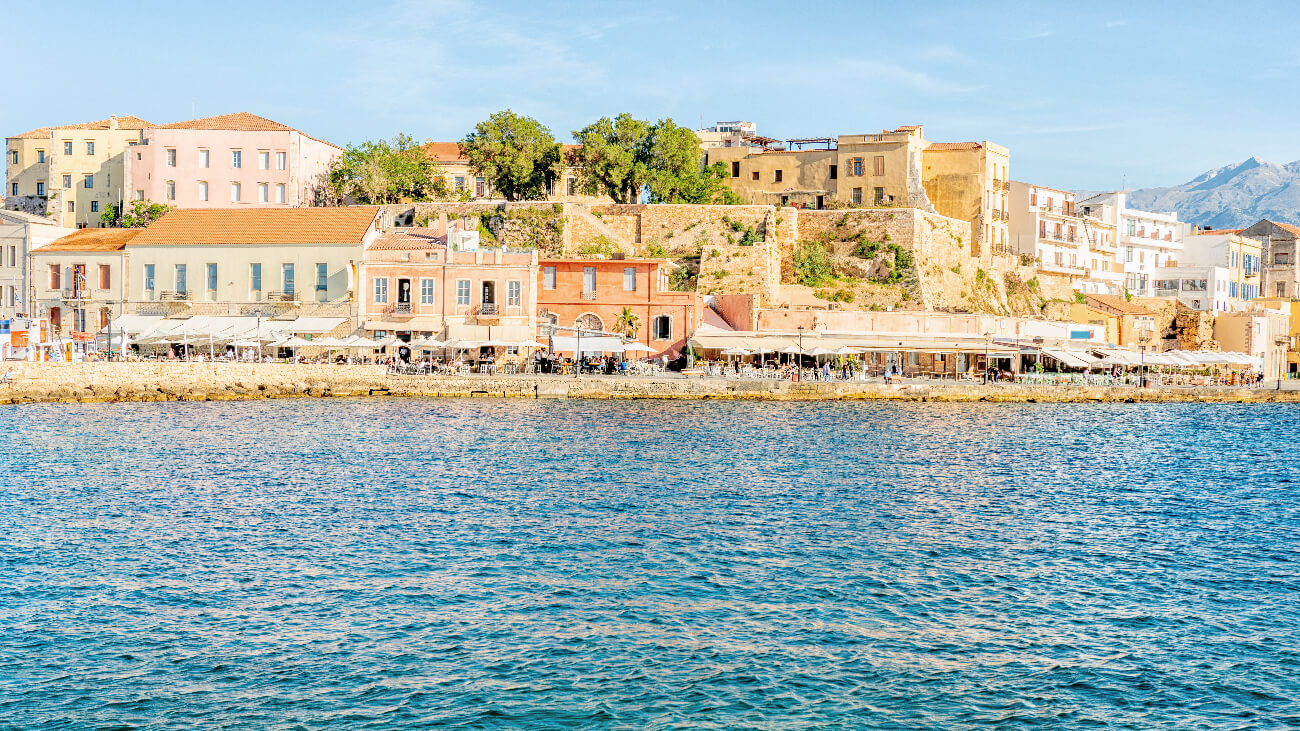
Chania on the coastline of Crete is a beautiful and picturesque city with a quaint old town. It has interesting Turkish and Venetian architecture and twisting narrow streets.
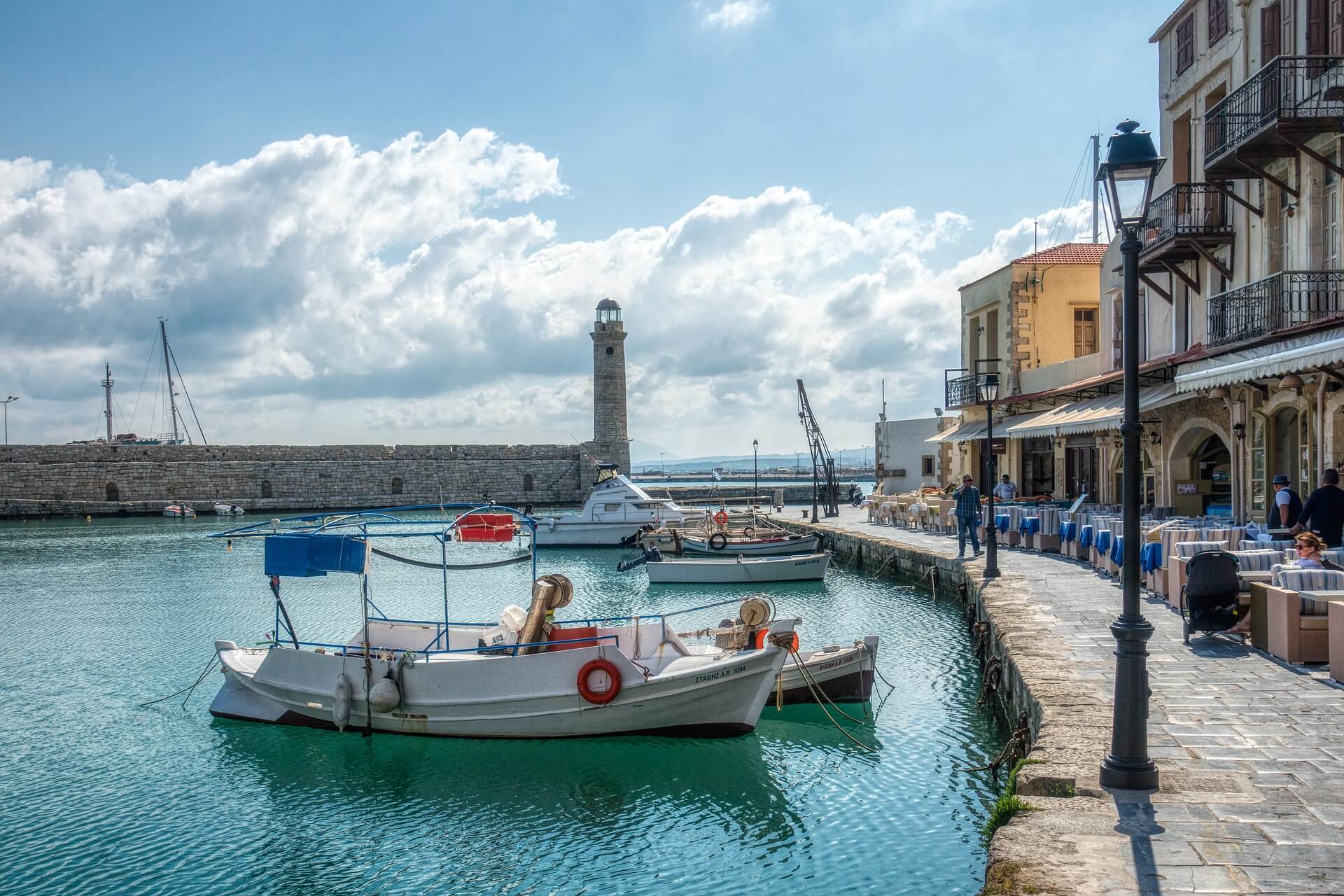
Rethymno is one of the best places to visit in Crete. It has beautiful beaches. It has a combination of Venetian, Roman and Byzantine architecture which makes the old town a must visit.
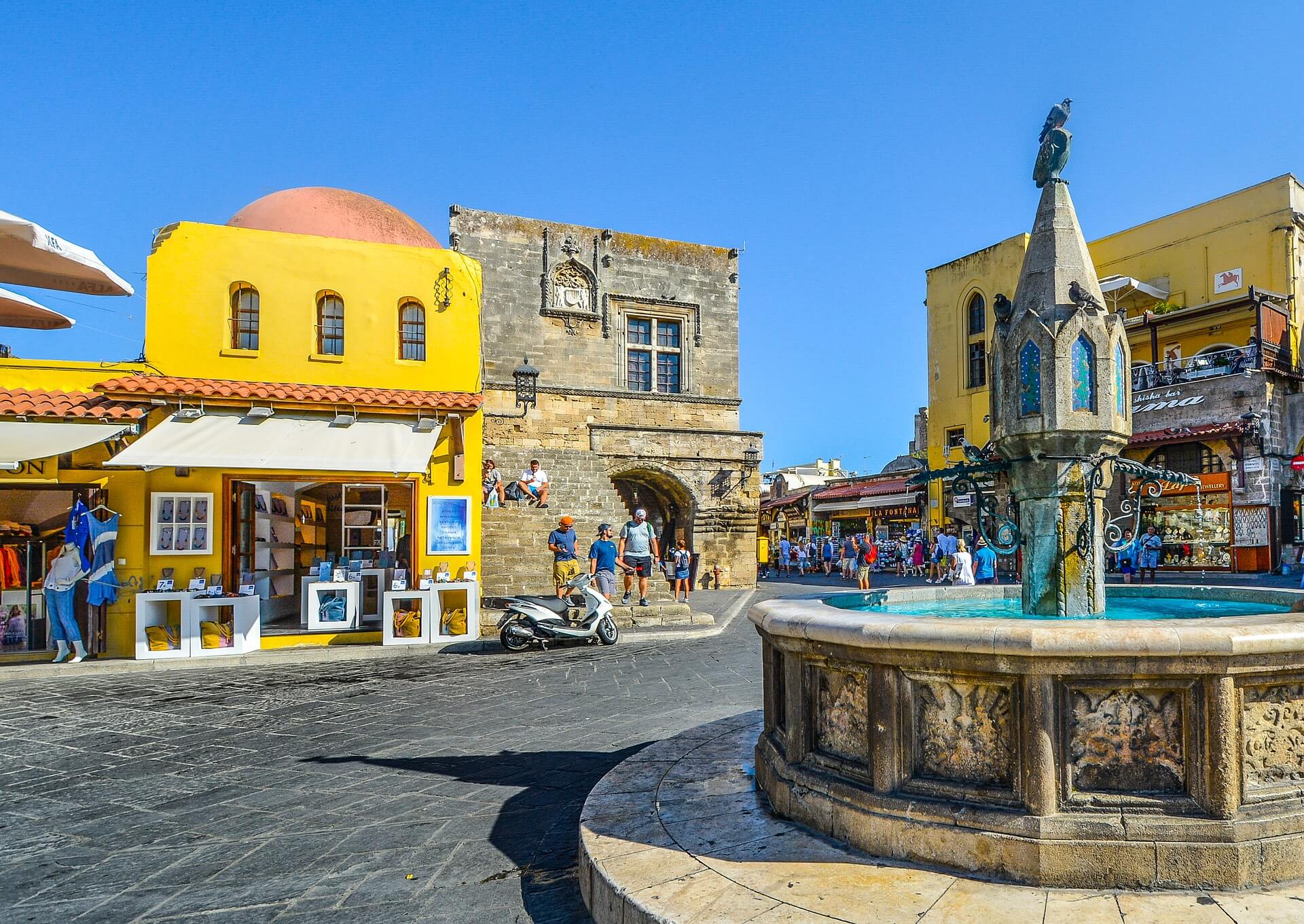
Rhodes Town is the capital city of the island of Rhodes. Rhodes City dates back to the 5th century BCE and has many historic sites to visit. It is ringed by ancient walls protecting the old town with its alleys and cobbled streets. Rhodes was the ancient site of the Colossus.
Other Tourist Attractions:
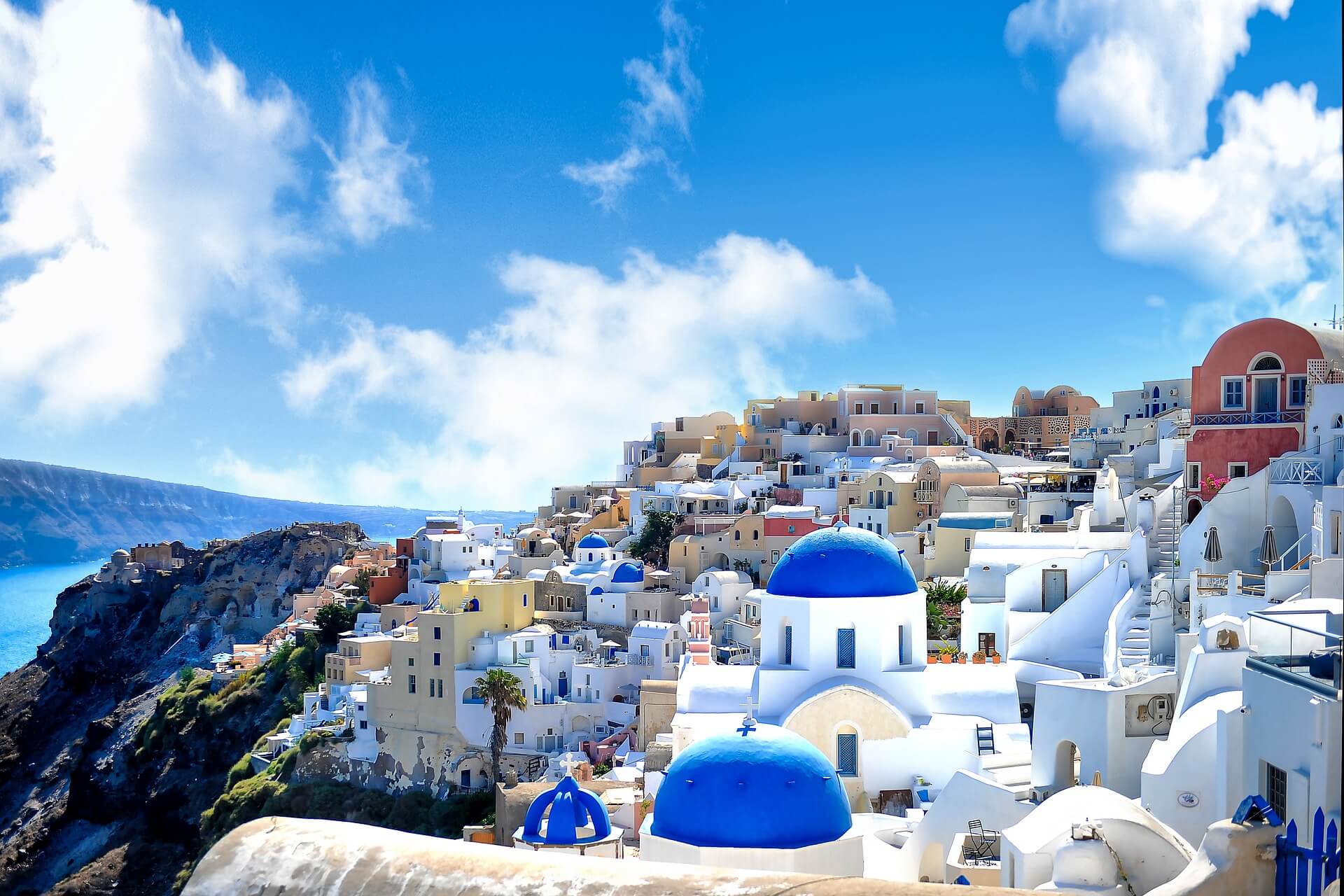
The beautiful volcanic island of Santorini
Temple of Poseidon at Cape Sounion
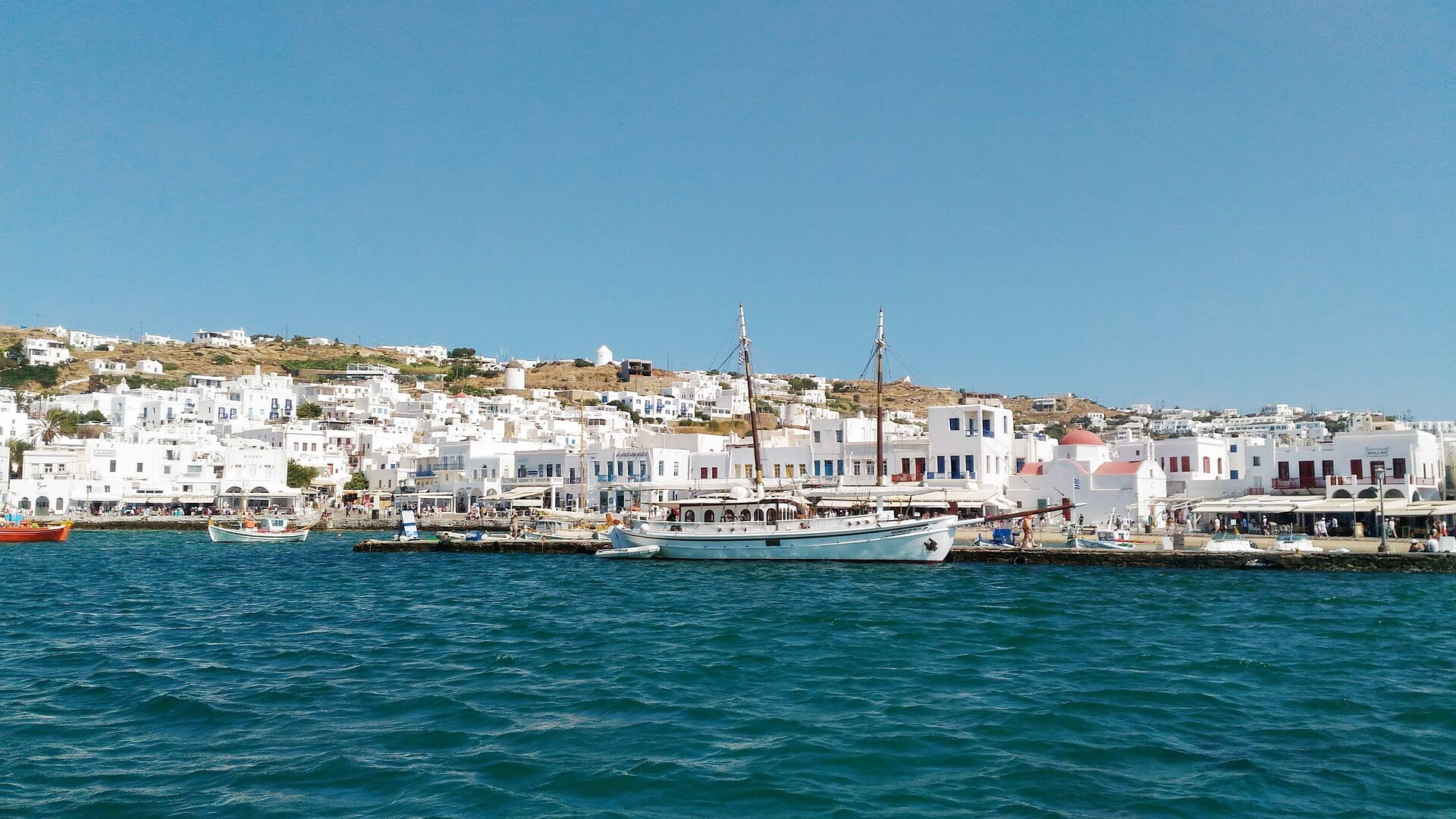
Mykonos Town
Delos a UNESCO World Heritage Site
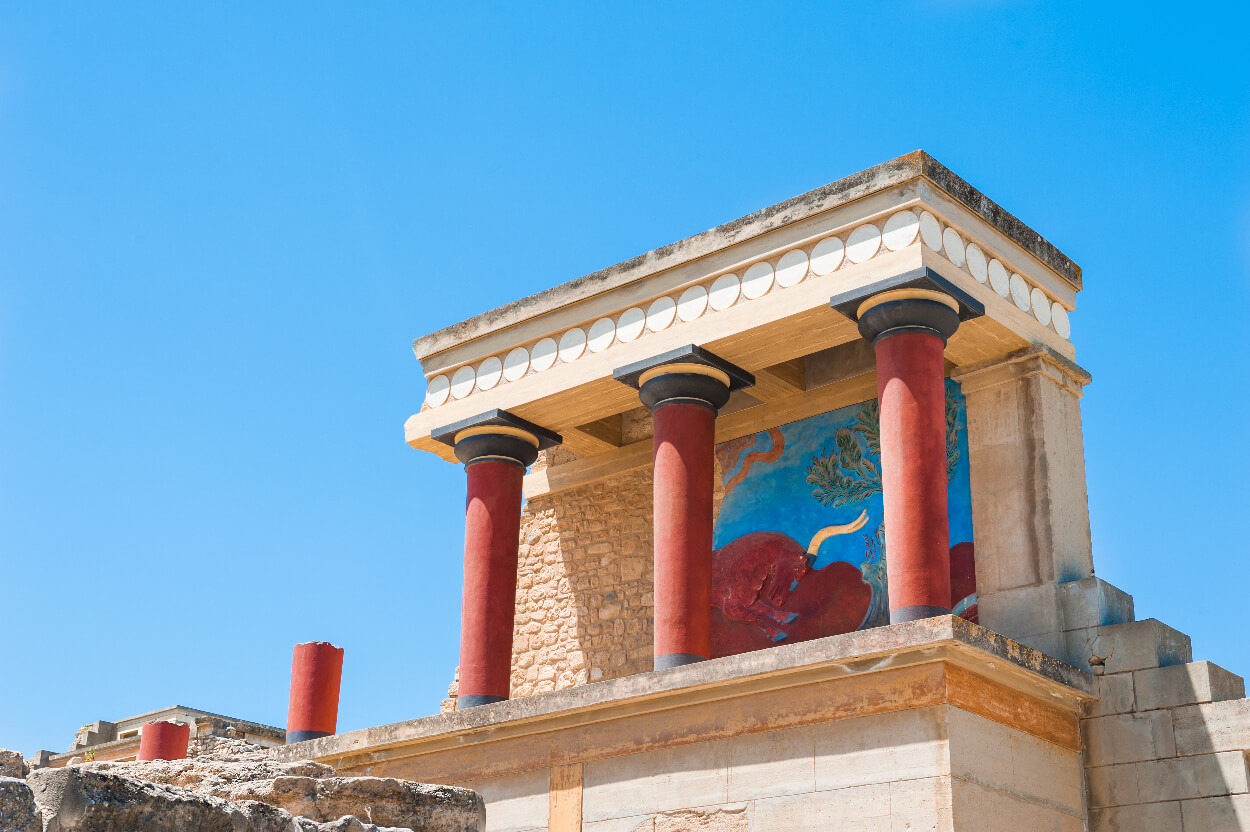
Palace of Knossos in Crete
Peloponnese Region Has a UNESCO World Heritage Site
Meteora 24 monasteries on Northern Greece cliffs
No Tour Found